Natchez Trace State Forest
Size: 45,093 acres
The State Forest is located in central-western Tennessee, in portions of Henderson, Carroll, and Benton Counties. It is approximately 30 miles east of Jackson and is bisected by I-40.

The forest originated from lands purchased by the Resettlement Administration and became a State Forest in 1949. At the time of purchase, the land was degraded by poor agricultural practices that caused severe erosion and resulted in a deeply gullied landscape.
When the Tennessee Department of Agriculture Forestry Division took over management of the land, the emphasis for many years was on fire control and establishment of vegetation to prevent erosion. Loblolly pine, because of high rates of litter production, proved very satisfactory for that purpose and hundreds of acres of pine plantations were established.
The forest now consists of 67% hardwood types and 30% pines. Hardwood stands exceeding 60 years of age occur on 39% of the forest in areas that were never cleared or long-ago ceased agricultural use. On the other hand, 57% of the forest supports trees aged 10 to 60 years on what was likely once farmland. Large areas have been salvaged as a result of approximately 7,300 acres of older age class stands being blown down to various degrees by a severe thunderstorm in 1999.
There are 16 cemeteries, 62 historic sites, 1 prehistoric site, 4 ponds, and 1 primitive campsite on the forest. Vistors enjoy 28 miles of hiking trails, camping, picnicking, and hunting. Horseback riding and OHV use are allowed on certain marked forest roads.
Fire Tower Access
Fire towers on state forests are not open to the public. Visitors are welcome to photograph these structures but may not climb the towers.
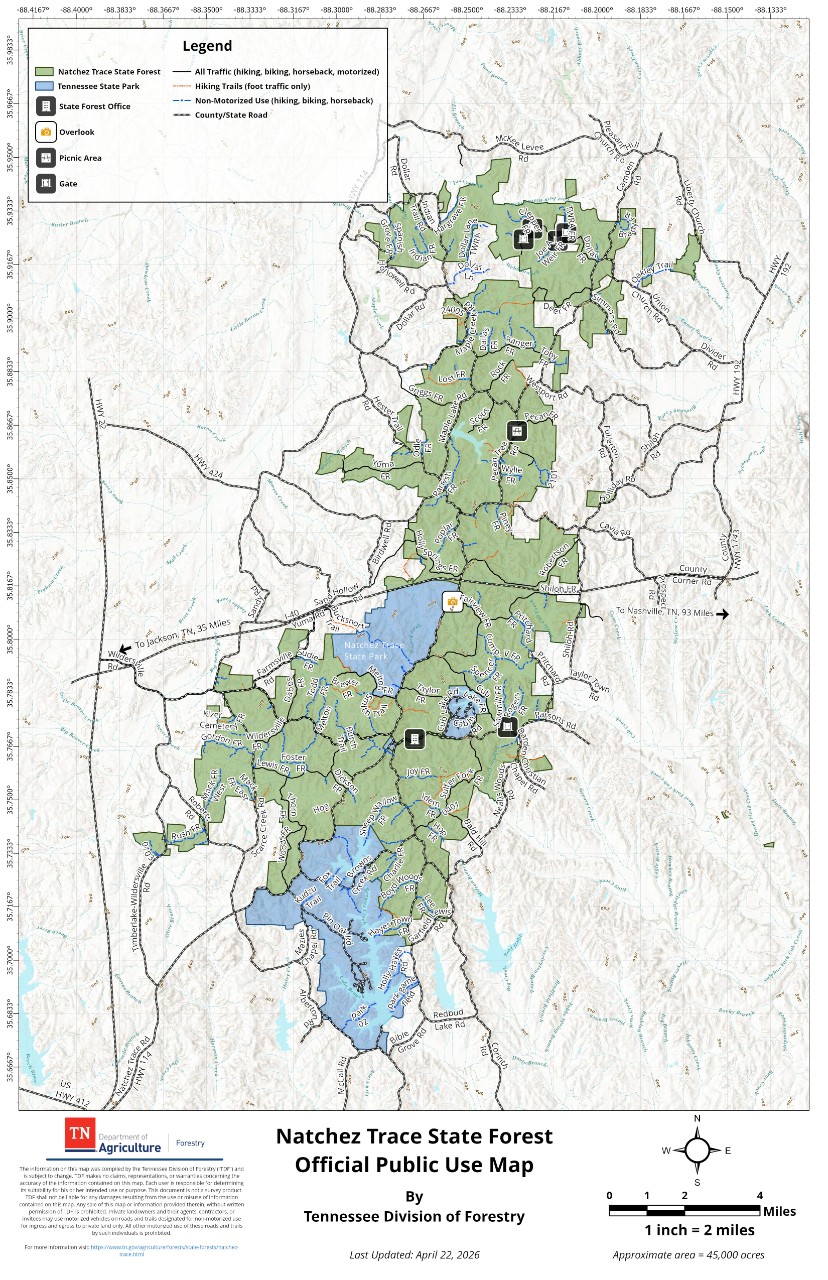
This map shows the full extent of Natchez Trace State Forest in West Tennessee, including its boundaries, road and trail system and designated road and trail uses. The forest covers about 45,000 acres, making it the largest in the state forest system, and surrounds Natchez Trace State Park, which sits within the central and southern portions of the property.
The forest is bisected by Interstate 40 and accessed from Highway 114, Highway 22, Highway 424 and connecting county roads, with Jackson located 35 miles to the west and Nashville 93 miles to the east.
The map identifies State Forest Offices in the central portion of the forest, picnic areas, an overlook near the state park and gate locations throughout the forest. Two additional detail maps cover the north and south halves of the forest at a larger scale.
The information contained in the map is also available in the sections below. This map was most recently updated in April 2026.
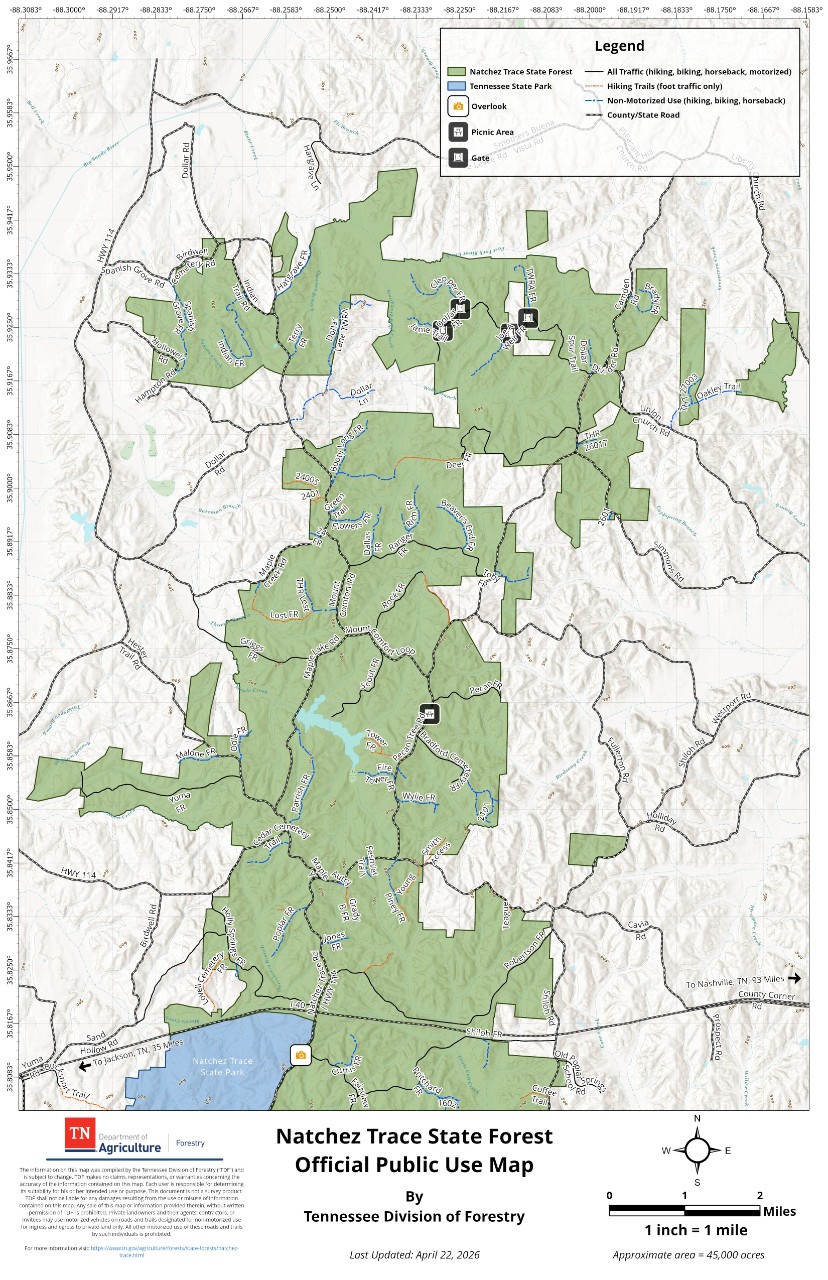
This map shows the northern half of Natchez Trace State Forest in West Tennessee at a larger scale, including its boundaries, road and trail system and designated road and trail uses. This section of the forest is accessed from Highway 114, Spanish Grove Road, Hester Trail Road and connecting county roads.
Roads and trails are designated for all traffic like hiking, biking, horseback riding and motorized use. The map identifies a picnic area near Pecan Tree Road, an overlook along Interstate 40 near Natchez Trace State Park and gate locations throughout the forest. The information contained in the map is also available in the sections below.
This map was most recently updated in April 2026.

This map shows the southern half of Natchez Trace State Forest in West Tennessee at a larger scale, including its boundaries, road and trail system and designated road and trail uses. This section surrounds the main body of Natchez Trace State Park, which contains Cub Lake, Pin Oak Lake and the park campground and day-use facilities. The section is accessed from Interstate 40, Highway 114, Scarce Creek Road, Redbud Lake Road and connecting county roads.
Roads and trails are designated for all traffic like hiking, biking, horseback riding and motorized use. The map identifies State Forest Offices near Cub Lake and along Sawmill Road, a picnic area in the northern portion and an overlook near the state park. The information contained in the map is also available in the sections below.
This map was most recently updated in April 2026.

This map shows the designated firewood collection areas within Natchez Trace State Forest in West Tennessee. Two harvest sites are located in the central portion of the forest along Todd Forest Road and Wildersville Forest Road, shown in detail in an inset map in the lower right. The forest surrounds Natchez Trace State Park, which sits within the central and southern portions of the property. A permit is required to remove firewood from the state forest.
Free permits are available from the local Tennessee Division of Forestry office at 731-968-3214, Monday through Friday from 8 a.m. to 4:30 p.m. except on state holidays.
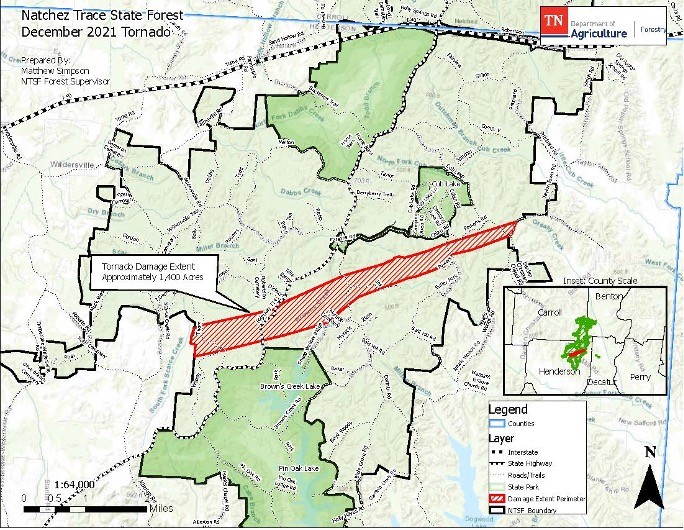
On December 10, 2021, a strong tornado passed through central Henderson County damaging homes and severely affecting several thousand acres of timberland. The tornado cut a path approximately 6-miles long through Natchez Trace State Forest, causing heavy damage to approximately 1,400 acres of state property managed by the Tennessee Department of Agriculture Division of Forestry (TDF).
TDF is committed to inform the public on the status of this natural disaster. TDF invites legislators or concerned citizens who would like an in-person tour to gain more understanding of the operation to contact TDF for scheduling. All questions or concerns can be directed to: State.Forest@tn.gov

- TDF cleared all primary forest roads of downed trees.
- TDF mapped damaged areas using our new Unmanned Aircraft Systems program and available geographic information system resources.
- Salvage timber sales were deemed necessary to improve forest health by reducing risk of disease infestation and to rehabilitate the area for multiple use benefits.Map and designate appropriate harvest areas for salvage.
- Salvage operations should be carried out in a timely manner before rot or staining can affect the value of the wood, and to take advantage of strong timber markets.
- Scheduled harvests not affected by the tornado damage will take place as planned.
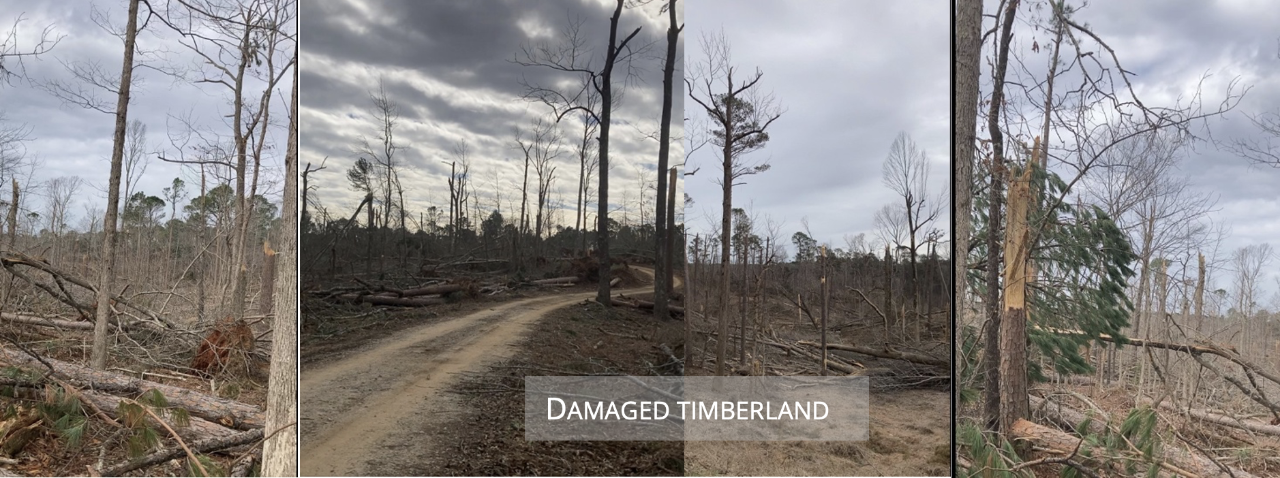
Salvage contracts were awarded to private vendors beginning in May 2022 to meet the following objectives:
- Rehabilitate public, state forestland through salvage timber sales.
- Capture value from dead, dying, and severely damaged trees.
- Add additional jobs to the timber and forest industry.
- Generate revenue for the local economy.Improve forest health in the affected areas.
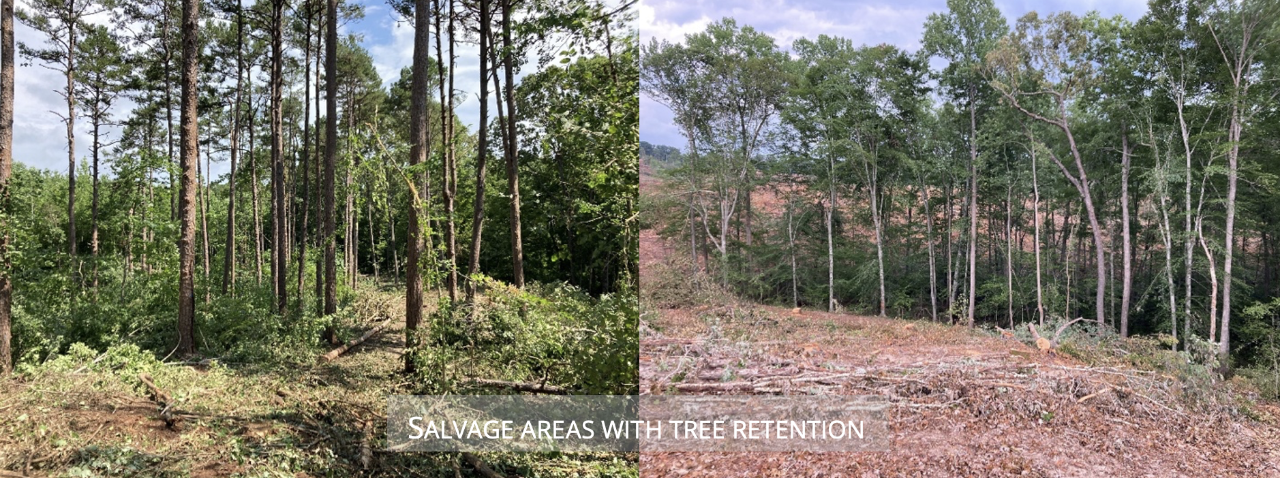
Salvage operations are progressing as planned with the following accomplishments current as of January 31, 2023:
- Completed 6 of 10 sale areas.
- Salvaged 27,365 tons of hardwood sawtimber and 10,954 ton of hardwood pulpwood.
- Salvaged 13,391 tons of pine sawtimber and 6,406 tons of pine pulpwood.
- Collected $1,118,000 in revenue.
All salvage sales were conducted through a sealed bid process and bid on a per ton (pay as cut) basis. Sale boundaries encompassed visibly damaged trees. Adjacent areas accounting for less than 5% of the total sale area were also included, including areas with less noticeable damage and areas. All affected areas provided vectors for an influx of pathogens and pests, creating future forest health risks. Comparing the salvage prices received to historical prices from 2018-2022 at Natchez Trace State Forest, TDF received approximately 50-60% of fair market value for hardwood sawtimber and approximately 25-35% of fair market value for pine sawtimber. The significant difference between hardwood and pine prices is attributed to the lighter weight of pine species compared to hardwood. Percentages for hardwood and pine pulpwood compared to fair market value ranged from 65-75% of value.
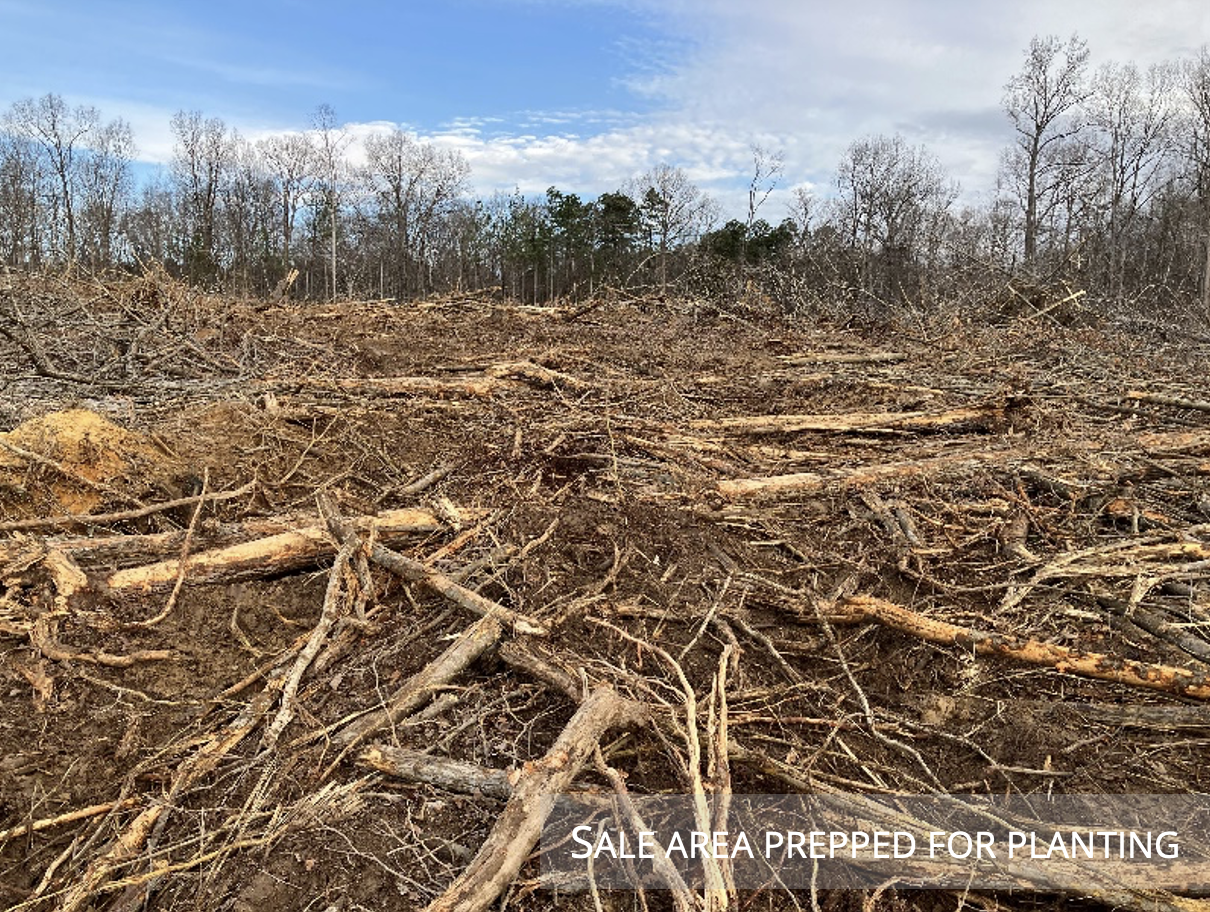
The timber sales are just the first phase of the salvage operation with proper reforestation of the harvested sites as the critical next step. Natchez Trace State Forest is widely known as a quality producer of both hardwood and pine timber. The map on the following page identifies the affected areas by species type. Sale areas that were composed of hardwood species will be allowed to naturally regenerate back to high quality stands of hardwood. Pines salvage areas will either be replanted with pine seedlings from the Division’s East Tennessee Nursery or allowed to naturally regenerate back to hardwood. These decisions will be based on sound, scientific forestry practices and strict adherence to the Sustainable Forestry Initiative (SFI) third party certification processes. Simply stated, the pine sites better suited for pine management will be planted back with pine and sites more advantageous to hardwood management will be regenerated naturally. No conversion of native forest type cover to another forest type will take place.
The final and potentially most important aspect to this project is preparing the sites for future success. Kudzu is a major invasive plant problem in West Tennessee and Natchez Trace State Forest and is currently found in the salvage areas. With the trees removed, increased sunlight will reach the forest floor and provide an ideal habitat for this exotic, invasive species to take over. Plans are being developed to combat this problem and will likely begin this summer after the salvage operations are complete and kudzu is no longer dormant. This will be a significant undertaking at a scale TDF has not been tasked with before. Herbicide application will be utilized for kudzu control and all standards required by TDF’s SFI certification, label requirements, and chemical application plans will be strictly followed. Aerial applications will be communicated with visitors and neighboring residents. The reforestation plan will be finalized once salvage operations are complete.
Contact
Vacant, State Forest Supervisor, (contact District Forester in lieu of)
465 Parsons Road
Wildersville, TN 38388
(731) 968-3214
Jonathan Vonesh, State Forest Forester
465 Parsons Road
Wildersville, TN 38388
(731) 307-3500