Long-tailed Duck
Clangula hyemalis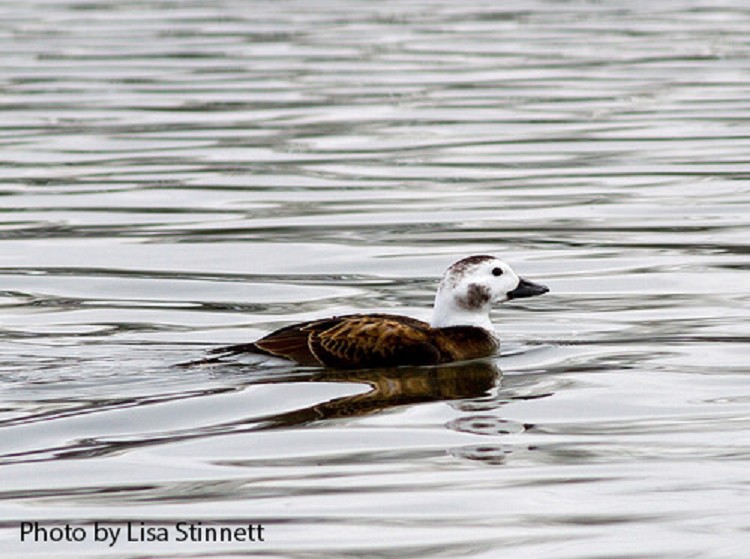
Description
The Long-tailed duck is a true arctic species that breeds in the tundra and taiga regions of the world. Once known by the former name of “Oldsquaw,” this long-tailed sea duck is quite the talker, emitting an almost constant chatter. A stunning duck, he is the only duck that undergoes two complete molts plus an eclipse and is the only duck to wear his breeding plumage in winter.
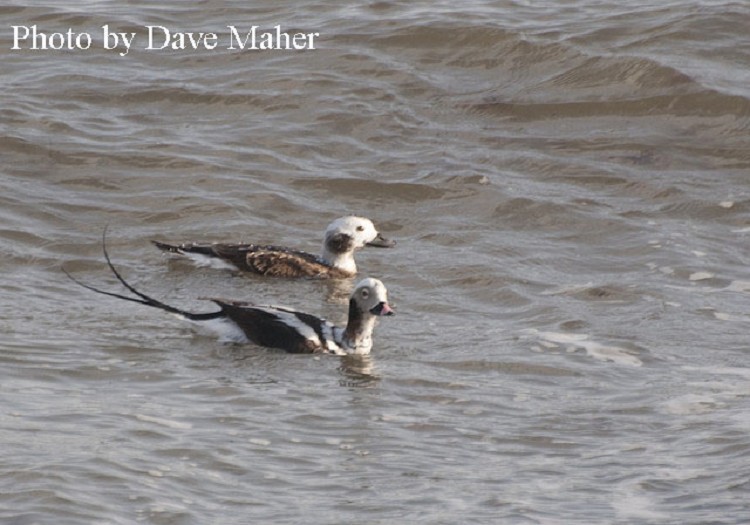
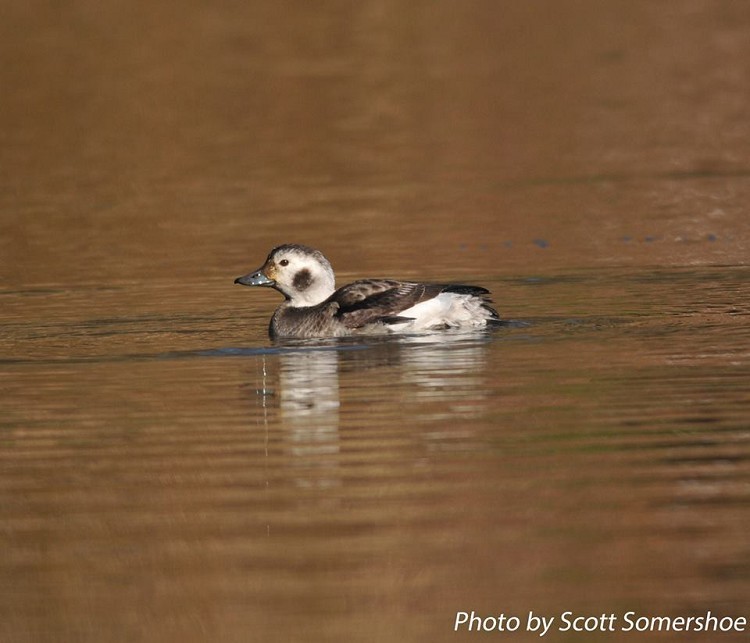
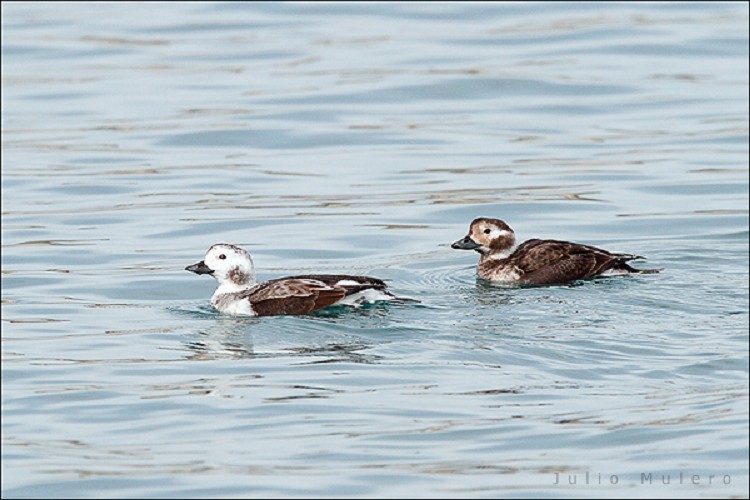
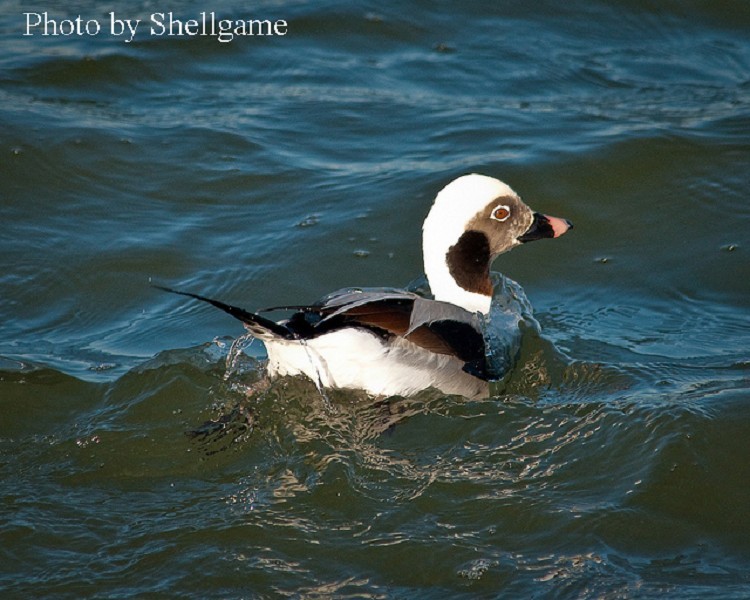
The Long-tailed duck is a medium-sized, heavy-bodied sea duck with a small bill, round body, and short, pointed, dark wings. Males have a long, pointed tail, and females have a relatively short, pointed tail. Both sexes have white underparts. In winter, the male has a dark cheek patch on a white head and neck, a brown breast, and a pink band on a dark grey bill. The wintering female Long-tailed duck is similar but has a dark crown and brown back and lacks the pink band on the bill. In flight, both sexes show dark wings and much white. Long-tailed ducks fly in clumped, irregular, small flocks. Individuals have an erratic, rocking, side-to-side, rapid movement.
Length: 16.5 inches
Wingspan: 28 inches
Weight: 1.6 lbs
Voice: Talkative vocal duck. Male has a melodious yodeling call - ‘ow-owdle-ow’. It can be heard at great distances. Females make a soft grunting quack.
Similar Species: Northern Pintail – has the long tail but lacks the white face patch and pied pattern. The male pintail has green secondary feathers. Harlequin Duck – female has brown flanks and a small, round spot on the head.
Habitat: In Tennessee, Long-tailed ducks can occasionally be found on deep freshwater lakes.
Diet: Insects, crustaceans, fish roe, vegetable matter, mollusks
Nesting and reproduction: There are no known records of this species nesting in Tennessee.
Status in Tennessee: The Long-tailed duck is an uncommon migrant in early spring and late fall, occasionally found in winter in Tennessee.
Best places to see in Tennessee: Nickajack Dam, Paris Landing State Park, Big Sandy Unit of Tennessee NWR, Percy Priest Lake, TVA Lakes

Fun Facts
- Long-tailed ducks can dive to impressive depths of 195 feet.
- Long-tailed ducks are the only duck that goes through 2 complete molts plus an eclipse plumage.
- Unlike other ducks, the Long-tailed duck wears its breeding plumage in winter.
- Obsolete English Names: Oldsquaw
Photos
Sick and Injured Wildlife
