Trumpeter Swan
Cygnus buccinator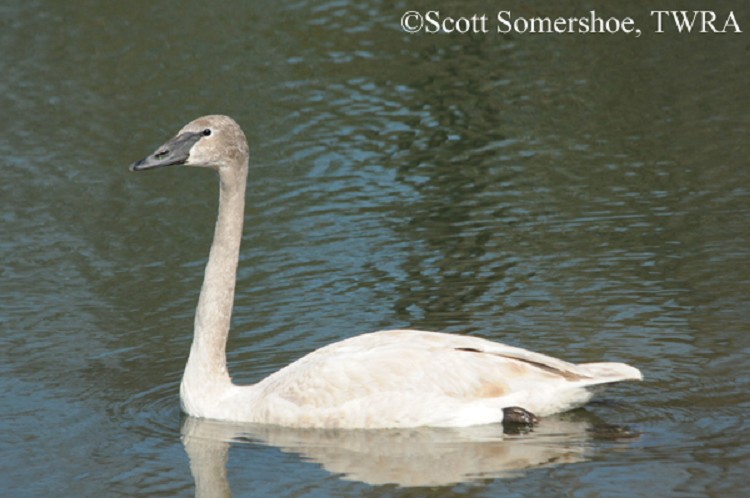
Description
The Trumpeter Swan is the largest waterfowl species in North America. It was once abundant and ranged across the northern prairies of North America, but was nearly driven to extinction by the end of the 19th century due to unregulated hunting and the millinery trade (swan feathers were popular in ladies' hats and made the best quill pens). Due to intensive reintroduction efforts in the Midwest, the species is making a comeback.
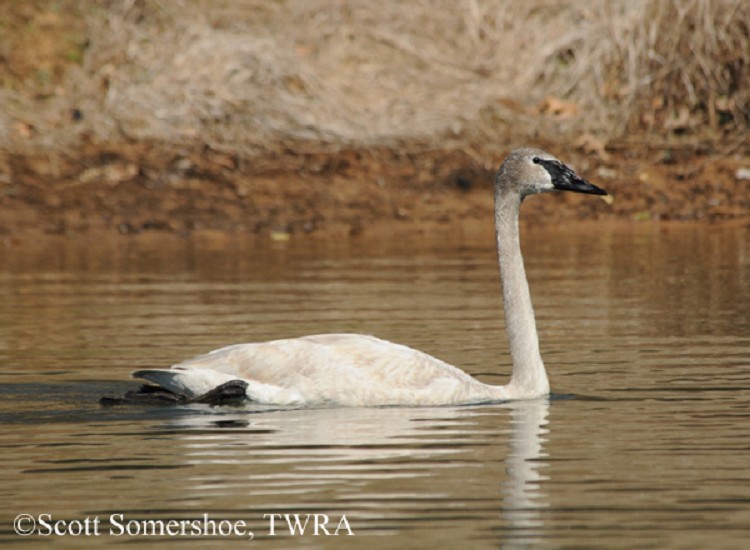
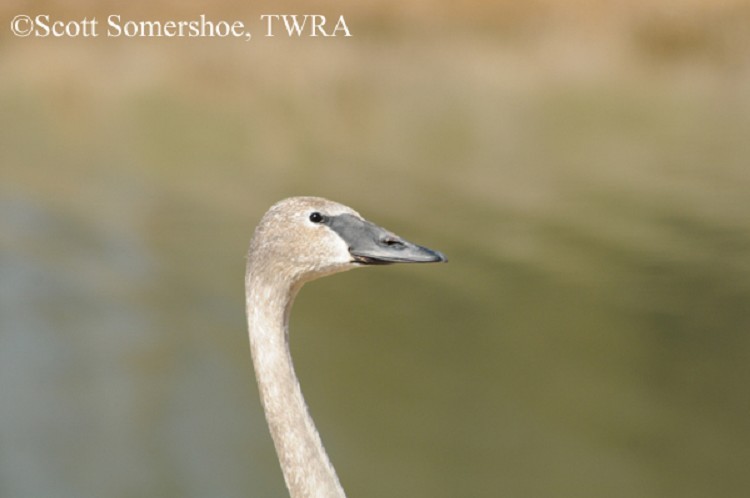
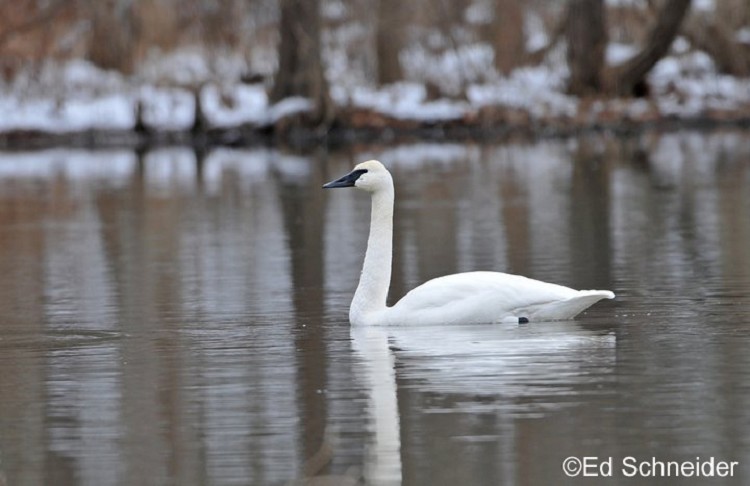
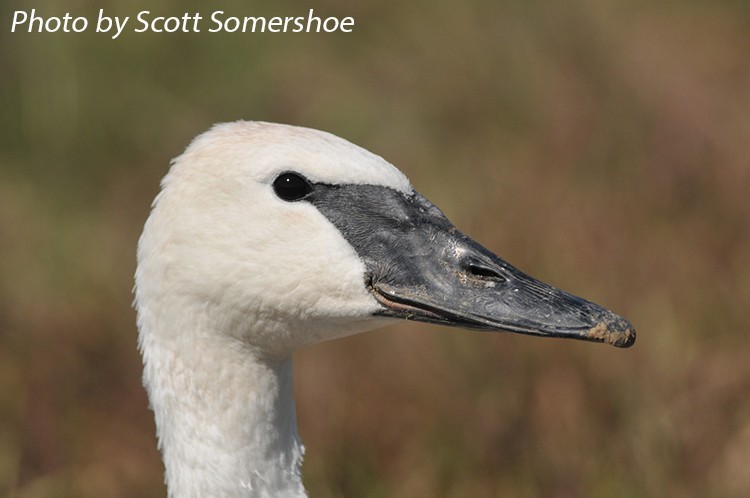
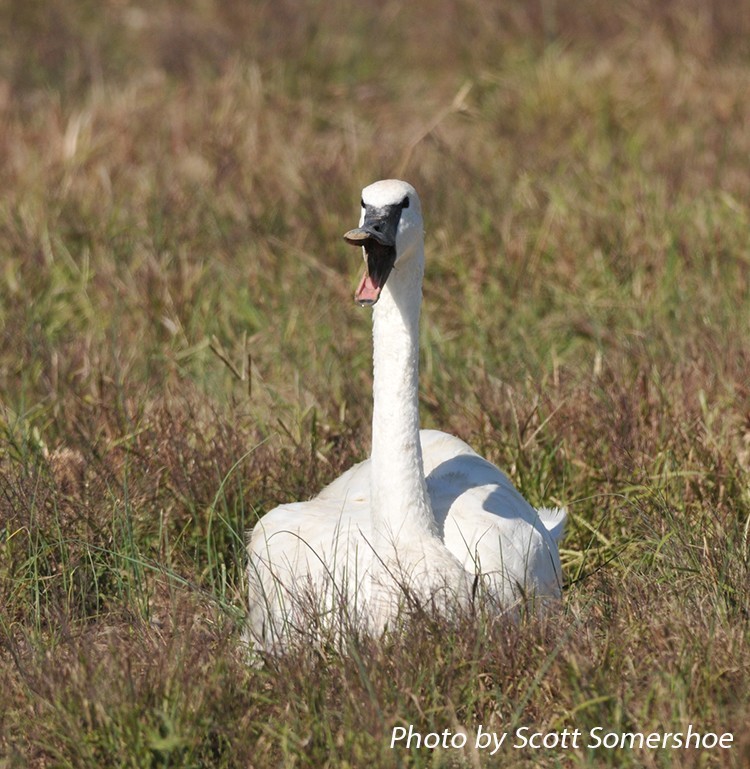
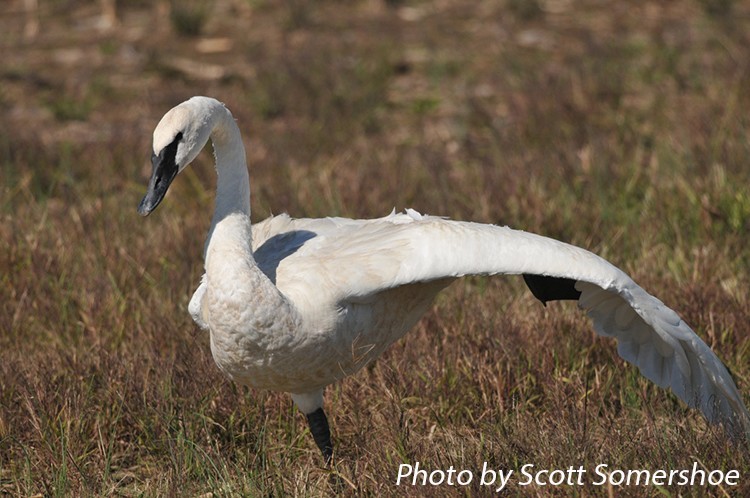
This pure white swan has a long, straight neck and a long, straight, flat, black bill. Males and females look alike. Though still a very rare bird in Tennessee, as the eastern population continues to increase, sightings are expected to increase. It is illegal to hunt any species of swan in Tennessee. Immature birds (August - December) are dirty white overall; legs gray-pink, turning yellowish gray to dull black, and bill gray-black at the base, pink towards the tip, turning completely black over time.
Length: 60"
Wingspan: 80"
Weight: 23 lbs.
Voice: The name of this swan comes from its deep trumpeting call.
Similar Species: Tundra Swans are rare migrants and winter residents in Tennessee, and though much smaller, are very difficult to distinguish from Trumpeter Swans. Mute Swans have a curved neck and an orange bill. They were introduced from Europe and are uncommon in Tennessee, but generally occur on farm ponds rather than large bodies of water. Snow Geese are smaller and have black wing-tips, shorter necks, and a pink bill.
Habitat: Winters in lakes, streams, springs, rivers, and reservoirs.
Diet: Aquatic plants, seeds, tubers, grains, some mollusks, and arthropods.
Nesting and reproduction: The Trumpeter Swan has never been known to nest in Tennessee.
Status in Tennessee: Trumpeter Swans are extremely rare in Tennessee, but there have been several records in the past 10 years.
Best places to see in Tennessee: Tundra Swans are rare throughout Tennessee. Lauderdale Waterfowl Refuge may be the best location in West Tennessee for winter Tundra Swans.
Fun Facts
- There are now three separate populations of Trumpeter Swans: the Pacific Coast Population breeding in Alaska and western Canada; the Rocky Mountain Population wintering primarily in the Red Rock Lakes National Wildlife Refuge; and the Interior Population, which includes all Trumpeter Swans breeding east of the Rocky Mountains. It is this population that is the product of intensive reintroduction efforts and the source of any Trumpeter Swans found in Tennessee.
- Restoration efforts have suffered numerous setbacks, including lead poisoning, power line collisions, and illegal shooting. In Tennessee, Trumpeter Swans can be illegally shot as they can be misidentified as Snow Geese. It is illegal to hunt any species of swan in Tennessee.
- The oldest known Trumpeter Swan was 23 years 10 months old.
Photos
Sick and Injured Wildlife
