TWRA Weekly Fishing Report

Locations
NOTE - The TWRA wants to build a comprehensive report each week of the state’s lakes. If you do not see a report for your favorite lake and you are someone who can provide a report, please contact us at Ask.TWRA@tn.gov and provide us with your contact information.
Trout Tailwater Reports:
TWRA biologists recently completed annual electrofishing surveys on Tennessee’s tailwater trout fisheries. You can read the TWRA summaries of individual lakes below. For more information about the great trout fishing opportunities, tips, and techniques to ensure a great fishing trip, check out the TWRA Trout Fishing Forecast.
Boone Tailwater 2025 Biologist Sampling Report
Tennessee Wildlife Resources Agency (TWRA)
In March 2025, our annual electrofishing survey of the Boone tailwater showed a slight drop in the number of Rainbow and Brown Trout compared to 2024, with total trout numbers on the lower end of what we've seen in previous years. For the first time since we began stocking Cutthroat Trout in 2021, none were found, suggesting that the Yellowstone and Bear River varieties stocked in 2023 and 2024 did not survive well. Despite the lower overall numbers, we saw a record-high number of large (18 inches or longer) Rainbow Trout in 2024, and Brown Trout have made up a growing portion of big fish since 2016. The quality of the fish remains excellent, with a healthy percentage meeting or exceeding our size goals, meaning Boone continues to be a strong fishery for large trout. Additionally, the trout we’re finding are in great shape, with body condition scores at or well above average.
Boone Lake 1/7/26
Forecast Contributor – Colton Chambers – C and C Outfitters
The warm weather has made for some great fishing that should continue through this weekend.
The Striper bite has been so so, with still some schooling fish in the mid-section (TVA Dam area) of the lake. Brown Trout have been very good on shiners and live shad on Planer boards as well.
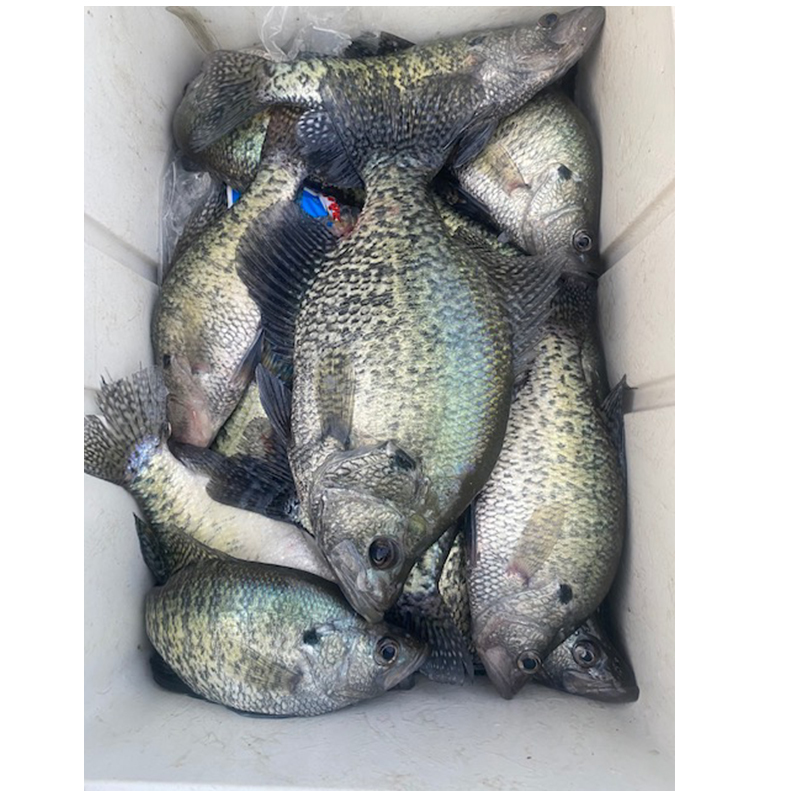
Crappie bite is solid. The fish are everywhere on the depth chart, some as shallow as 5' and some down to 30’, but once you find them, the schools are good. Black & Chartreuse Bobby Garland jigs seemed the most consistent.
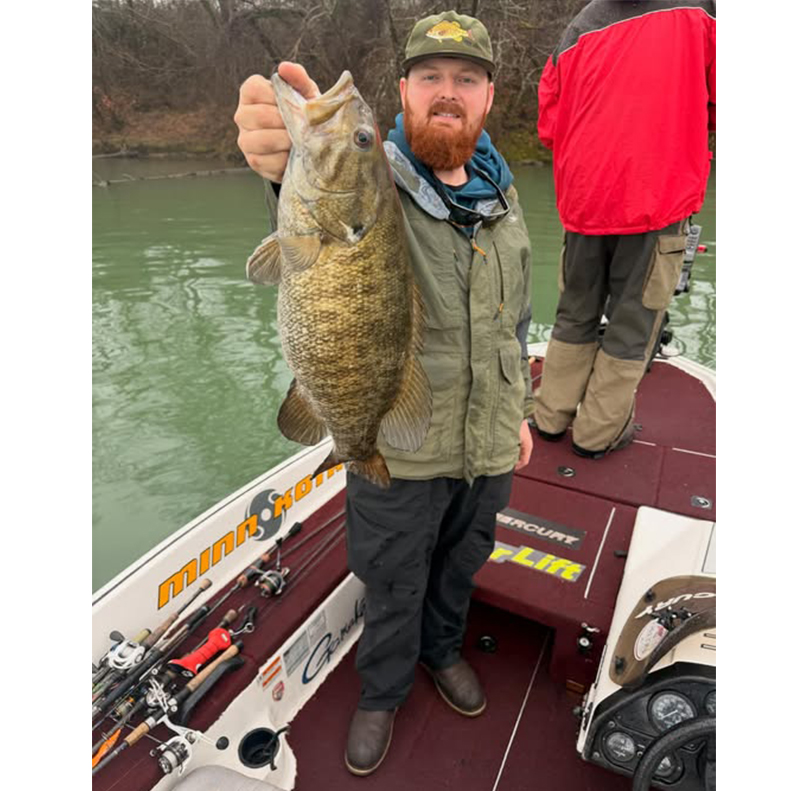
Bass bite is still decent, hair jigs and under spins with small shad colored swim baits. The jig head minnow combo is still producing well for the Forward-Facing Sonar anglers.
Stay safe on the water!
Chip & Colton Chambers C & C Outfitters - 423-707-8821, Facebook - C and C Outfitters
Caney Fork River 2025 Biologist Sampling Report
Tennessee Wildlife Resources Agency (TWRA)
On the Caney Fork, we just had our best sample since 2014. The recent March 2025 electrofishing survey was our first measurement of the fishery’s holdover potential and long-term success since the orifice came back online in 2024. Both Rainbow and Brown Trout abundance were double the 3-year rolling average. It was also the best year in several years for Browns over 14 inches. However, the bulk of our gains have been with 12–14-inch trout, which is expected with conditions only recently improving. Our survey indicates most of the trout were from the Dam to Betty’s Island. We are optimistic about building upon this success as fish thrive with the improved water quality and wider stream widths. Be sure to thank the Army Corps for making the right call, and thank the several hundred anglers who helped by writing in.
Center Hill Tailwater (Caney Fork River) 11/18/25
Report Contributors – Justin Spaulding, Region 3 Fish Biologist
River Conditions- Be sure to check the generation schedule the day of your trip, as forecasted flows often change: https://www.tva.com/environment/lake-levels/center-hill
Although the weather has cooled off, we aren’t out of the woods with water quality on the Caney Fork. We have had improvements in releases with the orifice coming back online in 2024; however, we are dealing with unusually poor water quality this fall. A very wet April/May used up a lot of the cold water banked from last winter. Center Hill Reservoir always thermally stratifies each summer and fall, but the volume of cold oxygenated water fluctuates each year. Stratification prevents the oxygen-rich water near the surface from mixing with deeper water where the dam releases are located. Currently, there is no oxygen in the reservoir below 38 feet deep. In most years, we only get a few weeks of this, but in 2025, we are dealing with months of it. All we can do is wait for the lake to turn over, which is usually caused by cold rain coupled with a few windy days to stir it up. Center Hill Reservoir typically does not turn over until late November or early December. Temperatures from the orifice hover near 57°F while the generators are releasing temperatures around 64-65°F. The orifice is deeper than the generators and pulling from a cooler band of water.
Trout- Fishing has picked up. While some folks are still struggling, we are talking to others who are having great double-digit days. We are getting decent DO at times throughout the day, and the fish seem to be responsive. Nymphs and small jigs should be the ticket. The lake still needs to turn over.
Other- Some walleye, drum, and yellow bass around.
Chickamauga 12/17/25
Report Contributor – Billy Wheat, Follow on Facebook and www.riprapfishing.net
Chickamauga is in winter pool the water temperature is 47-49. The bass are smashing an Arig and as always you can catch them with a Minner scoping. The main channel points and shellbeds are definitely where the big ones are stacking up. If you don’t scope then get the jerkbait and jig out and run the current breaks in 6-12 feet. The DT series crankbait can be awesome this time of year. I will have a glide bait on the deck all winter.
Cordell Hull 1/7/26
Report Contributor – Will Schibig, Region III Creel Clerk
Flow Rates-
Cordell Hull Dam- average outflow of 5,800 cfs per day
Wolf Creek Dam (Lake Cumberland)- average outflow of 4,400 cfs per day
Dale Hollow Dam- average outflow of 400 cfs per day.
Reservoir Conditions-
Reservoir elevation is currently sitting at 499’. Due to low water levels, many ramps and access areas are inaccessible, so plan ahead to find a ramp that is accessible. Surface water temperatures are similar throughout the system with temperatures in the 46–48-degree range. Water clarity is a fair bit better from Gainesboro-upstream, with visibility averaging 6-10’. From Granville-downstream the visibility is relatively poor, 4-6’. Please use caution navigating on the main river channel or entering creeks with the low water conditions. It is very hazardous to stray from the channel this time of year.
Sauger/Walleye- Fishing is good. Anglers are catching good numbers of fish in the Gainesboro area of the reservoir. From Gainesboro upstream to Celina, it is more of a quantity bite with the most success being fishing holes in the river around the 20’ range or trolling plugs in 10-15’. South of Gainesboro to Granville is more of the quality bite. Bottom bouncing jigs of different colors is producing bites around creek mouths in the 30-40’ range. From Gainesboro-upstream, the bite is a healthy mix of sauger and walleye.
Bass- Fishing is slow. The best bite has been on the upper end of the reservoir, fishing mud banks with wood or the mouths of creeks. Fishing shallow jerk baits or dragging jigs in the 2-6’ range has produced some decent quality catches recently on these types of banks
Dale Hollow Tailwater (Obey River) 2025 Biologist Sampling Report
Tennessee Wildlife Resources Agency (TWRA)
The Obey River, below Dale Hollow Dam, fall 2024 sample was a slight improvement over the rolling 3-year average. We saw improvements in both our Rainbow and Brown trout samples. We have not changed any regulations, but the Corps has been more sensitive to tailwater water quality in the last 18 months, so perhaps that is our boost.
Dale Hollow 12/17/25
Report Contributor, Will Schibig, Region III, Creel Clerk
Reservoir Conditions-
Dale Hollow Dam is generating 550 cfs of outflow per day, on average. The reservoir elevation currently sits at 636’. The US Army Corps of Engineers have publicly mentioned the increased need for electricity this time of year, and that the reservoirs in the area could possibly continue to drop in water level. Keep an eye on your favorite ramps to determine if they are accessible for launching your boat before you go out next. Surface water temperatures are currently in the high forties’ reservoir wide. Water clarity is good on the lower end of the reservoir, with visibility ranging in the 12-17’ range.
Bass- Fishing is good. The winter bite is in full swing. Smallmouth are being caught reservoir-wide on various presentations. Smallmouth are being caught on live bait near the bottom on gravel flats near a channel drop in the 20-30’ range. Live bait fisherman are also catching smallmouth with shiners along main channel bluff walls, targeting the points, rockslides, treetops, or the transition zones. Anglers are catching bass dragging jigs on main lake gravel points with chunk rock mixed in in the 20-30’ range. You can drag a jig on steep chunk rock banks at the halfway point of creek arms in the 20-30’ range for mixed bag results as well.
Crappie- fishing is decent. Anglers are catching some crappie off deep brush piles in the 25-30’ range, reservoir-wide, with jigs and minnows. You can find suspended crappie in big creek arms around flats near a channel. Fish could be suspended anywhere from 15-30’ if baitfish are nearby.
Sunfish- fishing is decent. Some big bluegill are being caught on deep brush piles with red worms in the 35-40’ range.
Douglas Lake 12/10/25
Forecast Contributor Brad Burkhart – Follow on Facebook
The late fall bite is in full swing folks. The bass have the feed sack on and are fattening up for winter. Target main lake and close by secondary points with a Jerk bait and a-rig. These baits will get you bit right now.
Pay close attention to your depth finder and notice where the shad are. The fall shad migration is key to putting yourself in good position. Most of the bait balls I am seeing are anywhere from 8-15’ deep, so you have to target that zone.
Also, another fun technique I do this time of year is working very well…..TIGHTLINING
I hit main lake points, bluff ends and channel swing banks. The better slope the better it usually is. It’s an awesome way to catch smallmouth and as many of you know the population in Douglas is really growing.
*If you would like to get out and catch some fish and practically have the lake to yourself, give me a shout.
Thanks!! God bless
Brad Burkhart
@bradburkhartprofishing
Fort Patrick Henry Tailwater 2025 Biologist Sampling Report
Tennessee Wildlife Resources Agency (TWRA)
In March 2025, electrofishing surveys on the Fort Patrick Henry tailwater (South Fork Holston River) showed that the number of Rainbow Trout—and overall trout—caught per hour had dropped back to similar numbers in 2021–2023, continuing a general decline that has been happening since 2017. The exact cause remains unclear. Interestingly, while overall trout numbers were down, the number of large (18 inches or longer) Rainbow Trout and other trout increased in 2025, reaching the highest levels since 2020. Also, the fish that were caught were in excellent condition, showing that while there may be fewer fish overall, the ones that remain are in great shape.
Hiwassee River 2025 Biologist Sampling Report
Tennessee Wildlife Resources Agency (TWRA)
The Hiwassee looked typical at our Fall electrofishing sample in 2024, just before the Delayed-Harvest Season started. We saw a handful of holdover Browns and Rainbows, but the Hiwassee still struggles with water temperatures in the high 60s and low 70s from the end of August to mid-October. This spring, we saw some quality Brown Trout, and overall numbers were almost identical to the 3-year rolling average. Angler reports suggest the Hiwassee has been fishing great this Spring and should continue that way for a few more months. We received hundreds of comments through the public listening session and video last year and have taken them to heart.
Hiwassee River below Appalachia Powerhouse 1/7/26
Report Contributor - Tic Smith/Southeastern Anglers Guide Service
Water temp – 44 degrees
River is running clear
Variable generation schedules throughout the day
The mild weather has been very good for fishing. Dependable hatches of Blue Wings and midges are hatching every day and there are lots of rising fish. If the water is low in the afternoons the dry fly fishing is excellent.
Suggested flies – for the midges start with zebra midge and a pupa as a dropper both in black or olive. Once fish start rising, try using #20 Adams parachutes with a pupa or # 18-#20 soft hackle dropped below it. For The baetis, the same type set up will work but you can switch to a very small, unweighted pheasant tail as a dropper. Streamers can be very effective at this time of year. If turbines are off, a wooly bugger in black or olive is hard to beat. If fishing when the turbines are off, you can upsize to a larger streamer of your choice. Junk flies like squirmy worms and mop flies will also work and there are days when you really need these! Be sure to check the TVA Lake Levels report before wading or boating. Apalachia is the lake to click on, not Hiwassee.
Kentucky Lake 1/7/26
By Steve McCadams, Professional Guide/Outdoor Writer (stevemc@charter.net)
MILD WEATHER AND LOW LAKE LEVELS CONTINUE
Kentucky Lake’s winter fishing scene continues to see low and stable lake levels hanging around. Not much rain has fallen in the region this winter and that means very little runoff and fluctuation in the reservoir as to its elevation. Usually, anglers are seeing some changes in lake levels throughout the winter but not so the last few weeks or months. The drought conditions linger across the whole region. Presently Kentucky Lake’s elevation is hanging around the 354.7 range. That’s within the normal winter pool elevation neighborhood but the lake just hasn’t fluctuated much all winter.
Watercolor remains clear across the reservoir. Surface temperatures reflect the unusually warm weather we’ve been having as readings are above normal for this time of year and residing around the 48-degree range. Discharge rates through Kentucky Dam have dropped to around 16,000 cubic feet per second (cfs) range. That will change when and if we get thunderstorms or heavy rains.
Pleasant weather has seen the winter fishing scene appeal to above average participation. Several nice days with above average temperatures saw both crappie and bass anglers out in force. There have been a few windy days but there have also been plenty of nice, warm and calm days inviting anglers to test the water.
A few decent stringers of crappie have been taken. Several slabs were reported from anglers using both jigs and minnows in midrange depths of 7 to 13 feet. A few fish were also caught deeper by anglers stalking main lake ledges and targeting the deep sides of the drop-offs where structure could be found in the 16-to-22-foot depth range. Overall, it has been a pretty good winter for crappie fishermen. Not many anglers can recall having this many long spells of above average temps during December and early January.
Bass fishermen have done their share too and landed some hefty smallmouth at times. Anglers are tossing crankbaits on rocky banks plus targeting some pea gravel points for smallmouth. Some are tossing swim baits and finesse baits as they slowly retrieve grubs that entice strikes. The spots have paid dividends at times too as a few fishermen are tying into some 5-pound plus bronze backs during these winter months.
Area boat ramps reflect the winter fishing scene’s surge in popularity lately. Increased numbers of boaters are out and about, filling up a lot of parking spots in what would normally be almost empty lots in the peak of winter. While there have always been a few bass and crappie anglers out on the water during the winter months there has definitely been a surge in activity due to the decent bite underway teaming up with mild weather.
Anglers best take advantage of it while it’s. You never know when the ugly faces a funky February or a mean March will enter the picture.
Nickajack Reservoir 12/06/25
Report Contributor, Nathan Rogers, Region III, Creel Clerk
The weather was much cooler in the morning, with lows in the lower 30s and highs throughout the day, warming up to 48. Current throughout the reservoir has steadied. Water temperatures are dropping throughout the reservoir due to the cooler temperatures. The water levels were normal; the latest depth and discharge rate I have recorded is below. For any discharge or elevation info, check out the TVA Lake Info App. Wear life jackets if planning to go out during high water and heavy current conditions.
Reservoir Conditions
Water Temp: Upper end of reservoir: 53.7 degrees Fahrenheit - Lower end of reservoir: 52.7 degrees Fahrenheit
Water Clarity: Tennessee River (River Channel): 3 feet
Water Level: (as of December 6th) Reservoir elevation: 632.90 feet - Headwater elevation: 636.78 feet
Water Flow: (as of December 6th) Chickamauga Dam: ~ 34718 cfs - Nickajack Dam: ~ 25051 cfs
Observed Species Information
Upper section of the reservoir:
Bass: Small swimbaits and A-rigs casting into current edges, as well as drifting live shiners/jigging minnows in current, were the most successful practices observed. Ned rigs in deeper holes of the channel and ledges also attracted bites. Live shad in these areas was very effective as well.
Lower Section of the reservoir:
Bass: Fishing A-rigs, jerk baits, and swimbaits along grass edges has brought the most success. Lipless crankbaits and ffs minnows are also attracting bites in offshore humps/points away from grass.
Norris Tailwater (Clinch River) 2025 Biologist Sampling Report
Tennessee Wildlife Resources Agency (TWRA)
In March 2025, electrofishing surveys on the Norris tailwater showed that the number of Rainbow Trout caught per hour was within the typical range seen since the protected length range (PLR), or “slot limit,” was put in place in 2008. Brown Trout numbers improved slightly from recent years. The number of trout caught within the 14–20-inch slot (mostly Rainbows) increased again in 2025 to 65 fish per hour—the highest since 2020—and continues to show improvement compared to before the PLR was established. Overall, the size structure of the Rainbow Trout population looked good in 2025, with more fish both within the slot and over 20 inches than in 2024. There was also solid evidence of young, naturally reproducing Rainbow Trout (6 inches or smaller) joining the population in both 2024 and 2025. The Brown Trout population in 2025 showed more diversity in sizes than the previous year, with many more small fish (4 to 7 inches) likely coming from the 20,000 young Brown Trout stocked in November 2024. While the number of Brown Trout within the slot didn’t increase, more Brown Trout over 20 inches were caught, suggesting positive movement in the fishery’s overall health.
Norris Tailwater 12/10/25
Report Contributor – Scott Dalton, Wildlife Tech 1
Fishing has been great with lots of brown trout being caught. The go-to fly is a streamer. It seems the overcast weather is making the fish active and hungry. Good luck and tight lines! Remember to check the flows.
Make sure to check TVA's website https://www.tva.com/environment/lake-levels/norris for the generation schedule and flow rates on the river.
Old Hickory 1/5/26
Forecast Contributor – Noah Cartwright, Region II Creel Clerk
Happy New Year! As 2026 rolls around, the lake is struggling to break some old habits. These past few weeks have been relatively lonely on Old Hickory, making it hard to get a great gauge on just how well things are going. When I’m out, the few folks I’ve been seeing have largely been struggling, and weather conditions have been doing them no favors. Little to no consistency in the weather has kept the already-tough water tough to fish. Water temps over the weekend clocked in around low-mid 40°s, but expect this to change as another week in the 60°s approaches.
Bass: I interviewed my first decent batch of bass anglers in a few weeks over the weekend, to little fanfare. Of any species, bass angling has taken the biggest backseat in these cooler months, and the bite hasn’t proven this wrong. Most folks are struggling to catch anything exciting, if anything at all. If you’re wanting to bass fish on Old Hickory right now, your intuition might be the best thing to follow.
Crappie: Folks out crappie fishing this week were able to bring a couple home, but certainly aren’t having a fish fry. Fishing in 12-18ft of water in brush structure with just straight jigs seemed to consistently get bites here and there. Old Hickory is a big lake with a lot of different options for where to catch your fish, so your angling intuition will be just as, if not more helpful than this report, if you’d like to get out and fish for some crappie.
*Due to a low frequency of pressure/interviews, the species report you just read is a re-run of the previous week*
Sauger/Walleye: Similar to weeks previous, folks out hunting for sauger and walleye are catching fish in numbers, but rarely stocking the live well. Jigging in the channel near the mouths of your big creeks and coves is where everybody who was doing well had been getting their fish. Below Cordell Hull could very well be a hot spot, but I’ve not been there recently enough to say for sure. Off the clock, I was shown a picture of one of the largest, most beautiful sauger I have ever seen, but secrets were not divulged. That fish was caught somewhere between Old Hickory and Cordell Hull dams.
*If a species is not reported on, I have not seen/talked to enough folks fishing or catching that species to give accurate, good-quality advice.
Safe travels wherever you may be going, and a very Merry Christmas and Happy New Year to everyone!
Parksville Reservoir 12/7/25
Report Contributor, Nathan Rogers, Region III, Creel Clerk
The weather was cooler this weekend with lows in the lower 30s and warming to highs around 48. Current throughout the reservoir is normal. Water temperatures are dropping due to the cooler weather, with temperatures reaching into the low-50s throughout the lake. The water levels are at full pool; the latest depth recorded is below. For any discharge or elevation info, check out the TVA Lake Info App.
Reservoir Conditions
Water Temp: 51.2 degrees Fahrenheit
Water Clarity: Upper: 4 ft - Lower: 5 ft
Water Level: (as of December 7th) 828.21 feet
Water Flow: (as of December 7th)
- Ocoee#1 Dam: ~ 0 cfs - Ocoee#2 Dam: ~ 408 cfs
Observed Species Information
Bass: Fishing is fair. Anglers are finding success using live minnows on tapering points where fish are active on the surface. Others are finding bites upriver, throwing jerk baits and smaller crankbaits along the banks. Crankbaits and jerk baits also attract bites over shallower flats and ledges as well.
Yellow Perch: Most anglers are finding success in the riverine area of the reservoir using live minnows as well as small jigging minnows along the bottom
Percy Priest 1/5/26
Forecast Contributor – Noah Cartwright, Region II Creel Clerk
Happy New Year! It’s hard to believe 2025 came and went so quickly, but it did, and I saw lots of great fishing days throughout the year. While it unfortunately ended on a rocky note as far as the bite is concerned, there’s plenty of opportunity for great fishing in the new year. Things are off to a rocky start on Priest, as the dramatic weather and subsequent bite never celebrated Christmas or New Year’s. Similar to the past couple of weeks, the bite is equally slow and dramatic; some folks are having terrific days, lots of others terrible days. Water temps are hovering around the mid-high 40°s, but with the weather expected to warm in the coming week, the water should be warm too. The water is sitting at full winter pool at the time of writing. With rain expected later in the week, levels may rise.
Bass: Bass angling has largely remained tough for most folks that I’ve talked to, but this past weekend’s tournaments saw several bags over 16Ibs and at least one over 20. Folks that were catching good fish were trending toward shallower water, 5ft and under, but plenty of success was being had in the 8-12ft range. Any kind of rock structure and drop-offs, and even woody structure in the deeper sections, were holding fish. Jerk baits and A-rigs stood out among the anglers that I spoke to, catching decent-sized fish.
Crappie: I haven’t had a day in weeks where I saw a lot of folks catching crappie, but at least every time I go out, I usually see someone with 15 or so. Most folks have been struggling to secure a good box full of fish, but very few have been skunked. The majority of success that I’ve been seeing has been in shallower sections of water, 8-12ft deep around stumps and brush, though some folks have done really well in 6 or so feet in fallen trees. Jigs and minnows both have caught fish, but straight minnows on a hook has been stocking the box the quickest, still.
*If a species is not reported on, I have not seen/talked to enough folks fishing or catching that species to give accurate, good-quality advice.
Safe travels wherever you may be going, and a very Merry Christmas and Happy New Year to everyone.
South Holston Tailwater 2025 Biologist Sampling Report
Tennessee Wildlife Resources Agency (TWRA)
In March 2025, electrofishing surveys on the South Holston tailwater showed mixed results: Brown Trout numbers dropped slightly, while Rainbow Trout numbers increased significantly. The suspension of fingerling Rainbow Trout stocking back in 2021 continues to show no negative impact on their population. A major highlight from 2025 was the strong rebound in the number of trout within the 16–22 inch protected length range (mostly Brown Trout), the highest level seen since 2007. Large Brown Trout (22 inches or more) also reached their best numbers since 2006. The recent decline in overall Brown Trout numbers since 2022 may have helped reduce competition for food and space, allowing more fish to grow into the protected slot. While Brown Trout populations have often shown overcrowding of small fish (6–11 inches) in past years, especially since 2010, the 2025 survey revealed a healthier balance of sizes, with more fish in both the protected range and just below it (12–15 inches). Additionally, the average body condition of Brown Trout, measured by relative weight (a value to determine if the fish is in ideal shape for its size), has steadily improved since 2021, the best average condition seen in over two decades, indicating that the fish are not just larger, but also healthier.
Tims Ford 12/12/25
Report Contributor -JC Stephens, Region II Creel Clerk
Reservoir Conditions
Elevation Avg: 875ft (Down 1ft from last week)
Summer pool: 888ft
Winter pool: 875ft
Avg. Discharge Hourly: 235cfs (Has been over 3000cfs in the mornings)
Water Temp Avg: 50℉
Water Visibility Avg: 8.9ft / 2.7M
Moon phases: Next New Moon: 1/18/2025 - Next Full Moon: 01/03/2026
Fishing Conditions:
BLACK BASS: (Largemouth, Spotted, Smallmouth)
Black bass fishing has been good lately. They have been found around 20ft in the main parts of the lake near deep rock ledges, but most are found under 10ft closer to rocky banks upriver. Many anglers use soft plastics on a Texas rig or a Carolina rig, or they could use crankbaits or Alabama rigs. Evening has seemed to be a better time to catch them.
CRAPPIE: (Black Nose, Black, White)
Fishing has been slow. Some anglers are finding them in a range of 10ft to 20ft deep, and some people are casting at brush piles and off bridge pylons. Many people use jig heads with various colors of plastic minnows and live minnows to potentially trigger a bite.
WALLEYE: Low light conditions are best for walleye during the winter months. They may be found in deeper water throughout the day, but will be shallow for feeding around dawn and dusk. They should be schooled together at this time, in deeper parts of the lake, and they should be located near points. You could try using different crankbaits, ned rigs, jigging spoons, or even minnows to get them to bite. A lighter color has also been seen to work better in low light conditions.
TEMPERATE BASS: (Striper, Hybrid, White Bass)
Hybrid/ striper fishing has been slow lately. Anglers have been trolling the main lake in 20ft-30ft of water to get these fish to bite. Some anglers have had luck casting on top of bait fish. An angler has also mentioned seeing them near a flock of birds in the water. An idea of what to throw at them would be a topwater spook, crankbait, umbrella rig, or bucktail jig.
CATFISH: (Channel, Blue, Flathead)
Catfish can be found in deep channels during the winter months. You may have some luck with brush piles or ledges around 20ft – 30ft deep or deeper. On warmer days, they might move up shallow. Evenings on sunny days this winter could be the most beneficial time to catch them. Most people fish with shrimp, chicken livers, live and cut bait, leaving the bait to sit on the bottom.
Watauga Lake 1/7/26
Forecast Contributor – Colton Chambers – C and C Outfitters
Bass fishing remains good. Most of the damage is being done with Forward Facing Sonar, jig head minnows and Alabama rigs. Still some nice bass to be caught in the 10-15' water column and hair flies and small 3" Swim baits.
Crappie fishing has been slow, but if you put in the time in the 15 -25 ' range with small minnows, there are some decent numbers to be caught.
Seasonal Trout stockings are starting and it's a great way for the family to have some fun off the bank in the Rat Branch area. Try a #6 hook and a couple of split shots with corn, power bait or night crawlers. Remember your Trout Stamp on TWRA.GOV or at your licensing agent. It's a 7 fish limit per person.
Lake Trout trolling is very slow; it's been long hours with very few fish.
Stay safe on the water!
Chip and Colton Chambers
C & C Outfitters -423-707-8821
Facebook - C and C Outfitters
Watts Bar 12/17/25
Report Contributor, Billy Wheat, Follow on Facebook and www.riprapfishing.net
Watts Bar is in winter pool and the water temperature is 47-49. The scoping bite is fire! Main channel breaks in 5-15 feet are the deal. Jerkbait Arig and Glide bait does it for me but I love a jig so I will keep it on all winter. The 5-10 ft crankbait in Shad and crawfish patterns will get the job done as well. In the shallows the ratltrap and chatterbait will catch them especially if you find grass with bait in it. Shallow crankbaits are must this time of year so get the flat sides out and go catch you some BigNs!
Watts Bar 12/17/25
Forecast Contributor Captain Wallace Sitzes – Follow on Facebook
The crappie bite has been pretty good lately. A lot of fish are scattered around following schools of shad but there's some big white crappie sticking to the trees in 20 - 30 feet of water. Since the water has dropped a lot of the black crappie have pulled off of shallow docks and brush along the bank and are hanging around stumps and brush in creek channels and holes. There's also quite a few roaming around marinas and docks in deeper water. I try to find structure that doesn't have big fish hanging on them because it's usually drum or striper which will make the crappie less aggressive. I've been finding big bass just about everywhere there's giant schools of big shad. Some are on bluffs that drop into deep water but I've also found some big ones gorging back in very shallow water. It's a lot easier to spot them by watching the surface than it is using sonar.
There's some pretty active striper right now on top of sand bars and around deep structure. They can be easy to find by watching the birds. If the birds are just sitting around the fish aren't feeding a lot but when they start clustering up and dive bombing the water it's because fish are forcing baitfish to the surface. Buck tail jigs and spoons work well. Free-lining live shad or bluegill also works well.
The catfishing has been excellent. The flatheads are usually deep this time of year but the big blues are roaming the shallows looking for an easy meal. This can be a great opportunity for bank and dock fishermen to get into some monster blues. Fresh cut shad is king but they will also take other fresh baits like yellow bass or whitebass. You dont have to cast out far because they will get up into just a few feet of water to gorge on shad. Finding them can be as simple as looking for shad jumping back in the coves on a calm day. Shad tend to have winter hangouts so once you find them, they'll most likely be there for weeks in the same spot.
Use heavy gear so you can stop them from heading into structure and wrapping you up. If you just want to catch fish and aren't picky about the species try white grubs or swim jigs and cast them through the bait balls. Try different depths and retrieves until you get into some action. There could be anything roaming under those shad including drum, bass, walleye, crappie, striper, yellow bass and white bass. Even the blue cats will hit the jigs if you drop them down through the wall of shad.
Watts Bar Reservoir 1/5/26
Forecast Contributor – Nathan Rogers, Region III Creel Clerk
The weather is cooler in the mornings with lows in the lower 30’s with highs throughout the day warming up to 61. Current throughout the reservoir is low. Water temperatures are dropping throughout the reservoir due to the cooler temperatures. The water levels are at winter pool; the latest depth and discharge rate I have recorded is below. For any discharge or elevation info, check out the TVA Lake Info App. Wear life jackets if planning to go out during high water and heavy current conditions.
Reservoir Conditions
Water Temp:
- Upper end of reservoir: 46.5 degrees Fahrenheit
- Middle section of reservoir: 46.8 degrees Fahrenheit
Water Clarity:
- Tennessee River (River Channel): 3 feet
Water Level: (as of January 5th)
- Reservoir elevation: 736.89 feet
- Headwater (Ft. Loudoun) elevation: 737.18 feet
- Headwater (Melton Hill) elevation: 736.42 feet
Water Flow: (as of January 5th)
- Ft. Loudoun Dam: ~ 7202 cfs
- Melton Hill Dam: ~ 0 cfs
- Watts Bar Dam: ~ 10314 cfs
Observed Species Information
Upper section of the reservoir:
Walleye/Sauger: Jigging live minnows and artificial lures in deeper holes of the main channel, mainly in areas where the river narrows and the current is quicker.
Middle Section of the reservoir:
Crappie: Using live minnows over submerged structure in mouths of creeks/inlets
Wilbur Tailwater (Watauga River) 2025 Biologist Sampling Report
Tennessee Wildlife Resources Agency (TWRA)
In March 2025, electrofishing surveys on the Wilbur Tailwater showed that Rainbow Trout numbers increased noticeably, while Brown Trout numbers dipped slightly. In the lower section of the tailwater, downstream of the Doe River, catch rates remained consistent with past years and showed no impact from the flooding caused by Hurricane Helene in September 2024. In the upper section of the tailwater (above the Doe River), Brown Trout numbers had climbed steadily after 2013, peaking in 2019, but have since declined to pre-2013 levels. Length data from 2025 indicate ongoing natural reproduction by both Rainbow and Brown Trout, and a noticeable increase in large Brown Trout (over 20 inches) in 2025.