East Tennessee Nursery

The East Tennessee Nursery (ETN) is currently open for the 2025-2026 season. Please visit https://store.planttntrees.tn.gov/ to order seedlings now.
Some tree species sell out quickly, so plan ahead and order early.
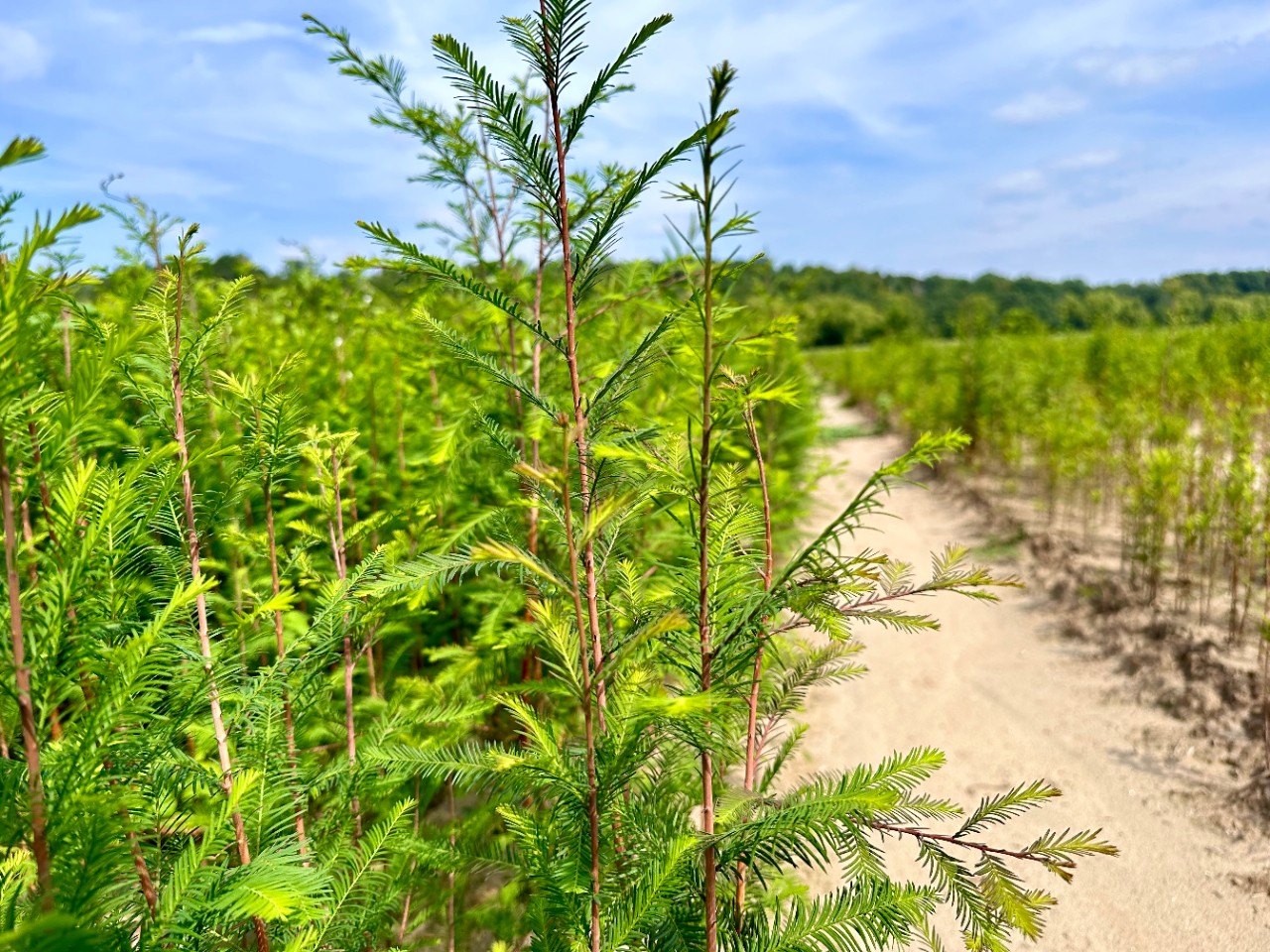
About the East Tennessee Nursery
The East Tennessee Nursery supports reforestation across the state by cultivating millions of native trees and shrubs each year and offering them in bulk and at affordable prices to individuals and to public, nonprofit, and private organizations.
The nursery is situated on approximately 500 acres next to the Hiwassee River in Polk County. Its dedicated staff manage the land and nursery operations, and the planting, cultivation, and harvesting of millions of seedlings that will be part of our state's future forests.
It produces a variety of tree and shrub seedlings adapted to growing conditions found in Tennessee. They are available for sale to landowners for reforestation, wildlife habitat enhancement, erosion control, and other conservation purposes. Approximately 40 acres at the nursery are used for this purpose each year. The remaining seedbed area is planted in cover crops to ensure the long-term productivity of the nursery soil.
The seed used to produce the annual crop of tree and shrub seedlings is either purchased from commercial seed vendors or collected by Division of Forestry personnel from seed orchards and seed production areas or from wild stands. Regardless of the source, all the seed used is selected to produce seedlings that will perform well under the growing conditions commonly found in Tennessee. Nearly all seed originates from the area bordered in red on the map.
- Order Online - Beginning September 1, 2026 at 9:00 AM Eastern (8:00 AM Central)
For questions regarding seedling orders, call (877) 868-7337 or email Plant.TNTrees@tn.gov
The Tennessee Code Annotated authorizes the Division of Forestry to develop seedling nurseries and a tree improvement program to assure the long term availability of seedlings to Tennessee landowners and the genetic improvement of tree seeds:
TCA 11-4-601. Reforestation Programs: The division shall acquire, develop, and administer forest tree seedling nursery sites and facilities as necessary to assure the long term production of seedlings in sufficient quantity and quality for purposes of reforestation, and shall maintain a tree improvement program to assure the continued development and production of genetically superior tree seed.
The Division of Forestry’s history with reforestation began decades prior to this statutory acknowledgement of the need for a reforestation program. Farming practices prior to and during the 1930’s and 1940’s left many areas in Tennessee with extensive gullied areas especially in west Tennessee. J.O. Hazard, the second State Forester for Tennessee, was convinced that “gullies could be erased from Tennessee’s landscape”. These dynamics framed one of the earliest conservation issues facing Tennessee’s natural resource community – soil conservation through tree planting.
Tennessee’s first large scale reforestation effort occurred during the Civilian Conservation Corps period (1934-1942). This effort resulted in millions of trees planted in pursuit of State Forester Hazard’s vision of “erasing gullies from Tennessee’s landscape”. Seedling demand became so great that several nursery sites were established throughout Tennessee. In 1947 the State purchased the 310-acre Pinson Nursery site in Madison County, increasing production and the consolidation of seedlings from several smaller nursery sites across the state. In 1959 the Division of Forestry, in cooperation with the University of Tennessee, established a tree improvement program to improve the genetic quality of seedlings produced at the nursery.
Tennessee’s reforestation program has adapted over time to address the evolving conservation issues brought about by a growing population. In 1983 the Division became members of the Auburn University Southern Forest Nursery Management Cooperative as a means to better access technical information and leverage nursery industry support. In 1989 a new nursery began seedling production in the community of Delano in Polk County. In 1999 the Division joined the North Carolina State University Cooperative Tree Improvement Program, allowing otherwise unobtainable strides in securing genetically improved loblolly pine material. In 2009 land was purchased in Chester County that will enhance continued tree improvement activities. Each of these milestones represents significant improvements in the Division’s reforestation program.
Since the 1950’s, the Division of Forestry’s reforestation program has produced over 1 billion tree seedlings. These seedlings have been used to drive rural economic activity and address conservation issues from Mountain City to Memphis. Ongoing investments in programs, land, infrastructure, genetics, and technology have positioned the Division to continue helping landowners meet soil, timber, wildlife, aesthetic and water quality objectives and to help support a multi-billion dollar forest products industry. The resulting economic and environmental benefits to Tennesseans are incalculable.
Program Overview
The reforestation programs specified in the TCA are housed within the Reforestation Unit, one of the Division of Forestry’s eight core businesses. The Reforestation Unit is comprised of two programs, nursery operations and tree improvement operations.
Nursery Operations
Nursery operations are responsible for the production, sale and distribution of one and two-year old bare-root, forest tree seedlings. Nursery operations produce an annual crop based on biological cycles of seed germination and seedling growth.
Historically, the Division of Forestry has maintained several nursery locations across the state. Currently, the East Tennessee Nursery in Delano is the only nursery in operation. Depending on seed availability and demand, 5 species of pines and 40 or more species of hardwoods are produced at this facility annually. The nursery currently produces 6 to 7 million high quality seedlings each growing season and serves over 800 customers annually. Seedlings are planted for various reasons, the most significant being timber production, wildlife habitat improvement, and water quality protection.
To support nursery operations, the Division of Forestry maintains membership in the Auburn University Southern Forest Nursery Management Cooperative (AUSFNMC) along with 8 private organizations, 7 other state agencies, and the U.S. Forest Service. The AUSFNMC has proven to be a cost effective investment. The co-op produces and distributes information relevant to the advancement of forest nursery management and provides a forum for the discussion and promotion of issues relevant to forest tree seedling nurseries.
Tree Improvement Operations
Tree improvement operations are responsible for the development, production, harvesting, processing and storage of genetically superior seed. Tree improvement operations are also managed according to biological cycles but the benefits are incremental and accrue over many years. Seed produced by the tree improvement program are used by the Division of Forestry’s nursery operations to produce high quality, genetically superior seedlings. These seedlings are better adapted to survive, grow and produce forest benefits when out-planted on Tennessee’s landscape.
Through the Division of Forestry, the State of Tennessee owns or is involved with cooperative management of 272 acres of seed orchards (100 acres in hardwoods; 172 acres in softwoods) and 258 acres of genetic progeny tests (132 acres of hardwoods; 126 acres of softwoods). These orchards and tests are located all across the state. The largest concentrations of orchards/progeny tests are found at the East Tennessee Nursery (ETN) in Delano and the Pinson Reforestation Complex (PRC) in Pinson. In 2009 the State bought property in Chester County to establish the West Tennessee Tree Improvement Center (WT-TIC).
To support tree improvement operations, the Division of Forestry maintains membership in the North Carolina State University Cooperative Tree Improvement Program. This cooperative consists of 21 private and 5 public organizations that share the cost of the breeding and testing activities associated with genetic development. In return, each full member gets equal access to the genetically-improved material developed through their combined efforts. This valuable material is used to establish seed production orchards and the resulting genetic gains are passed on to landowners as fast-growing, disease resistant seedlings.
Economic Benefits
Seedlings grown by the Division of Forestry help supply the raw materials needed to support Tennessee’s forest products industry, a $22.8 billion dollar economic engine providing over 148,000 jobs across the state. In 2010, 4.6 million pine seedlings and 1.5 million hardwood seedlings were grown, representing over 14,000 acres in tree planting. The vast majority of the pine seedlings will be planted for fiber and timber production. The value to landowners of these pine plantings (11,000 acres) when mature is conservatively estimated to be over $22 million in current dollars. Most of the hardwood plantings (3,400 acres) will be tailored to provide environmental benefits; most important being streamside buffers and wildlife habitat. Additionally, over $ 1 million is estimated to have been paid to tree planting and other forestry services vendors in establishing these plantings. Much of the economic activity generated through the Division of Forestry’s reforestation program occurs in Tennessee’s rural landscape, providing much needed jobs and revenue.
From a timber perspective, landowners that plant Division of Forestry pine seedlings today receive a 25% gain in productivity as compared to seedlings available 30 years ago. Tennessee’s tree improvement program is expected to continue achieving a 1-2% annual gain in pine volume production for the next decade or longer. As a result, landowners planting Division of Forestry pine seedlings 10 years from now can potentially receive an additional $200 or more per acre at final harvest than they would today.
Environmental Benefits
Timber production and the associated economic activity is a well documented and acknowledged benefit of forests. Forests also provide other “non-traditional” benefits, including water quality and quantity protection, habitat for wildlife, habitat for rare and endangered plants and animals, opportunities for recreation, aesthetics, carbon sequestration, and open spaces.
Tennessee’s Forest Resource Assessment and Strategy documents the importance of these non-traditional forest benefits and the threats that will impact our state’s forests to sustain such benefits.
More specifically, Tennessee’s assessment emphasizes the role forested watersheds play in protecting, maintaining and enhancing public use water supplies. The Assessment identified public supply watersheds as having the highest priority in the state to receive professional forest management assistance. These watersheds are greater than 50% forested, face significant threat to development and provide most of the public water supply for at least one water intake. Therefore, these watersheds depend on healthy forests and riparian buffers for quality water yield.
Strategies are underway to identify landowners who, through planting forested riparian buffers, will ensure these watersheds continue to produce clean, abundant water for public use.
The Tennessee Forest Resource Assessment identifies 53 separate strategies to address threats, of which 11 strategies (21%) are dependent on a supply of quality seedlings for implementation (table 1). The majority of the 12 reforestation strategies are designed to enhance or maintain non-traditional forest benefits, with protection of public water supply having the most direct impact on quality of life. The Division of Forestry’s reforestation program is uniquely positioned to produce the genetically improved seed and seedlings specifically tailored to allow efficient and effective tree planting practices associated with implementing these strategies.
Strategies
- Develop a marketing campaign emphasizing the quantity/quality of Tennessee’s hardwood resource.
- Develop a set of silvicultural practice modifications (pine and hardwood) that provide opportunities to improve non-game wildlife habitat.
- Develop and support initiatives to establish or maintain forest cover that protects public water supply watersheds and streams.
- Develop or support initiatives to maintain or restore historic diversity within ecoregions by maintaining or reestablishing native forest tree species.
- Diversify the age structure and species composition of the forest by utilizing science based forest stand regeneration practices.
- Ensure landowners receive applicable technical assistance in identifying opportunities to create, enhance and maintain riparian buffers.
- Establish forested north-south corridors at the landscape scale with wider riparian zones and mixed hardwood corridors.
- Explore the feasibility of developing storm water mitigation programs through urban forestry.
- Implement and support Farm Bill initiatives and other programs that enhance water quality and aquatic habitat benefits by establishing or improving forested riparian buffers.
- Incorporate wildlife friendly practices and activities into appropriate federal and state cost-share and incentive programs.
- Increase the awareness of the benefits of forested watersheds and wetlands for providing sustainable and quality drinking water supply.
- Stop and reverse the spread of non-native pests in both urban and rural areas.
Tailored Markets
The Division of Forestry is often better positioned to serve the needs of a variety of landowners than private industry. Factors such as location, species preferences, delivery costs and order size often eliminate private sector nurseries from serving these customers well. While these purchases individually represent small tree planting efforts, collectively, they contribute significantly to the fiber supply of Tennessee’s forest industry or, in the case of maintaining water quality through riparian plantings, to maintaining quality of life for many Tennessee citizens.
Other examples of tailored markets include the production of larger size bareroot hardwood seedlings for use in wetlands mitigation projects and other reforestation efforts of the Tennessee Wildlife Resources Agency and the Tennessee Stream Mitigation Program. Similarly, larger seedlings are produced for use in supplemental plantings in several southeastern national forests. Another example of a specialized service provided by the Division of Forestry is the development of adapted seed sources for various non-timber species used in riparian and wildlife buffer plantings and the production of seedlings for this purpose. The Division’s nursery personnel have also worked closely with representatives of the Office of Surface Mines to produce seedlings needed for mine reclamation plantings under the Appalachian Regional Reforestation Initiative. Further examples of tailored services include developing specialized seed sources and seedlings for the production of loblolly pine sawtimber and white and Virginia pine Christmas trees in Tennessee.
Educational/Research Programs
Division of Forestry seedlings are planted through various school programs, Arbor Day and Earth Day activities, the Tree City USA program and other outreach efforts. Division of Forestry seedlings purchased for these activities allow citizens of all ages to learn about the benefits of trees, forests and forest resources. As this awareness builds, the trade-offs required to conserve and sustain forests will be more acceptable, allowing society to benefit from a broader scope of forest resources.
University and other forestry professionals routinely use the Division of Forestry’s nursery to conduct research critical to forestry in the southern U. S... University of Tennessee, Auburn University and U. S. Forest Service researchers have all made use of the East Tennessee Nursery to test various theoretical hypotheses. Screening studies conducted under the auspices of the Auburn Southern Forest Nursery Management Cooperative have been used to obtain data that may lead to registration of new pesticides for use in forest tree nurseries. Seedlings have been produced at the East Tennessee Nursery for several studies that may one day contribute to the development of a blight resistant American chestnut tree. These research efforts provide information that help nursery and forest managers better address management of Tennessee’s forest resource.
Future
The 2010 Tennessee Forest Resource Assessment identifies numerous threats to our state’s forests, including loss of forestland to other uses, elevated forest health risks due to aging forests, increased occurrence of invasive exotic pests, and uncertain forestland retention due to changing landowner demographics. The core principle to mitigate these threats is to help forest landowners maintain and enhance the forest values they cherish. These values range from growing timber as an investment, to developing favored hunting grounds, to having a quiet place for rest and relaxation. As forests are retained on the landscape, all Tennessee citizens benefit from resulting economic activity, abundant wildlife, cleaner water and air, and unparalleled scenic beauty. Landowners will need access to a reliable supply of high quality, affordable forest tree seedlings to implement many of the practices that enable them to keep forests on the landscape.
The Tennessee Department of Agriculture, Division of Forestry’s reforestation program is uniquely positioned to provide Tennessee forest landowners seedlings that are specifically tailored to meet any reforestation need. This ability to provide seedlings to meet the need of the landowner comes from decades of growing seedlings, establishing seed orchards, cultivating partnerships, improving infrastructure, and research. These efforts have benefited individual landowners through increased timber sales revenues and improved hunting grounds. Society has benefited as well through clean water and scenic landscapes. By nature, forestry endeavors are long term journeys. Often that journey begins by planting a seedling. The Department of Agriculture, Division of Forestry’s reforestation program accepts the challenges required to continue to produce the seedlings needed for the journey.
Seedlings grown by the Division of Forestry help supply the raw materials needed to support Tennessee's forest products industry that in 2015 represented a $24.3 billion dollar economic impact and providing over 101,000 jobs across the state.
In 2010, 4.6 million pine seedlings and 1.5 million hardwood seedlings were grown, representing over 14,000 acres in tree planting.
The vast majority of the pine seedlings were planted for fiber and timber production. The value to landowners of these pine plantings (11,000 acres) when mature is conservatively estimated to be over $22 million.
Most of the hardwood plantings (3,400 acres) will be tailored to provide environmental benefits including streamside buffers and wildlife habitat.
Additionally, over $1 million is estimated to have been paid to tree planting and other forestry services vendors in establishing these plantings.
Much of the economic activity generated through the Division of Forestry's reforestation program occurs in Tennessee's rural landscape, creating jobs and revenue.
From a timber perspective, landowners who plant Division of Forestry pine seedlings today receive a 25% gain in productivity as compared to seedlings available 30 years ago.
Forests also provide other "non-traditional" benefits, including water quality and quantity protection, habitat for wildlife, habitat for rare and endangered plants and animals, opportunities for recreation, aesthetics, carbon sequestration, and open spaces.
Watersheds especially depend on healthy forests and riparian buffers for quality water yield. The Division is currently implementing strategies to identify landowners who, through planting forested riparian buffers, will ensure these watersheds continue to produce clean, abundant water for public use. The Reforestation Program is uniquely positioned to produce the genetically improved seed and seedlings specifically tailored to allow efficient and effective tree planting practices associated with implementing these strategies.