Histology: A Cornerstone of Diagnostic Excellence at KAHDL
Overview
The Histology section is a cornerstone of animal disease diagnostics at the Kord Animal Health Diagnostic Laboratory (KAHDL). Tissue samples submitted in 10% neutral buffered formalin (NBF) whether surgically removed biopsies, tumor masses, tissue samples from field necropsies, or specimens from in house necropsies are routed to Histology for processing. These samples undergo several key processes before being returned as slides to the veterinary pathologists for diagnostic evaluation.
Tissue Preparation
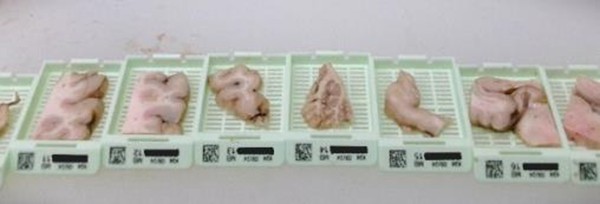
Upon receipt, tissues are trimmed to approximately 1 cm square and about 3 to 4mm thick —about the thickness of a nickel — ensuring that any visible lesions are included. Trimmed specimens are placed into labeled, barcoded tissue cassettes and processed overnight in a 15-hour cycle of fixation, graded alcohol dehydration and paraffin infiltration. The next morning, the paraffin-impregnated tissues are ready for slide preparation.
Embedding and Sectioning
The processed samples are taken to embedding stations, where technicians carefully orient the tissues in molten paraffin so the diagnostically relevant surface faces the cutting edge. This step requires quick, precise movements to align the samples in the mold before the molten paraffin solidifies. Once embedded, the paraffin blocks are placed on a cooling surface to fully harden and then transferred to the microtomy area.
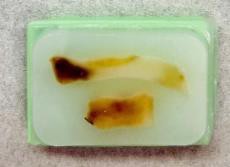
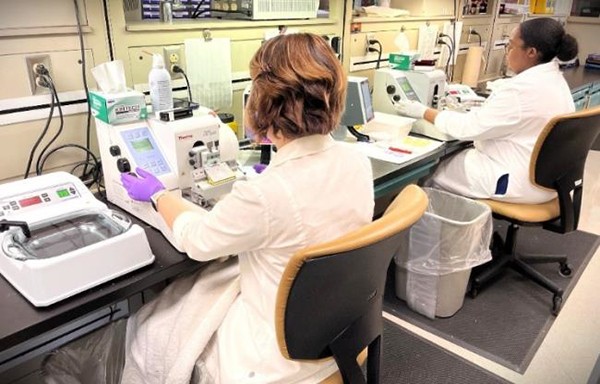
A microtome is a precision instrument that advances the paraffin block across a stationary blade, shaving off thin wax layers until the full tissue face is exposed. The blocks may then be cooled to improve sectioning quality. The slide-making stage is called “ribboning” because a continuous ribbon of wax-embedded tissue is cut at 4 to 5 micrometers and floated on a warm water bath. A glass slide is positioned beneath the desired section and lifted to capture the tissue onto the slide surface. The slides are then dried and heated to melt residual wax, which helps the tissue adhere firmly to the glass slide and prepare it for staining.
Staining and Coverslipping
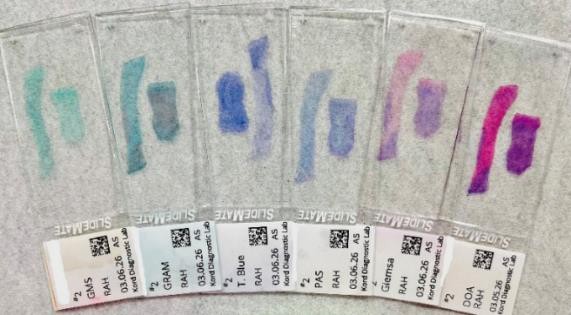
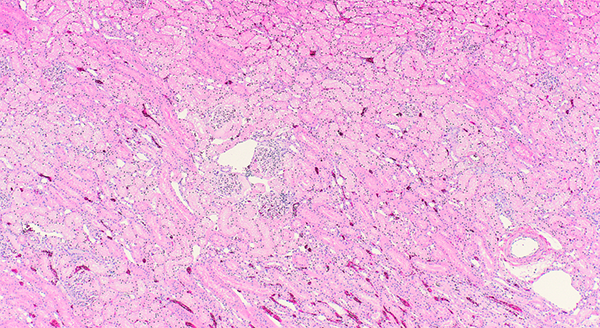
Routine staining with hematoxylin and eosin (H&E) involves immersing slides in a series of reagents over approximately two hours, producing the characteristic purple-and-pink appearance that allows the pathologists to evaluate tissue architecture and detect abnormalities. The stained slides are then coverslipped with mounting medium to preserve the tissue and stain. In addition to routine H&E staining, the Histology section performs a range of special stains that help pathologists identify fungi, bacteria, minerals and other microscopic components.
Diagnostic Importance
Histology plays a critical role in identifying cellular changes associated with diseases such as cancer, infections, and inflammation, and it remains the gold standard for cancer diagnosis. Critically, the diagnostic quality of histopathology begins the moment the tissue is collected. Proper sampling, prompt fixation, and accurate documentation of the collection site and clinical history are essential for obtaining meaningful diagnostic information.
If you have questions when planning a tissue submission, please refer to the Laboratory Test Catalog or contact us for guidance. We welcome the opportunity to assist our clients and are committed to helping keep Tennessee’s animals and the people who care for them healthy.