Tennessee Deer Hunting
Out-of-State Hunters - Be aware of carcass importation restrictions for deer, elk, moose and caribou. CWDinTennessee.com
| Season Type | Season Dates | Statewide Antlered Bag Limit | Units 1, 2, & 3 Antlerless Bag Limits | Units 4, 5 & 6 Antlerless Bag Limits |
|---|---|---|---|---|
| August (A) * | Aug. 28 - Aug. 30, 2026 | 2 (1/day)*** | No Antlerless Harvest | No Antlerless Harvest |
| Young Sportsman (G/M/A) ** | Oct. 31 - Nov 1, 2026 Jan. 9 - 10, 2027 | 3/day | 2 | |
| Archery (A) | Sept. 26 - Oct 30, 2026 Nov. 2 - Nov 6, 2026 | 4 | ||
| Muzzleloader/Archery (M/A)**** | Nov. 7 - Nov. 20, 2026 | 2 | ||
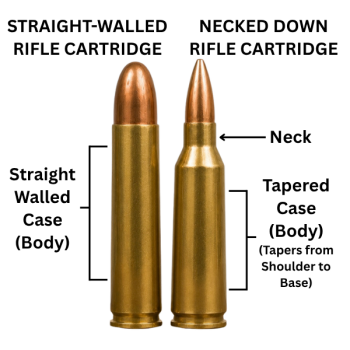
Single Shot, Straight-walled Cartridge Rifles, on Private Lands Only | Nov. 14 - 20, 2026 | |||
| Gun/Muzzleloader/Archery (G/M/A) | Nov. 21, 2026 - Jan. 3, 2027 | 2 |
*Archery only. Private lands and select Unit 1 WMAs only. NOT available on WMAs in other Units. See individual WMA regulations.
** Youths 6–16 years of age may participate using a gun, muzzleloader, or archery equipment (G/M/A). Young sportsmen must be accompanied by a non-hunting adult, 21 years of age or older, who must remain in a position to take immediate control of the hunting device and who must also comply with fluorescent orange/pink regulations, as specified for legal hunters. Multiple youths may be accompanied by a single, qualifying adult. Antlerless bag limits for Units 4, 5, and 6 are not to exceed a total of 2 antlerless deer for the four (4) days combined.
*** Bag limit may be exceeded only if taken as a bonus deer (only on certain WMAs), under the Earn-A-Buck program in a CWD-positive county, or as a Replacement Buck.
****Single shot rifles using straight-walled cartridge ammunition (.35 caliber or larger) that, as manufactured, are not capable of containing multiple rounds, are legal to be used on private lands only during the second week of the Muzzleloader/Archery season (Nov. 14 – Nov. 20, 2026). Harvested deer count toward the Muzzleloader/Archery season bag limit.
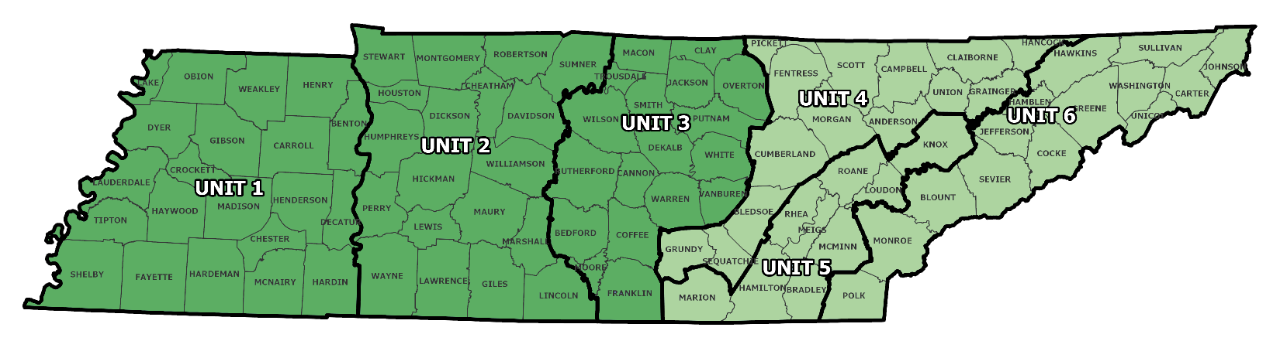
Unit 1 includes Benton, Carroll, Chester, Crockett, Decatur, Dyer, Fayette, Gibson, Hardeman, Hardin, Haywood, Henderson, Henry, Lauderdale, Lake, Madison, McNairy, Obion, Shelby, Tipton, and Weakley counties.
Unit 2 includes Cheatham, Davidson, Dickson, Giles, Hickman, Houston, Humphreys, Lawrence, Lincoln, Lewis, Marshall, Maury, Montgomery, Perry, Robertson, Stewart, Sumner, Wayne, and Williamson counties.
Unit 3 includes Bedford, Cannon, Clay, Coffee, DeKalb, Franklin, Jackson, Macon, Moore, Overton, Putnam, Rutherford, Smith, Trousdale, Van Buren, Warren, White, and Wilson counties.
Unit 4 includes Anderson, Bledsoe, Campbell, Claiborne, Cumberland, Fentress, Grainger, Grundy, Hancock, Morgan, Pickett, Scott, Sequatchie, and Union counties.
Unit 5 includes Bradley, Hamilton, Loudon, Knox, Marion, McMinn, Meigs, Rhea, and Roane counties.
Unit 6 includes Blount, Carter, Cocke, Greene, Hamblen, Hawkins, Jefferson, Johnson, Monroe, Polk, Sevier, Sullivan, Unicoi, and Washington counties.
August Archery-only (Velvet) Hunt
The Archery-only (Velvet) Hunt is only open on private lands and the Unit 1 WMAs listed below. NOT open to WMAs in other Units. Some WMAs list “open with statewide seasons,” but this does not include the August Hunt. Please check regulations carefully before heading out.
Meeman-Shelby Forest State Park and State Natural Area
Eagle Lake Refuge
Bomprezzi Unit of the Eagle Lake Refuge
Wolf River Wildlife Management Area Unit 1
Wolf River Unit 2
Piperton Wetland
Chickasaw State Forest Wildlife Management Area
Gray’s Creek Wildlife Management Area
Oak Dain Wetland
Big Hill Pond State Park
Tull Bottom Wildlife Management Area
South Fork Refuge
Spring Creek Wildlife Management Area
Colonel Forest V Durand Wildlife Management Area
Fort Ridge Wildlife Management Area
Lower Hatchie National Wildlife Refuge
John Tully Wildlife Management Area
Horns Bluff Refuge
Maness Swamp Refuge
Parker Branch Wildlife Management Area
Perry Switch Wildlife Management Area
Chickasaw National Wildlife Refuge
Hatchie National Wildlife Refuge
Carcass Transport into Tennessee:
Only approved parts (i.e., deboned meat, clean skulls, skull plates and teeth, antlers, finished taxidermy, hides, and tanned products) from deer, elk, moose, and caribou may be brought into TN.
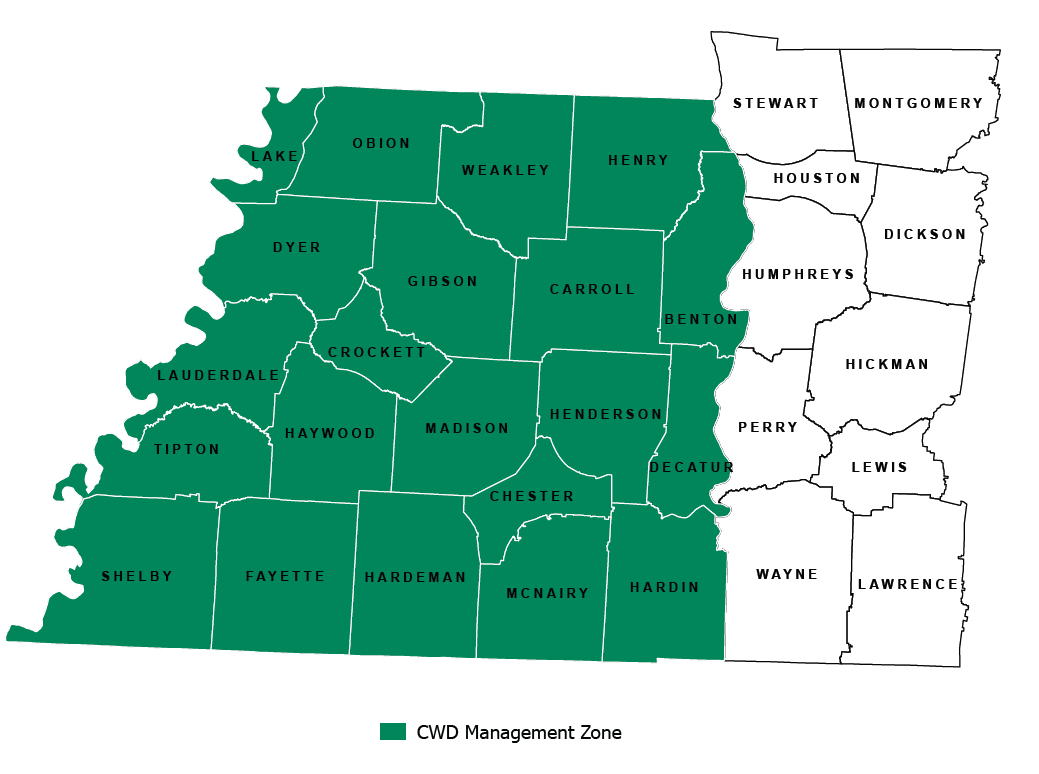
CWD Management Zone for Carcass Transportation Regulations
Transport restrictions have been put in place to reduce the risk of spreading CWD to areas outside of the primary affected regions. Restricting wide-ranging carcass movement can lower the risk of an infected deer carcass becoming a source of infection in a new area.
Unapproved parts, including whole or undressed carcasses, cannot be moved from inside the CWD Management Zone (Green) to other parts of the state. Only approved parts (i.e., deboned meat, clean skulls, skull plates and teeth, antlers, finished taxidermy, hides, and tanned products) may be moved freely outside of zone.
The CWD Management Zone includes all counties west of the Tennessee River: Benton, Carroll, Chester, Decatur, Dyer, Fayette, Gibson, Hardeman, Hardin, Haywood, Henderson, Henry, Madison, McNairy, Lake, Lauderdale, Obion, Shelby, Tipton, and Weakley Counties.
Visit the CWD Management Zone for Carcass Transportation and Wildlife Feeding Restrictions for more details.
Deer Harvest Check-In
All harvested deer must be checked in. Visit Big Game Check-In Procedures for details.
Antlered Deer
Male or female deer with at least one (1) antler that is a minimum of three (3) inches in length. All Units (statewide) - Two (2) antlered deer (1 per day, not to exceed 2 for the season). The bag limit of two (2) antlered deer may be exceeded if taken as a bonus deer (only on certain WMAs), taken under the Earn-A-Buck Program, or taken as a Replacement Buck.
Antlerless Deer
Male or female deer with no antlers or with antlers that are less than three (3) inches in length. Deer hunters may harvest up to the antlerless bag limit set for each individual Unit. Moving to a different county within the same Unit does not increase the hunter’s bag limit.
Legal Equipment
Archery equipment is legal during muzzleloader and gun seasons. Muzzleloading equipment is legal during gun season. Straight-wall rifles can be used during the 2nd week of muzzleloader season on private land only.
Albino Deer
Hunting, trapping, or possession of albino deer is prohibited as set forth in TCA 70-4-130. An albino deer is a deer with a lack, or significant deficiency, of pigment in the skin and hair, and has pink eyes.
The TWRA urges all deer hunters hunting from tree stands to use a fall restraint system. Most deer hunting accidents involve hunters falling from a tree stand. Proper use of a fall restraint system could prevent or lessen the severity of these accidents.
Deer Bait Privilege License
This license is available on GoOutDoorsTennessee.com) and allows hunting over bait only for white-tailed deer on privately owned or leased properties. It must be purchased annually by any individual hunting over bait. There will be no exemption for any hunter regardless of age or license exempt status.
License is not available for use in the CWD Management Zone or in CWD-positive counties: Benton, Carroll, Chester, Crockett, Decatur, Dickson, Dyer, Fayette, Gibson, Hardeman, Hardin, Haywood, Henderson, Henry, Humphreys, Lake, Lauderdale, Lewis, Madison, McNairy, Obion, Shelby, Tipton, Wayne, Weakley, and Williamson.
Bait Type Specifics
• Allowed: Corn, wheat, grains, natural food substances, or any product exclusively produced or marketed for feeding deer, including pelletized feeds, flavored corn, and mineral supplements.
• Not allowed: Any processed foods or enhanced/modified products not categorized above (Ex: sugar, honey, syrups, pastries, candies, peanut butter, etc.).
• Scented sprays, powders and salt blocks are not considered bait.
Baiting Methods
• Properties five (5) acres or less can only have one (1) bait site.
• Larger properties can have one (1) bait site per five (5) acres and must be at least 500 yards apart.
• No more than five (5) gallons or twenty-five (25) pounds of bait may be available for consumption at a single bait site during a 24-hour period.
• No open trough style feeders can be used. All other feeder styles are legal.
• Bait shall be scattered across the ground and not piled.
Other Considerations
• Baiting is prohibited on all public lands, private inholdings bound on all sides by WMAs or PHAs, and within the proclaimed No Feeding Zone in Gatlinburg.
• No other big game species can be harvested within two hundred fifty (250) yards of a bait site. The same applies to deer if you did not purchase a baiting license.
• If baiting creates a public safety concern by concentrating and/or habituating wildlife, the agency can revoke a license.
• Baiting licenses will be valid for the duration of the deer season, even if a new county becomes CWD-positive during the deer season.
• Hunting over normal agricultural practices or wildlife food plots is not considered baiting.
Baiting Considerations and Best Practices
The unnatural congregation of animals through baiting or feeding can have several unintended consequences.
Feeding or baiting can also attract non-target species, causing nuisance issues. Higher raccoon concentrations around bait sites can increase predation risk of nearby turkey nests. Where present, feral hogs can outcompete deer for feed and degrade local habitat. Black bears are actively expanding across the state and will also be attracted to deer bait sites. Unfortunately, this often results in damage to feeders, trail cameras, and blinds. Some hunters may even “discover” that they also have feral hogs and bears in the area once they begin baiting.
Higher rates of direct contact between animals and soil contamination around bait sites increase the risk of disease transmission. This should be strongly considered regarding the spread of chronic wasting disease in deer. Bait sites can also propagate the spread of other diseases, such as bovine tuberculosis and brucellosis, which can be transmitted to humans, livestock, and pets.
Feed quality should also be considered, as grains can be contaminated by a fungus byproduct called aflatoxins, which can be harmful or lethal to wildlife. Wild turkey poults and bobwhite quail are particularly at risk. Grains, especially corn, stored for an extended period or piled in warm, moist conditions, can produce high concentrations of these toxins.
Some use artificial feed during the winter to try to supplement deer nutrition. However, a sudden shift to a high-carb diet, such as grain feed, during this time of year can disrupt their digestive system and cause fatal acidosis.
Responsible baiting practices:
• Regularly clean feeders by removing old food and wiping with a bleach solution.
• Avoid storing feed for extended periods.
• Keep feed as dry as possible and replace it if there is any moisture.
• Avoid placing feed/bait during warm and moist environmental conditions.
• Utilize spread-type feeders.
• Reduce the length of time bait/feed is on the landscape.
• Only use USDA-approved feed that has been tested for aflatoxins. Feed found unfit for livestock due to high levels of aflatoxins is often advertised for wildlife use.
• Do not use grains that are clumping, damaged, or have visible molds.
• Stop baiting or feeding if you see sick or oddly behaving wildlife.
Baiting in Bear Country
Depredation permits will not be issued for the occurrence of bear or other wildlife damage associated with bait sites or feeders. Be proactive when deer baiting or wildlife feeding in areas with bears.
• Bear-proof feeders are commercially available.
• Consider suspending feeders so that bears cannot access.
• Use of security boxes to protect trail cameras is a must in bear country.
• Electric fencing is a safe and effective method to protect feeders. This can be achieved by a perimeter fence that allows deer to jump over or by electrifying the feeder itself (bears can still access corn that is spread). Visit BearWise.org for information on building electric fences to exclude bears. Regularly check and maintain the system, as bears will quickly learn if a fence is not working properly.
• Consider using foods other than corn. While not foolproof, bears typically don’t utilize soybeans as readily as corn. The advantage here is that bears MAY prefer some natural foods over soybeans at some times. Any feeders that have held corn should be cleaned thoroughly before filling them with soybeans. If the feeders still smell like corn, the bear will still attempt to access them.
CWD Wildlife Feeding Restrictions
Within the CWD Management Zone and any other CWD-positive county, there can be no placement of grain, salt products, minerals, or other consumable natural and manufactured products for general wildlife consumption unless feed and minerals are:
• Placed within one hundred (100) feet of any residence or occupied building.
• Placed in such a manner to reasonably exclude access by deer.
• Placed as part of a wild hog management effort authorized by the agency.
• Present from normal agricultural practices, normal forest management practices, or crop and wildlife food production practices.
Hunting over feed is not allowed under any of these circumstances.
Related Deer Hunting Links
