High Occupancy Vehicle Lane (HOV)

Since 1993, Tennessee has used high occupancy vehicle (HOV) lanes to promote ridesharing and reduce urban interstate congestion.
HOV lanes focus on moving more people, rather than moving more cars, through the region.
- Each vehicle using an HOV lane must carry the minimum number of people posted on entrance signs.
- In Tennessee, that posted requirement is at least two people, with exceptions that include motorcycles.
Public awareness and enforcement help maintain the effectiveness of HOV lanes throughout the region.
- TDOT will restripe lanes with wider, broken lines to make HOV lanes more obvious to motorists.
- These markings provide a mental barrier for single occupants deciding whether to enter or remain outside HOV lanes.
- Tennessee law allows a fine of up to $50, plus court costs, for HOV lane violations.
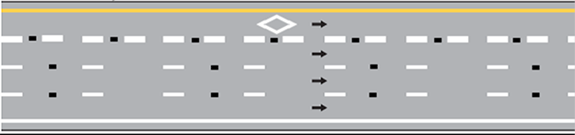
Graphic of lane markings for Tennessee HOV Lanes
NEW LANE MARKINGS FOR TENNESSEE HOV LANES
HOV Operational Hours
Monday - Friday
7 a.m. to 9 a.m. inbound
4 p.m. to 6 p.m. outbound
HOV Benefits
- HOV lanes move more people in fewer vehicles, reducing the demand for new highways.
- HOV lanes increase the efficiency of existing highways.
- HOV lanes reduce the use of personal resources such as time and fuel.
- HOV lanes benefit drivers of single-occupant vehicles by taking car-poolers out of general use lanes.
Tennessee HOV Lane Locations (mm = mile marker)
| Memphis: | I-40 E, 15 mm to 22 mm |
| I-40 W, 22 mm to 16 mm | |
| I-55 N, 0.0 mm to 5 mm | |
| I-55 S, 5 mm to 0.0 mm | |
| Nashville: | I-40, eastside of Nashville, both directions, 216 mm to 232 mm |
| I-24, eastside of Nashville, both directions, 56 mm to 81 mm | |
| I-65 north side of Nashville, both directions, 90 mm to 95 mm | |
| I-65 south side of Nashville, both directions, 60 mm to 79 mm |