White-winged Scoter
Melanitta fusca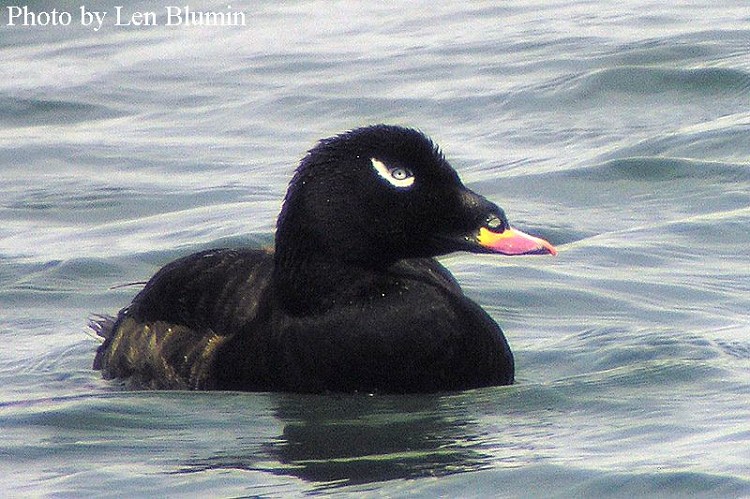
The White-winged Scoter is the largest and most well-known of the three species of Scoter. A stocky bird, both males and females have a white patch on the secondary feathers in their wings. This characteristic is unique to this scoter, making it easily recognized on its winter visits to Tennessee. The male is black and has a crescent-shaped white patch that passes through the eye and a large orange bill with a black nasal knob.
The female is a sooty brown color with two light oval face patches. In flight, the white secondary feathers are very visible and can occasionally be seen when on the water. When lifting off the water, White-winged Scoters run and fly along the surface for a short distance, finally taking off in straight lines or “stings” flying low with heavy, labored wing beats. They prefer to spend their time diving and drifting on the water.
Length: 21 inches
Wingspan: 34 inches
Weight: 3.7 lbs.
Voice: Generally silent. Males and females make a harsh guttural croak. During courtship, males make a thin whistle wher-er. Both sexes' wings produce a whistling noise in certain flight displays.
Similar Species: Black Scoter -The male sports all black plumage, and the black bill is thinner with a yellow-orange knob. The female has a dark cap with clean, whitish cheeks, not patches. Surf Scoter – Male has distinct white head patches, an all-black body, and a multi-colored, large, heavy bill. The female is dusky brown with white patches on the sides of the face and a pale patch on the nape.
Habitat: In Tennessee, White-winged Scoters can occasionally be found on large freshwater lakes.
Diet: Mollusks, crustaceans, insects, occasionally fish, and aquatic plants
Nesting and reproduction: There are no known records of this species nesting in Tennessee.
Status in Tennessee: The White-winged Scoter is an uncommon migrant in winter in Tennessee.
Best places to see in Tennessee: Nickajack Dam, Radnor Lake, Percy Priest Lake.

Fun Facts
- White-winged Scoters can dive to depths of 40 feet to get to shellfish, their favorite food.
- Obsolete English Names: Velvet Scoter
Sick and Injured Wildlife
