Southern Two-lined Salamander
Eurycea cirrigera
Description
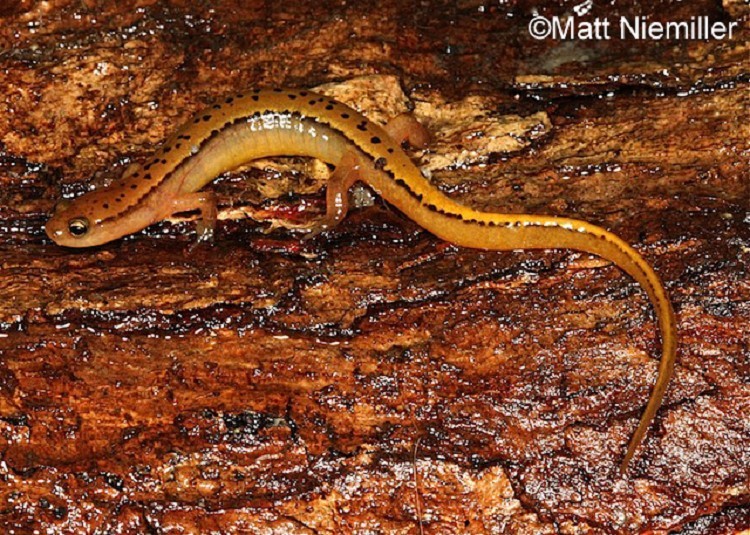
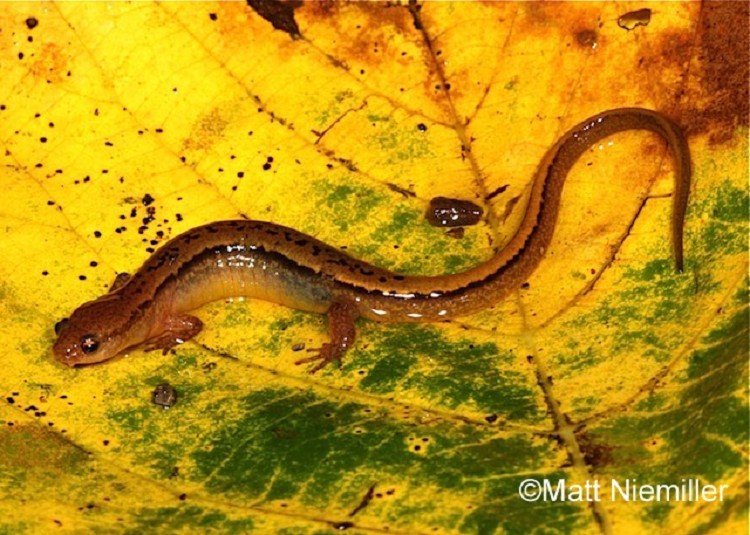
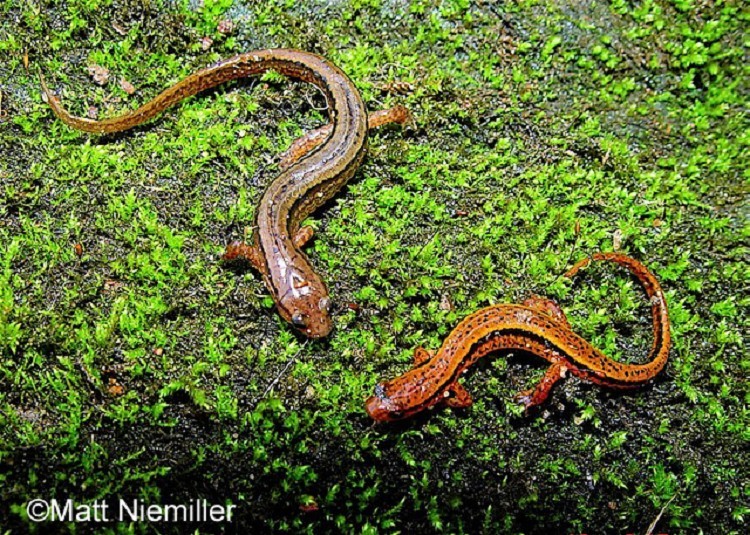
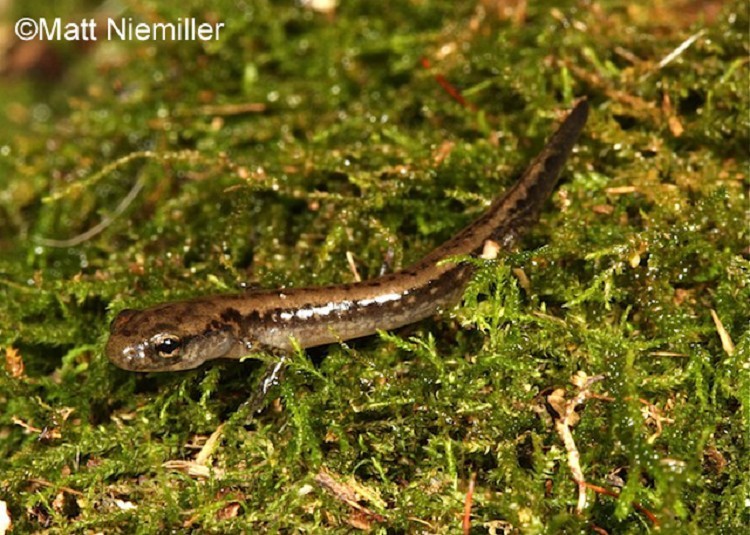
One of two species of the Eurycea bislineata complex. Southern Two-lined Salamander, Eurycea cirrigera, extends from the bottomland habitats in West Tennessee to the upland foothills of the Blue Ridge Mountains. Blue Ridge Two-lined Salamander occurs in the Blue Ridge Mountains. A small, slender salamander (2.5 to 4.0 inches in length) having a yellowish to brownish dorsum with two prominent black lines extending from the eye along the top of either side to the end of the tail. Many individuals also have black spots along the back between the two lines. The belly is yellow.
Similar Species: Separated by Blue Ridge Two-lined Salamander by range and markings (more yellow to orange and has a broken tail stripe). Junaluska Salamander resembles two-lined salamanders, but has no distinct black stripes on the sides and has a shorter tail.
Habitat: Found in moist habitats throughout Tennessee. Commonly found beneath rocks, leaves, and logs along the edges of woodland streams and seeps, but some may occur on the forest floor.
Diet: Spiders, ticks, earthworms, beetles, millipedes, snails, grubs, flies, bees, and ants.
Breeding information: Adults migrate to breeding streams in late winter to early spring. Between 12 to 110 eggs are attached under rocks in streams; sometimes under logs, sticks, or leaves. The female attends the eggs until they hatch in spring. The larval period lasts from 1 to 3 years.
Status in Tennessee: Abundant throughout their range, and populations appear stable. Potential risks include habitat destruction through activities such as clear-cutting and acid mine drainage.
Best places to see in Tennessee: Moist, woodland streams throughout the state.

Fun Facts
- Breeding males of both the Southern Two-lined Salamanders, as do all Plethodontidae family salamanders, have prominent Cirri, which are downward fleshy projections from the upper jaw (fang-like), helping carry hormonal information to the nostrils.
Photos
Sick and Injured Wildlife
