Northern Slimy Salamander
Plethodon glutinosus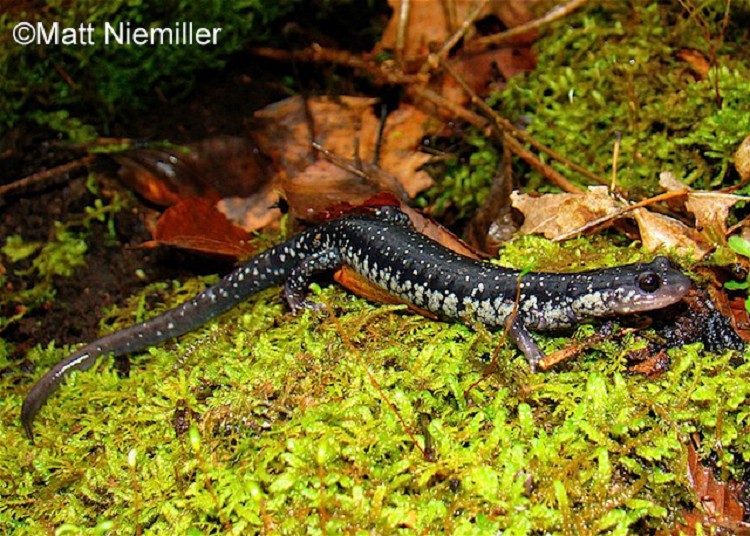
Description
Occurs in the eastern two-thirds of the state. White-spotted Slimy, Mississippi Slimy, and Northern Slimy Salamanders, Plethodon glutinosus, are virtually indistinguishable and make up the Slimy salamander complex. A large salamander (4.5 to 8.0 inches in length) has a black dorsum with small, white, or silver spots scattered over the body. The belly is lighter than the back, and the tail is round.
Similar Species: Distinguished from identical White-spotted Slimy and Mississippi Slimy Salamanders by the range and genetic analysis. Tellico Salamander has a separate range, and Cumberland Plateau Salamanders are smaller and have a light chin. The Southern Appalachian Salamander usually has fewer and smaller white spots on the back and sides.
Habitat: Beneath rocks, logs, and forest litter in woodland habitats; occasionally around cave entrances.
Diet: Earthworms, spiders, snails, flies, beetles, aphids, and other invertebrates.
Breeding information: Adults reproduce terrestrially during the spring and summer. Females lay 15-35 eggs in rotting logs or under stones and brood the eggs until hatching. The young hatch directly into miniature adults.
Status in Tennessee: Appears to be common in the Great Smoky Mountains and in parts of its range. Relatively resilient to timber harvesting; however, clear-cuts have a negative impact on populations.
Best places to see in Tennessee: Mid- to lower-elevation forests of Great Smoky Mountain National Park.

Fun Facts
- The genus name Plethodon means “full of teeth”, reflecting the large number of teeth in the jaws.
Photos


Sick and Injured Wildlife
