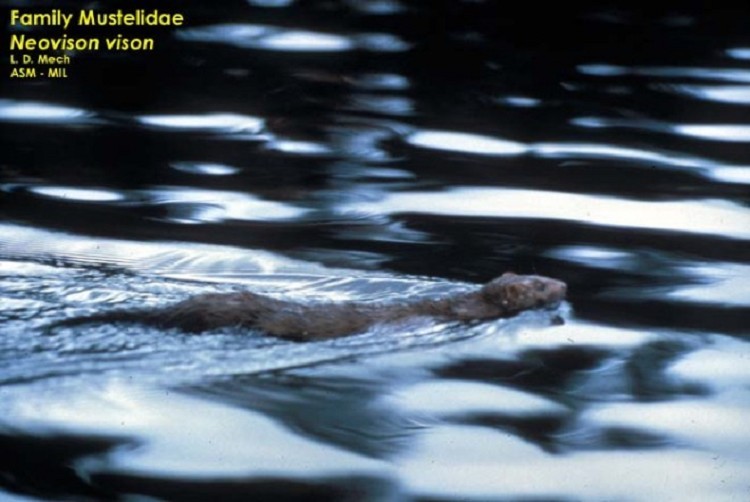
American Mink
Neovison vison
Description
The American Mink is a semi-aquatic mammal that is well known for its high-value fur and occurs across Tennessee. They are long, slender, medium-sized mammals with a long neck, short legs, a small head, and a bushy tail equal to one-third the total body length. The head is somewhat flattened, and the ears are small and rounded. The shiny, dense fur is brown to nearly black with a white chin patch and some scattered white on the throat, chest, and belly. The summer coat is lighter and less dense than winter coats. Males are larger than females.
Length: 16.5 - 27.3 inches
Tail: 5.0 - 9.4 inches
Ears: 0.8 - 1.0 inches
Weight: 1.3 - 3.3 pounds
Similar Species: Least and Long-tailed Weasels are much smaller and have light-colored underparts.
Habitat: Permanent water is a habitat requirement for mink. They will use lakes, ponds, rivers, streams, marshes, and other areas with permanent water, especially when near standing timber. Dens are made in banks, under tree roots, in hollow trees, or in abandoned burrows of other mammals.
Diet: Mink feed upon a mix of aquatic and terrestrial animals, including mice, rats, rabbits, squirrels, fish, snakes, frogs, crayfish, and birds.
Breeding information: Mink mate between February and April of each year, resulting in a single annual litter born in May. Their gestation varies from 40 to 75 days due to delayed implantation of the embryos after fertilization. Litter sizes can range from 2 to 17, but usually consist of 4 to 5 young. The young are weaned at 5 weeks old when they open their eyes. At 6-8 weeks, they begin to hunt with the adults.
Status in Tennessee: American Mink are hunted and trapped in the state. Although they may be hard to spot, mink can be common in some aquatic habitats.
Best places to see in Tennessee: Near permanent water sources.

Fun Facts
- They are mostly nocturnal, but will come out at dawn and dusk.
- Minks have large territories, which can range up to 5 miles in diameter.
- Males and females are very defensive of their territories and, as typical of the mustelids, they will discharge a strong odor to mark their boundaries.
Photos