Glossy Ibis
Plegadis falcinellus
Sometimes called the more cosmopolitan ibis, the Glossy Ibis is the most widespread ibis species. It can be found in South, North, and Central America, southern Europe, Africa, Asia, and Australia. In the US, it primarily lives along the Atlantic coast but can also be found in a variety of inland wetlands. A nomadic wading bird, Glossy Ibis often roosts communally at night in large mixed flocks, sometimes a good distance from their feeding wetlands.
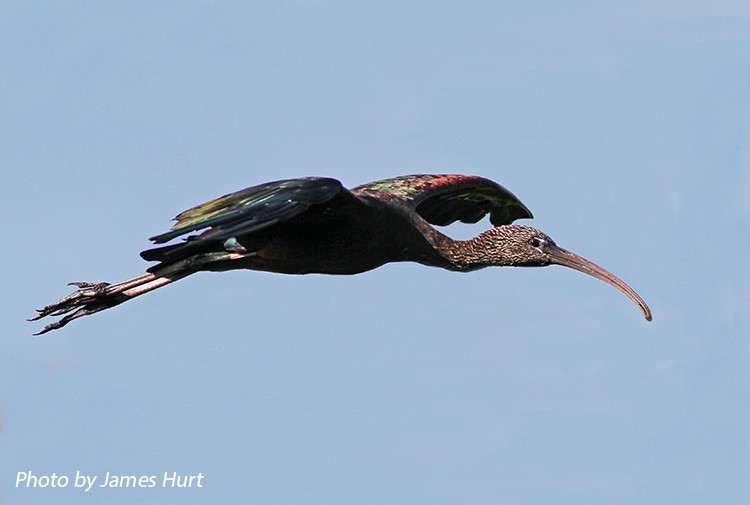
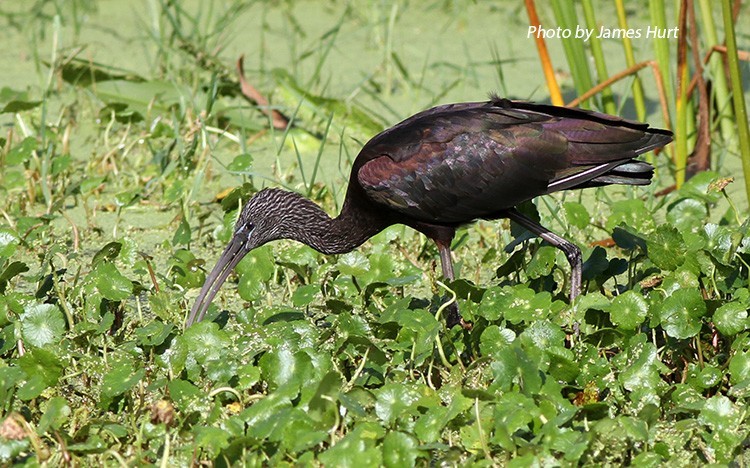
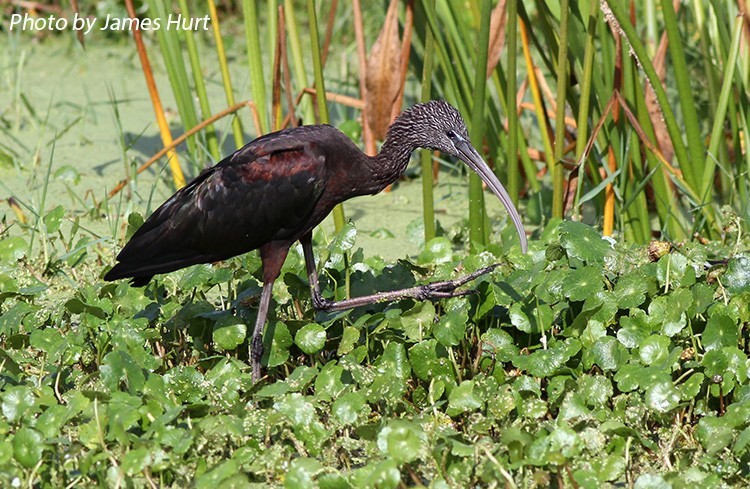
The Glossy Ibis’s head, neck, back, and underparts are a rich chestnut-brown. The wings are black with a metallic green sheen. There is a white stripe from the base of the bill to above the eye, and the bill, legs, and feet are greenish-brown. In the fall, a dark iris is a key identification marker.
Length: 23 inches
Wingspan: 36 inches
Weight: 1.2 lbs.
Voice: Usually silent, but will emit a nasal croak or quacking sound.
Similar Species: White Ibis - only juvenile White Ibis are typically seen in Tennessee, and they are all gray or mottled gray and white with a pink bill. White-faced Ibis – Reddish legs and lore bordered with white, RED iris, white line around lore and eye. Herons have straight, not curved, bills.
Habitat: Wide variety of habitats, shallow lakes, swamps and marshes, ponds, rivers. Floodplains, wet meadows, and irrigated agricultural fields.
Diet: Insects, worms, frogs, leeches, small mollusks, mussels, clams, rice, and sorghum
Nesting and reproduction: There are no known records of this species nesting in Tennessee.
Status in Tennessee: The Glossy Ibis is a very uncommon migrant in Tennessee.

Fun Facts
- Predators of the Glossy Ibis are Birds of Prey and alligators.
- Glossy Ibis is capable of short swims but seldom does.
- Obsolete English Names: Black Curlew
Photos


Sick and Injured Wildlife
