TWRA Fishing Reports
Fishing Reports
NOTE - TWRA wants to build a comprehensive report each week of the state’s lakes. If you do not see a report for your favorite lake and you are someone who can provide a report, please contact us at Ask.TWRA@tn.gov and provide us with your contact information.
Cordell Hull – 6/11/26
Report Contributor – Will Schibig, Region III Creel Clerk
Flow Rates-
· Cordell Hull Dam- average outflow of 4,500 cfs per day
· Wolf Creek Dam (Lake Cumberland)- average outflow of 3,000 cfs per day
· Dale Hollow Dam- average outflow of 680 cfs per day.
· Roaring River- average flow of 11.5 cfs
Reservoir Conditions-
The reservoir elevation is currently sitting at 503’. The main river channel is around 65-75 degrees on the lower end and 60-70 degrees on the upper end. Surface water temperatures in creek arms and pockets range from 73-83 degrees reservoir-wide. Water clarity varies throughout the reservoir as well. The best visibility is on the river channel by Celina. The frequent storms have clouded the visibility in most of the reservoir, water clarity in these areas is roughly 2-5’ of visibility. The moon phase of this writing is 18% waning, with the next full moon projected to be June 29th. Along the banks of the main channel upstream from Gainesboro, Curly-leaf Pondweed has topped out and matted in many locations. Throughout the reservoirs on channel flats or the backs of protected pockets, mixes of Eurasian Milfoil, Hydrilla, and Coontail have formed thick rows and patches along the old waterline in 3-5’ (varying on water clarity). A lot of the shoreline vegetation that was submerged when the water rose has died off, but some native shoreline submerged vegetation still exists around Gainesboro.
Bass- Fishing is slow.
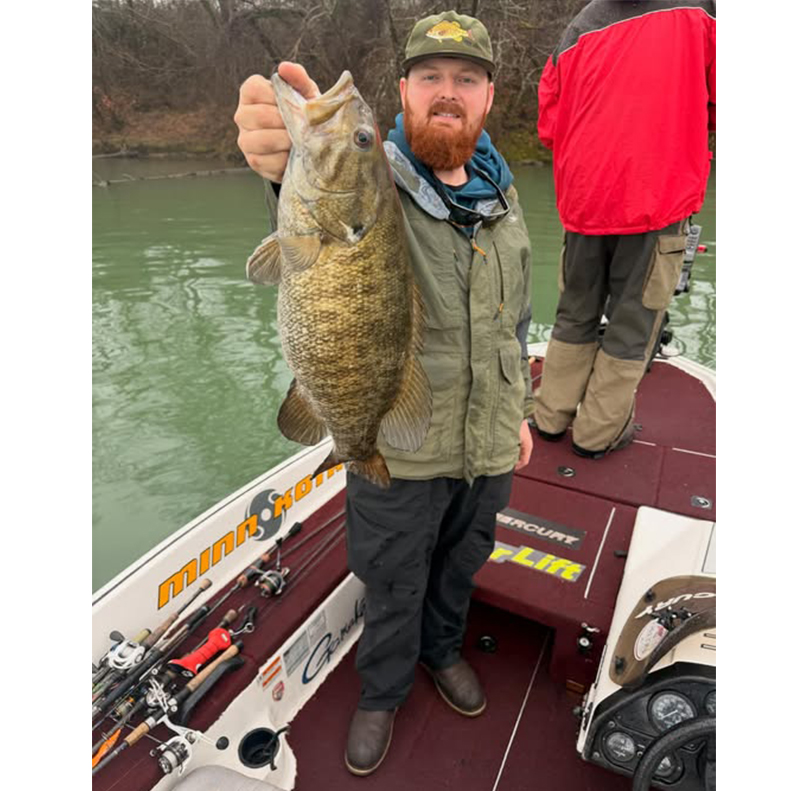
The main channel is still the most consistent bite. Grass with isolated wood mixed in on the channel flats has been producing quality bites with topwater or big worms. Quantity bites can be had fishing channel transition banks with shade using shaky heads, small jigs, or medium running crankbaits. Because of the lack of current from upstream tailwaters, the main river channel is warmer than it usually is this time of year. With that, the channel provides better thermal refuge, habitat, and forage than many of the side creeks and pockets. If you do want to fish shallow in pockets, the backs of many pockets and creek arms have thick grass patches, with many topping off with a mat of algae or duckweed. It’s prime frogging in these areas, or if it’s not topped off, white swim jig through the grass stalks.
Crappie- Fishing is slow.
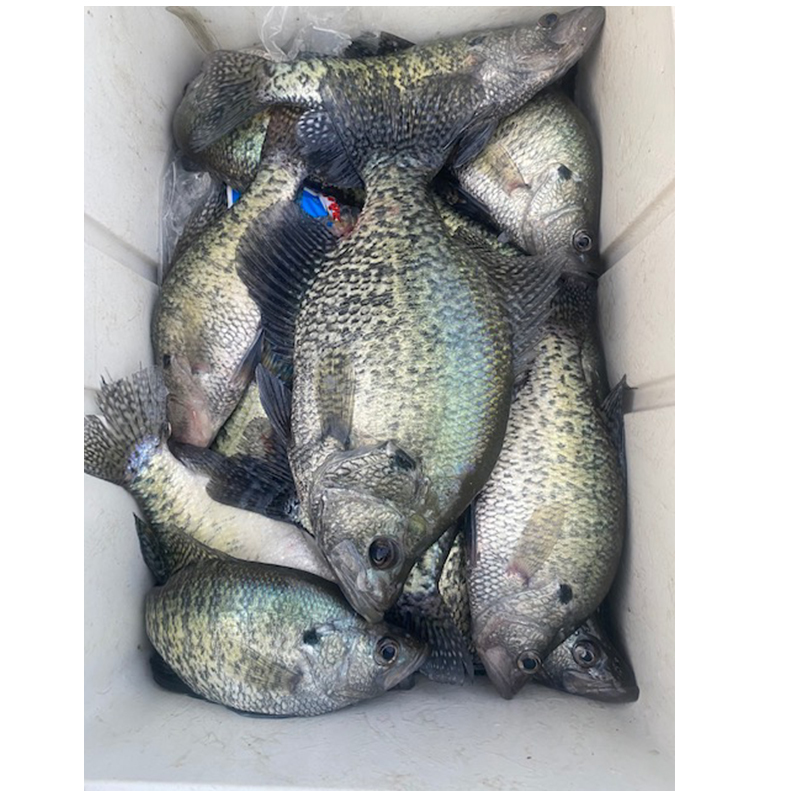
The post spawn crappie can be caught around deep brush near creek channels or suspended with baitfish in creek channels and creek mouths. Better quality crappie can be caught one or two at a time on shallow isolated wood in shallow sloughs and the backs of creek arms. Lots of crappie have been reported to be caught on our TWRA deployed artificial structure in these creek arms. You can find fish attractors on the TWRA On The Go app under “Where To Fish” or search “Fish Attractors” to access the interactive map on tnwildlife.org
Sauger/Walleye- Fishing is slow.
Some walleye have been caught on the upper end of the reservoir between Celina and Gainesboro. With the lack of current compared to this time of year historically, anglers can get away with trolling worm harness rigs near the bottom. Fish these harness rigs or just nightcrawlers on the bottom in general near creek mouths.
Striped Bass- Fishing is slow. Some anglers are having inconsistent results around Celina. Anglers are trolling live bait on planner boards around creek channels and flats near the channel in creek arms on the mid and lower end of the reservoir. I’ve also heard of some fish being caught near creek mouths or off the channel near the bottom with cut skipjack.
Sunfish- Fishing is good. This latest full moon has brought in another wave of spawners up shallow. Anglers are finding bluegill and redear spawning together on beds. Look for small pockets in creek arms where floating logs have accumulated towards the back of the pockets. Out from the middle of the logs in 2-4’ you can find these sunfish beds.
Fall Creek Falls – 6/10/26
Report Contributor – Region 3 Fisheries Staff
Lake Conditions- Fishing has picked up with the warming weather and start of summer vacation. As we go into the summer, fishing will be best early and late during hot days. Surface water temp is currently hanging around 80°F and water clarity is 5ft. Ten automatic fish feeders are currently in use. Feeders are located near the dam, the lakeside cabins, the lodge, and the boat dock. All feeders are set to go off at 6am and 7pm (Central Time). Fall Creek Falls State Park has announced their All-Night fishing days for the year. On these dates night fishing is allowed, and the boat dock will remain open until 9pm: June 26th, July 11th, July 31st, August 8th, August 28th, September 12th, September 25th, and October 17th.
Largemouth Bass: Fishing is fair. Bass have been caught on plastic worms and plastic bugs. Several large bass have been caught around the boat dock including a 7-pounder caught last week, but most bass are being caught from more remote banks in boats. Last month anglers were catching about 1.4 bass per hour. Daily bass creel limit is 10 fish per day and only 1 (one) over 16 inches may be harvested.
Bluegill and Redear Sunfish: Fishing is good. Anglers are mostly catching Bluegill with a few Redear being caught. Anglers using crickets are catching good numbers of Bluegill along the bank, under the boat dock, and near feeders. Fishing more remote banks with boats has seen the most success. Other live baits (red worms, nightcrawlers, etc.) are producing, but in lower numbers. Daily Bluegill/Redear (in combination) creel limit is 10 per day, no length limit.
Catfish: Fishing is good. Most catfish are being caught around the boat dock and near fish feeders. The highest numbers of catfish are being caught when fish feeders are going off. Anglers have seen success using chicken livers, chicken meat soaked in Kool-Aid, Bluegill, hotdogs, worms, and slim-jim. Catfish are also being caught from the fishing cabins. Daily catfish creel limit is 5 per day, 16-inch minimum length limit. The Bluegill creel limit still applies when using Bluegill as bait.
Crappie: Fishing is fair. Most crappie caught this month have been caught from the boat dock in the evening using minnows. Crappie will generally move deeper in the water column as we continue into the summer. Try at night or during low-light periods for better action near the surface. There is no creel or length limit on crappie at Fall Creek Falls Lake.
Fort Loudoun Reservoir – 6/10/26
Report Contributor – Sydney Feistner, Region 4 Creel Clerk
Fishing on Ft. Loudoun has remained productive over the last couple of weeks as water temperatures have reached the low 80s. Bass anglers are finding success early and late in the day by targeting main lake points, secondary points, and shoreline cover with topwater baits, soft plastics, and jigs. As the sun gets higher, many bass are moving deeper to ledges and offshore structure where deep-diving crankbaits and Carolina rigs have been productive.
Crappie fishing has slowed from the spring bite but remains fair around deeper brush piles, bridge pilings, and docks in 10–20 feet of water, with minnows and small jigs producing the best catches. Catfish anglers are also reporting good success using cut bait and nightcrawlers along channel edges and deeper holes. Overall, fish activity has stayed steady but will more than likely slow as summer temperatures continue to rise. With summer approaching and more recreational boaters on the lake, stay safe out there!
Kentucky Lake - 6/12/26
By Steve McCadams, Professional Guide/Outdoor Writer (stevemc@charter.net)
MAYFLY HATCHES BEGIN/CRAPPIE/CATFISH BITE HOLDS UP
You know Kentucky Lake’s summer fishing scene is in full swing once the mayflies begin to hatch. Recently this natural phenomenon emerged along the shady shorelines, providing a buffet for just about every species of fish that swims in these waters. Summer officially arrives on the calendar June 21, yet the fishing scene seems to have already hit that mode a week or two earlier. Hot weather last week sent a humid reminder that spring is now in the rearview mirror.
Lake levels this week across the reservoir were still holding several inches above the normal summer pool of 359. Elevation as of this report was posted showed the lake still up a bit with a reading of 359.8. Watercolor remains clear. Surface temperatures have risen to the 82-to-83-degree range. That reflects several consecutive days and nights of hot weather across the region.
Anglers had to dodge several thunderstorms recently that drenched some areas and sent anglers running for shelter. When heat and humidity team up at midday it doesn’t take long for a thunder boomer to form. In the aftermath of some heavy rains current out on the main Tennessee River channel has returned. TVA was pushing over 69,000 cfs (cubic feet per second) through Kentucky Dam as this report was posted.
Increased flow has stimulated the catfish bite to rapidly rebound out along the riverbank. Some dandy stringers were taken over the last few days as the increased flow spurred additional movement of baitfish. Once the current increases so does movement of big balls of shad that are out there feeding on the plankton and algae moving throughout the water column. Catfish know it as the prowl alarm goes off, alerting their cohorts the buffet is now open!
Anglers are reaping the benefits and catching catfish in the 35-to-45-foot depth range. Some fish are even deeper at times but wise are the fishermen who monitor their sonar screens and locate the big balls of baitfish. Catfish will be hot on their trail, often staying just under them or even right in there amongst the meandering schools of both threadfin and gizzard shad.
Productive baits throughout the summer will always be nightcrawlers, cut bait in the form of shad or bluegill, big minnows and hot dogs marinated in red Kool Aid with a hefty dose of garlic added to the soup. A few anglers still love to use catalpa worms but finding them is much harder than the old days of summer. This great bait source from Mother Nature was once the “cat’s meow” among the ranks of die-hard cat fishermen. Not only were catalpa worms attractive to the keen sense of smell of hungry channel and blue cats but their texture was tough, staying on the hook and lasting longer when small fish nibbled in an attempt to steal the bait. There are also a lot of very effective commercial stink baits available from bait and tackle shops that do the trick.
Also, beneficiaries of the moving water out there right now are bass fishermen targeting the main lake ledge bite. Some scattered reports had a few white bass biting too. Moving water enhances the main lake sandbar bite as bass are chasing shad. At times anglers may see schools of bass blow up on the surface in a feeding frenzy. When they go on attack mode the shad run to the surface in a last-ditch effort to escape.
This scenario is a Mecca for bass fishermen. Tossing spoons, crankbaits, suspending jerk baits and anything in their tackle box that mimics a fleeing shad will work. Chrome colored Rattle Traps or a wide range of shad-colored crankbaits or swim baits will pay dividends. At other times fishing the ledges with Texas rigged worms, jig and craws, Carolina rigged worms, jigging spoons and such offerings work well as do finesse baits. Covering a lot of water with a big deep diving crankbait is a deadly presentation if your hand and shoulder will hold out.
Reports lately indicate most of the winning tournament stringers are coming from anglers hitting the main lake ledges. Meanwhile, there’s always a shallow summer pattern working in the visible grass beds, buck bushes and tree laps where schools of pin minnows are abundant. Tossing a spinnerbait or Texas rigged worms plus a buzz bait or jerk bait in the early morning hours is definitely worth trying. Find the minnows and you’ll find the bass. River island points are always holding minnows and bass when the current is present.
Recent Mayfly hatches have emerged, attracting bass and bluegill to the shady canopies where the flies fall. The bigger fish feast on the sudden food supply and gorge themselves. Fishing in the midst of a mayfly hatch can be one of the sport’s finest hours. From tossing ultralight tackle with artificial grubs to live crickets, rapid fire feeding bluegill or bass will keep anglers busy. It’s another great time to introduce kids or novice anglers to fishing.
June crappie have been holding in the 12-to-15-foot depths. Live minnow presentations or jigs tipped with minnows are working. Deeper brush piles and stake beds are holding decent numbers of crappie. Kentucky Lake’s early summer crappie bite is worthy of pursuit. Just keep the fish on ice to preserve their flavor.
Melton Hill Reservoir – 6/10/26
Report Contributor – Sydney Feistner, Region 4 Creel Clerk
Fishing has continued to improve on Melton Hill over the past couple of weeks, with water temperatures now sitting in the low 80s. The warmer water has fish settling into more consistent summer patterns, and anglers are reporting good success across several species. Bass fishing has been productive around rocky banks, bluff walls, and submerged structure, with anglers catching fish on soft plastics and crankbaits primarily. Early morning topwater action has also been good around shallow cover before fish move deeper during the day. Crappie anglers are still finding fish suspended around brush piles, docks, and submerged timber in deeper water, with small jigs and live minnows producing consistent catches.
Pan fishing is still good but definitely slowing down for most anglers; redear sunfish and bluegill are still being found around shallow gravel areas and shoreline cover. With stable conditions and active fish. With summer approaching and more recreational boaters on the lake, stay safe out there!
Nickajack - 6/12/26
Report Contributor: Tristan Owenby, https://www.facebook.com/tristan.owenby
This week has been a smack down week I have caught fish on everything and the kitchen sink with the frog being the work horse of the shallow bite and the big finesse worm on a 1/4-1/2 shaky head and a minnow type bait really getting them deep fish to bite. We found the quality this week and we kept the same good numbers that were being put up before just a lot better than average size fish. Water temperatures are just sitting right under 80 degrees, and the fishing is just going to get better as June rolls by.
Give me and call and let’s get on this awesome ledge bite that is going on right now! 931-314-1951
Normandy - 6/8/26
Report Contributor: JC Stephens & Jesse Taylor, Region II Creel Clerks
Reservoir Conditions
Elevation Avg: 874 ft
*Summer pool: 875ft
*Winter pool: 864ft
Avg. Discharge: 50 cfs
Water Temp Avg: 81℉
Water Visibility Avg: Approx. 3ft / 1M
Moon Phases:
*New Moon: 06/14/2026
*Full Moon: 06/30/2026
Fishing Conditions:
BLACK BASS: (Largemouth, Spotted, Smallmouth)
Bass fishing has been great for most anglers this week. Many were fishing at around 10ft of water off the points. Anglers in the past few weeks have had more luck fishing the banks where the wind is blowing towards the bank. Many anglers use soft plastics on a Texas rig or a Carolina rig. Some have been using crankbaits or Alabama rigs. Urchin baits have been seen to work as well for some anglers. Be on the lookout for bait fish on the radars.
CRAPPIE: (Black Nose, Black, White)
Crappie fishing was slow again this week. They have been found in around 20ft of water on or around brush piles. You can also fish near the bridge pylons. On warmer days, look for shaded areas under docks, or downed trees for a possible catch. Many people use jig heads with various colors of plastic minnow and live minnows to potentially trigger a bite.
WALLEYE:
Walleye should be closer to the dam. They are most often found in 10ft – 15ft of water usually on rocky banks and points. The best time to find them would be early morning and dusk. You could try using different crankbaits, ned rigs, jigging spoons, or even minnows to get them to bite. A lighter color has also been seen to work better in low light conditions. Many anglers troll the channel edges
CATFISH: (Channel, Blue, Flathead)
You may have some luck in creek mouths, brush piles, or near bluff walls around 10-15ft deep. The best times to fish in summer are cloudy days, from sunset through midnight, while most can be found deep, at night they may move up shallow. Most People fish with shrimp, chicken livers, live and cut bait, leaving the bait to sit on the bottom.
Norris Tailwater – 6/2/26
Report Contributor – Scott Dalton, Wildlife Tech 1
The Tailwater has been fishing very well, the Sulphur hatch has been on fire. There have been a few over slot brown trout caught in the past few weeks along with some very nice slot sized rainbow trout, please check the flows before you go out. “TVA APP”
Make sure to check TVA's website for generation schedule, and flow rates on the river.
Reelfoot Lake - 6/3/26
Report Contributor-Reelfoot Lake Tourism Council - www.reelfoottourism.com
Early June has typically been great bluegill fishing at Reelfoot Lake, and this week has been true to the past with lots of nice sized bluegill being caught. Crappie are biting but slow. The water level has risen to 12.23 gage height at the spillway. Check out Reelfoot Lake Ultimate Crappie Challenge June 27,28 on this link: Reelfoot Challenge: Join the Ultimate Fishing Event - Reelfoot Challenge
Watts Bar Reservoir – 6/526 - 6/8/26
Report Contributor – Nathan Rogers, Region III Creel Clerk
The weather was warmer with lows in the upper 60’s with highs throughout the day warming up to 82. Current throughout the reservoir has steadied. Water temperatures are rising with the warmer days. The water levels are now at full pool or just barely shy of it; the latest depth and discharge rate I have recorded is below. For any discharge or elevation info, check out the TVA Lake Info App. Wear life jackets if planning to go out during high water and heavy current conditions.
Reservoir Conditions
Water Temp:
- Lower section of reservoir: 81.5 degrees Fahrenheit
Water Clarity:
- Tennessee River (River Channel): 3.5 feet
Water Level: (as of June 8th)
- Reservoir elevation: 740.67 feet
- Headwater (Ft. Loudoun) elevation: 741.03 feet
- Headwater (Melton Hill) elevation: 740.88 feet
Water Flow: (as of June 8th)
- Ft. Loudoun Dam: ~ 6720 cfs
- Melton Hill Dam: ~ 0 cfs
- Watts Bar Dam: ~ 10031 cfs
Observed Species Information
Lower Section of Reservoir:
Bass: The most successful method used was fishing offshore humps and ledges with minnow/shad style baits and ned rigs. Texas rig baits worked in these areas as well while slowly dragging them along the bottom. These same baits also worked on steeper rocky substrate banks as well.

Trout Reports:
TWRA biologists recently completed annual electrofishing surveys on Tennessee’s tailwater trout fisheries. You can read the TWRA summaries of individual lakes below. For more information about the great trout fishing opportunities, tips, and techniques to ensure a great fishing trip, check out the TWRA Trout Fishing Stocking and Forecast.
2025 Sampling Reports
Boone Tailwater 2025 Biologist Sampling Report
Tennessee Wildlife Resources Agency (TWRA)
In March 2025, our annual electrofishing survey of the Boone tailwater showed a slight drop in the number of Rainbow and Brown Trout compared to 2024, with total trout numbers on the lower end of what we've seen in previous years. For the first time since we began stocking Cutthroat Trout in 2021, none were found, suggesting that the Yellowstone and Bear River varieties stocked in 2023 and 2024 did not survive well. Despite the lower overall numbers, we saw a record-high number of large (18 inches or longer) Rainbow Trout in 2024, and Brown Trout have made up a growing portion of big fish since 2016. The quality of the fish remains excellent, with a healthy percentage meeting or exceeding our size goals, meaning Boone continues to be a strong fishery for large trout. Additionally, the trout we’re finding are in great shape, with body condition scores at or well above average.
Caney Fork River 2025 Biologist Sampling Report
Tennessee Wildlife Resources Agency (TWRA)
On the Caney Fork, we just had our best sample since 2014. The recent March 2025 electrofishing survey was our first measurement of the fishery’s holdover potential and long-term success since the orifice came back online in 2024. Both Rainbow and Brown Trout abundance were double the 3-year rolling average. It was also the best year in several years for Browns over 14 inches. However, the bulk of our gains have been with 12–14-inch trout, which is expected with conditions only recently improving. Our survey indicates most of the trout were from the Dam to Betty’s Island. We are optimistic about building upon this success as fish thrive with the improved water quality and wider stream widths. Be sure to thank the Army Corps for making the right call, and thank the several hundred anglers who helped by writing in.
Dale Hollow Tailwater (Obey River) 2025 Biologist Sampling Report
Tennessee Wildlife Resources Agency (TWRA)
The Obey River, below Dale Hollow Dam, fall 2024 sample was a slight improvement over the rolling 3-year average. We saw improvements in both our Rainbow and Brown trout samples. We have not changed any regulations, but the Corps has been more sensitive to tailwater water quality in the last 18 months, so perhaps that is our boost.
Fort Patrick Henry Tailwater 2025 Biologist Sampling Report
Tennessee Wildlife Resources Agency (TWRA)
In March 2025, electrofishing surveys on the Fort Patrick Henry tailwater (South Fork Holston River) showed that the number of Rainbow Trout—and overall trout—caught per hour had dropped back to similar numbers in 2021–2023, continuing a general decline that has been happening since 2017. The exact cause remains unclear. Interestingly, while overall trout numbers were down, the number of large (18 inches or longer) Rainbow Trout and other trout increased in 2025, reaching the highest levels since 2020. Also, the fish that were caught were in excellent condition, showing that while there may be fewer fish overall, the ones that remain are in great shape.
Hiwassee River 2025 Biologist Sampling Report
Tennessee Wildlife Resources Agency (TWRA)
The Hiwassee looked typical at our Fall electrofishing sample in 2024, just before the Delayed-Harvest Season started. We saw a handful of holdover Browns and Rainbows, but the Hiwassee still struggles with water temperatures in the high 60s and low 70s from the end of August to mid-October. This spring, we saw some quality Brown Trout, and overall numbers were almost identical to the 3-year rolling average. Angler reports suggest the Hiwassee has been fishing great this Spring and should continue that way for a few more months. We received hundreds of comments through the public listening session and video last year and have taken them to heart.
Norris Tailwater (Clinch River) 2025 Biologist Sampling Report
Tennessee Wildlife Resources Agency (TWRA)
In March 2025, electrofishing surveys on the Norris tailwater showed that the number of Rainbow Trout caught per hour was within the typical range seen since the protected length range (PLR), or “slot limit,” was put in place in 2008. Brown Trout numbers improved slightly from recent years. The number of trout caught within the 14–20-inch slot (mostly Rainbows) increased again in 2025 to 65 fish per hour—the highest since 2020—and continues to show improvement compared to before the PLR was established. Overall, the size structure of the Rainbow Trout population looked good in 2025, with more fish both within the slot and over 20 inches than in 2024. There was also solid evidence of young, naturally reproducing Rainbow Trout (6 inches or smaller) joining the population in both 2024 and 2025. The Brown Trout population in 2025 showed more diversity in sizes than the previous year, with many more small fish (4 to 7 inches) likely coming from the 20,000 young Brown Trout stocked in November 2024. While the number of Brown Trout within the slot didn’t increase, more Brown Trout over 20 inches were caught, suggesting positive movement in the fishery’s overall health.
South Holston Tailwater 2025 Biologist Sampling Report
Tennessee Wildlife Resources Agency (TWRA)
In March 2025, electrofishing surveys on the South Holston tailwater showed mixed results: Brown Trout numbers dropped slightly, while Rainbow Trout numbers increased significantly. The suspension of fingerling Rainbow Trout stocking back in 2021 continues to show no negative impact on their population. A major highlight from 2025 was the strong rebound in the number of trout within the 16–22 inch protected length range (mostly Brown Trout), the highest level seen since 2007. Large Brown Trout (22 inches or more) also reached their best numbers since 2006. The recent decline in overall Brown Trout numbers since 2022 may have helped reduce competition for food and space, allowing more fish to grow into the protected slot. While Brown Trout populations have often shown overcrowding of small fish (6–11 inches) in past years, especially since 2010, the 2025 survey revealed a healthier balance of sizes, with more fish in both the protected range and just below it (12–15 inches). Additionally, the average body condition of Brown Trout, measured by relative weight (a value to determine if the fish is in ideal shape for its size), has steadily improved since 2021, the best average condition seen in over two decades, indicating that the fish are not just larger, but also healthier.
Wilbur Tailwater (Watauga River) 2025 Biologist Sampling Report
Tennessee Wildlife Resources Agency (TWRA)
In March 2025, electrofishing surveys on the Wilbur Tailwater showed that Rainbow Trout numbers increased noticeably, while Brown Trout numbers dipped slightly. In the lower section of the tailwater, downstream of the Doe River, catch rates remained consistent with past years and showed no impact from the flooding caused by Hurricane Helene in September 2024. In the upper section of the tailwater (above the Doe River), Brown Trout numbers had climbed steadily after 2013, peaking in 2019, but have since declined to pre-2013 levels. Length data from 2025 indicate ongoing natural reproduction by both Rainbow and Brown Trout, and a noticeable increase in large Brown Trout (over 20 inches) in 2025.
Submissions
NOTE - The TWRA wants to build a comprehensive report each week of the state’s lakes. If you do not see a report for your favorite lake and you are someone who can provide a report, please contact us at Ask.TWRA@tn.gov and provide us with your contact information.