Harmful Algal Blooms (HABs)
Current Issues and Frequently Asked Questions
General Information
Algae is a simple, nonflowering, typically aquatic plant that can conduct photosynthesis. While algae is quite common, there are times when it can become harmful under the right circumstances when excess nutrients are present. When colonies of these simple plants in our waters grow out of control, they can harm humans, fish, shellfish, mammals, and birds.
The best way to protect people and pets is not to engage in recreational activity in or around bodies of water that exhibit signs of a bloom. When in doubt stay out!
TN HABs StoryMap
Everything you need to know about harmful algal blooms in Tennessee: identification, reporting, and real-time advisory updates. The Tennessee Harmful Algal Blooms (HABs) StoryMap provides an accessible overview of HAB science, monitoring practices, and response efforts across the state. It explains what HABs are, why they occur, how they are monitored, and what the public can do to stay informed. Designed for broad audiences, the StoryMap supports public awareness, education, and community engagement around water quality and environmental health.
TN HABs Report Form
The Tennessee Harmful Algal Blooms (HABs) Report Form allows the public, partner agencies, and water resource managers to submit observations of suspected algal blooms. The form collects basic location details, visual descriptions, and optional photos to support statewide awareness, early detection, and response coordination. Submitted information helps TDEC track potential bloom activity and prioritize follow-up actions.
Frequently Asked Questions
What are harmful algal blooms?
Algal blooms are caused by cyanobacteria, or blue-green algae which are microscopic organisms that occur naturally in fresh and salt surface. These organisms multiply or “ bloom “ when the water is warm and contains nutrients such as phosphorus and nitrogen form naturally occurring or man made sources.
Not all algal blooms are harmful. Some cyanobacteria can produce toxins (cyanotoxins) that can reach concentrations that are dangerous to people, animals marine life, and the environment. One significant risk is to livestock , young children and pets while engaging in water related activities when they come in contact, ingest or inhale toxins. These toxins can affect the liver, nervous system skin and other organs. Common symptoms after recreational exposure include vomiting, diarrhea, skin rashes, eye irritation, and respiratory distress.
What does a bloom look like?
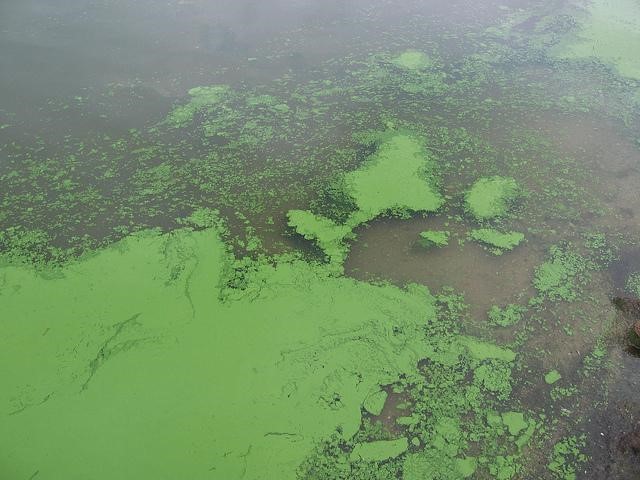
Cyanobacterial blooms are usually blue-green in color but can also be red or brown depending on the type of cyanobacteria. When a bloom occurs a layer of matter may float on the water surface, and appear as foam or scum. Blooms typically occur during late summer or early fall, but can occur anytime during the year.
How do I know If an algal bloom is producing toxins and what can I do to protect myself and my pets?
The only way to determine if cyanobacteria are producing toxins is test the water. The best way to protect ourselves and pets is not to engage in recreational activity in or around bodies of water that exhibit signs of a bloom. When in doubt stay out.
What should I do if I come in contact with algae or experience illness suspected from exposure to a HAB?
- In case of skin contact, remove clothing and jewelry from affected area and wash thoroughly with soap and water.
- In case of illness consult a physician or veterinarian immediately and explain the suspected exposure and symptoms.
Who should I contact to report a potential bloom?
For lakes and streams:
- Waterborne.Health@tn.gov / 615-741-7247 OR
- Jessica.Rader@tn.gov/ 423-714-6606
For farm ponds and agricultural impacts:
- Tennessee Department of Agriculture, Sam.Marshall@tn.gov / 615-837-5306

Blooms can also be reported using the bloomWatch App.
For more information and to download the app, please click on the image link.