American Pygmy Shrew
Sorex hoyi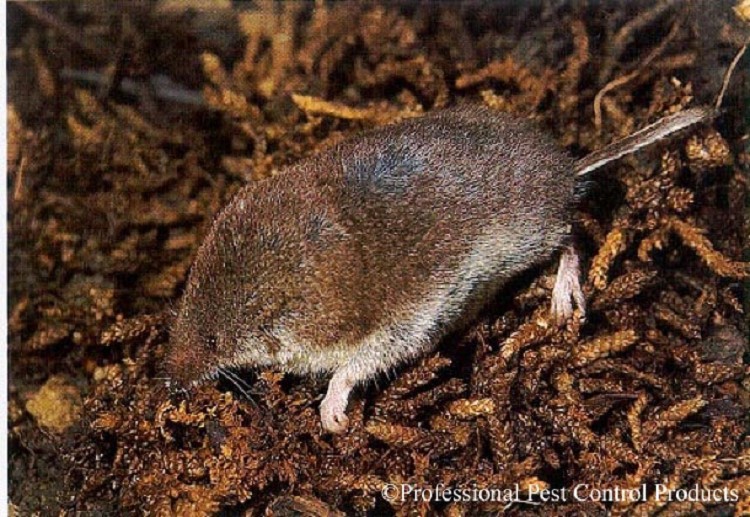
Description
The American Pygmy Shrew is the smallest mammal of North America and occurs across Tennessee, except west of the Tennessee River. A tiny mammal with a short, brownish fur coat in the summer and grayish in the winter; they are pale gray below. It has a long, pointed snout, cylindrical body, and tiny eyes. The tail is about one-third the length of the body, and dark brown above and paler below.
Length: 3.1 - 3.9 inches
Tail: 1.1 - 1.4 inches
Weight: 0.13 ounces
Similar Species: Cinereus Shrew is slightly larger with a longer tail.
Habitat: Occupies a wide range of habitats, including grassy openings, coniferous and deciduous forests, floodplains, and bogs.
Diet: A large part of the diet includes spiders, beetles, and insect larvae, but it also eats earthworms, caterpillars, and centipedes.
Breeding information: Breeding ecology and nest sites are not well known. Most births occur between January and March, although births do occur in the fall in lower numbers. Gestation is thought to last 2-3 weeks, with an average of 5-6 young born per litter.
Status in Tennessee: American Pygmy Shrew is uncommon throughout its range, and is deemed in Need of Management by the Tennessee Department of Environment and Conservation.
Best places to see in Tennessee: Moist grassy opening in a forest with downed timber.

Fun Facts
- American Pygmy Shrews often stand on their hind legs like a Kangaroo; they are very agile and can jump as high as 4 inches.
- Weighs less than a dime.
