Wood Stork
Mycteria americana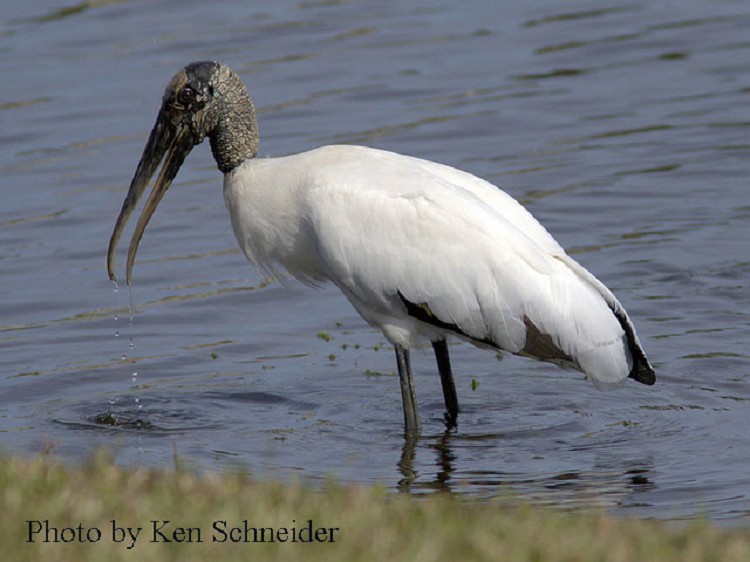
Description
Large, long-legged, slow-moving, heavy wader that feeds in shallow water in southern wetlands and swamps, and is the only stork that breeds in the US. Often feeding in groups, the Wood Stork continuously moves its bill from side to side, probing and feeling for food. The population has been on the decline since the 1960s due to water management practices in South Florida and the loss of habitat in the Everglades. Wood Storks typically only occur in Tennessee from mid-July through September.
Tall, dark, bald head and upper neck, all-white plumage, black iridescent wings, and tail feathers; a long, black, thick bill that is thicker at the base and slightly decurved.
Length: 40 inches
Wingspan: 61 inches
Weight: 5.3 lbs.
Voice: Usually silent, some hissing and bill clattering during nesting.
Similar Species: Egrets - Straight bill, feathered white head, no black markings on the wings. White Ibis – Much smaller, bright red face and bill, black on wing tips. Whooping Crane – Taller, shorter bill, red face, white head, and less black in the wing. Whooping Cranes only occur in Tennessee in winter.
Habitat: In Tennessee, the Wood Stork can occasionally be found in wetlands and swamps in western Tennessee.
Diet: Crustaceans, frogs, lizards, rodents.
Nesting and reproduction: There are no known records of Wood Storks nesting in Tennessee.
Status in Tennessee: The Wood Stock is occasionally seen in marshes, shallow ponds, and mudflats in Tennessee.
Best places to see in Tennessee: Ensley Bottoms, Mud Island State Park, Eagle Lake, and Reelfoot Lake in mid-July through September.

Fun Facts
- During breeding season, Wood Storks' toes turn pink.
- A Wood Stock can live 20-30 years.
- Obsolete English Names: Ironhead, Flinthead, Pond Gannet.
Photos


Sick and Injured Wildlife
