Swainson's Thrush
Catharus ustulatus
Description
The Swainson's Thrush is a shy ground-foraging songbird that is present in Tennessee only as a migrant. It frequents moist woodlands, and during the non-breeding season, you are more likely to hear its call note, which sounds like a drop of water, than its ethereal flute-like song. The Swainson's Thrush primarily breeds in coniferous woods across northern North America, with a small disjunct population in West Virginia and on Mt. Rogers in Virginia. It winters mainly in Mexico and northern South America.
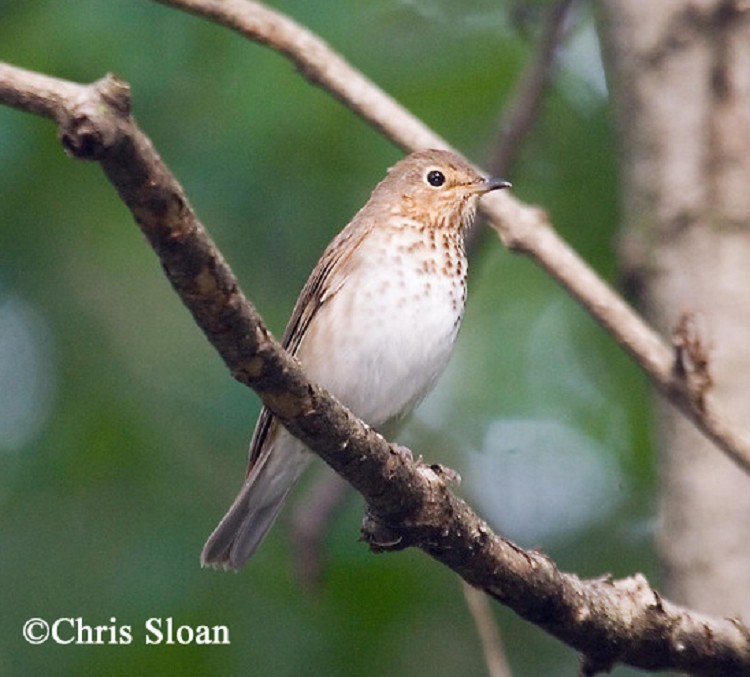
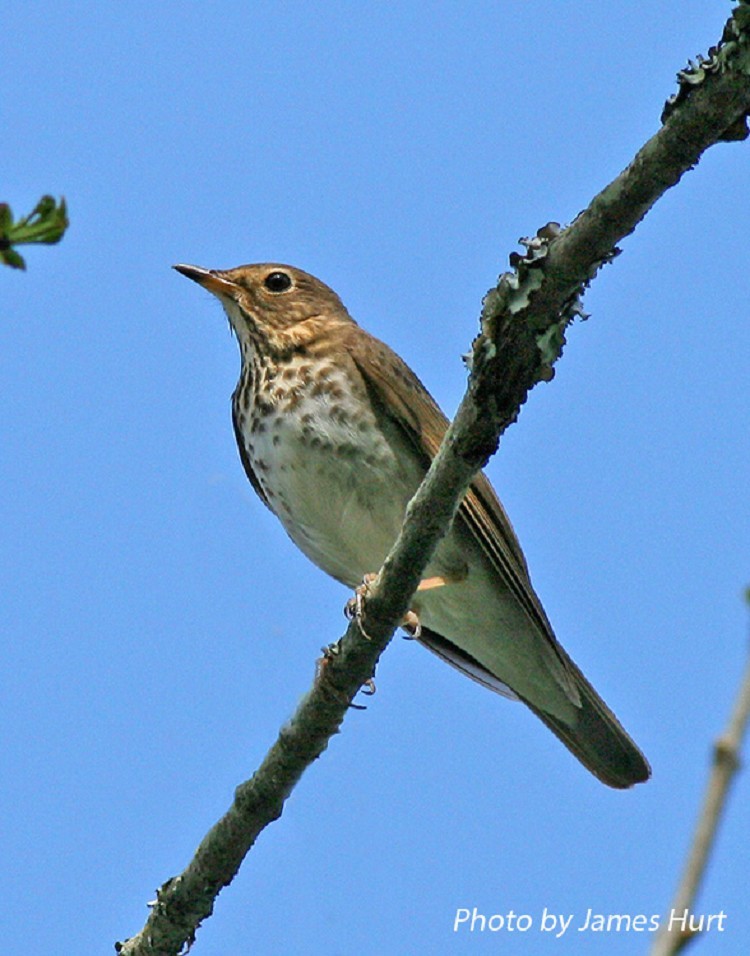
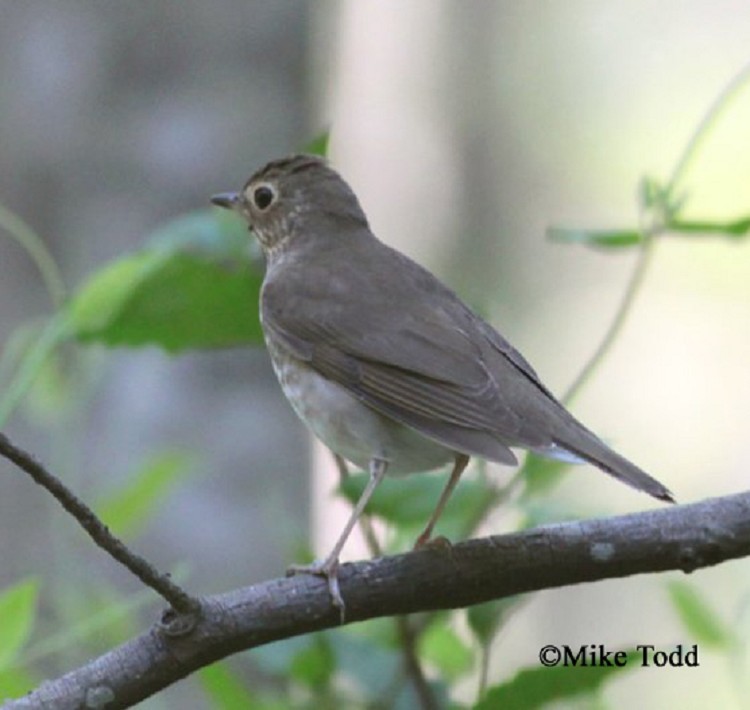
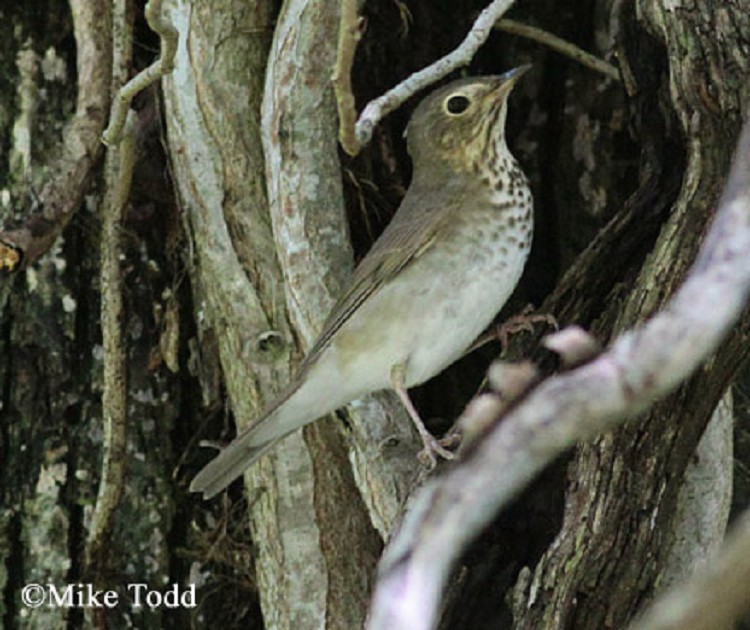
The Swainson's Thrush is uniformly olive-brown above with a buffy face and an obvious buffy eye-ring, appearing to form "spectacles." It is pale below with dark spots on a buffy breast. The male and female look alike.
Length: 7"
Wingspan: 12"
Weight: 1.1 oz
Voice: The song is an upward spiral of flute-like notes, and its call note sounds like a drop of water whoit.
Similar Species: Hermit Thrushes have a thinner, whitish, not buffy, eye-ring and a rusty colored tail that contrasts with its brown back. The Veery has a warm reddish brown back, an indistinct eye-ring, and indistinct reddish brown chest spots. Wood Thrushes have an orange-brown back and bold black spots below. Gray-cheeked Thrushes have a grayish-brown back, lack an eye-ring, and are more heavily spotted in the upper breast than other thrushes.
Habitat: Swainson's Thrushes breed primarily in coniferous forests, especially spruce and fir. They winter in mature tropical and secondary forests.
Diet: A variety of insects and berries.
Nesting and reproduction: While there are breeding records for the Swainson's Thrush on Mount Rogers in Virginia, there are no known nesting records in Tennessee.
Status in Tennessee: The Swainson's Thrush is a fairly common migrant across the state. In spring, it can be present from late April to late May and from early September to mid-October in the fall.
Best places to see in Tennessee: Swainson's Thrushes are somewhat more numerous during spring migration than in the fall. Between late April and late May, they might be encountered in any large wooded area.

Fun Facts
- The Swainson's Thrush was named in honor of the early 19th-century British ornithologist William Swainson (1789-1855).
- The oldest known Swainson's Thrush in the wild was 12 years and one month old.
- Obsolete English Names: Alma's thrasher, olive-backed thrush, russet-backed thrush.
Photos