Zero Waste TN

The Zero Waste TN program provides resources to help Tennessee residents reduce their waste.
The Zero Waste TN program provides resources to encourage Tennesseans to focus on reducing their waste by being aware of where it comes from, where it is going, and how to make responsible decisions along the way. Zero Waste is a philosophy that goes beyond the traditional "reduce, reuse, recycle" model. It is a set of principles focused on waste prevention by redesigning resource lifecycles so that all products and materials are conserved, reused, and recovered. The ultimate goal is to avoid sending trash to landfills, incinerators, or the natural environment. A common way to understand the zero waste philosophy is through the waste reduction hierarchy, often referred to as the 5 R's, which prioritizes action:
Re-Think: Adjust your behavior as a consumer and make purchasing choices that limit your environmental impact.
Reduce: Be mindful of unnecessary items and learn to live without them (e.g., choosing products with minimal or no packaging).
Reuse: Give possessions a second life through creative reuse, repurposing, or donation.
Recycle: Use existing products to create new ones and reduce dependence on virgin materials.
Re-Earth: Compost your organic materials (like food scraps and yard waste) to divert the single largest waste stream from landfills.
Why is Waste Reduction Important?
Waste reduction, and the broader shift toward a "zero waste" model, is critical for both the environment and the economy.
Resource Conservation: Recycling and reusing materials lessens the need to extract raw resources (oil, timber, minerals), saving energy and protecting natural habitats.
Environmental Protection: Properly managing and reducing waste decreases the amount of material that ends up in landfills, which conserves valuable land space. It also reduces air and water pollution, including the harmful greenhouse gas methane, which is produced when organic waste (like food scraps) decomposes in a landfill.
Economic Benefits: Less waste means lower costs for collection and disposal. It also fosters a circular economy by creating new jobs in the recycling and reuse industries.
Reduced Landfill Strain: Tennesseans produce significantly more waste per person each day than the national average. Reducing this volume helps preserve the limited space in existing landfills and reduces the need to build new ones.
Zero Waste Day - October 27th
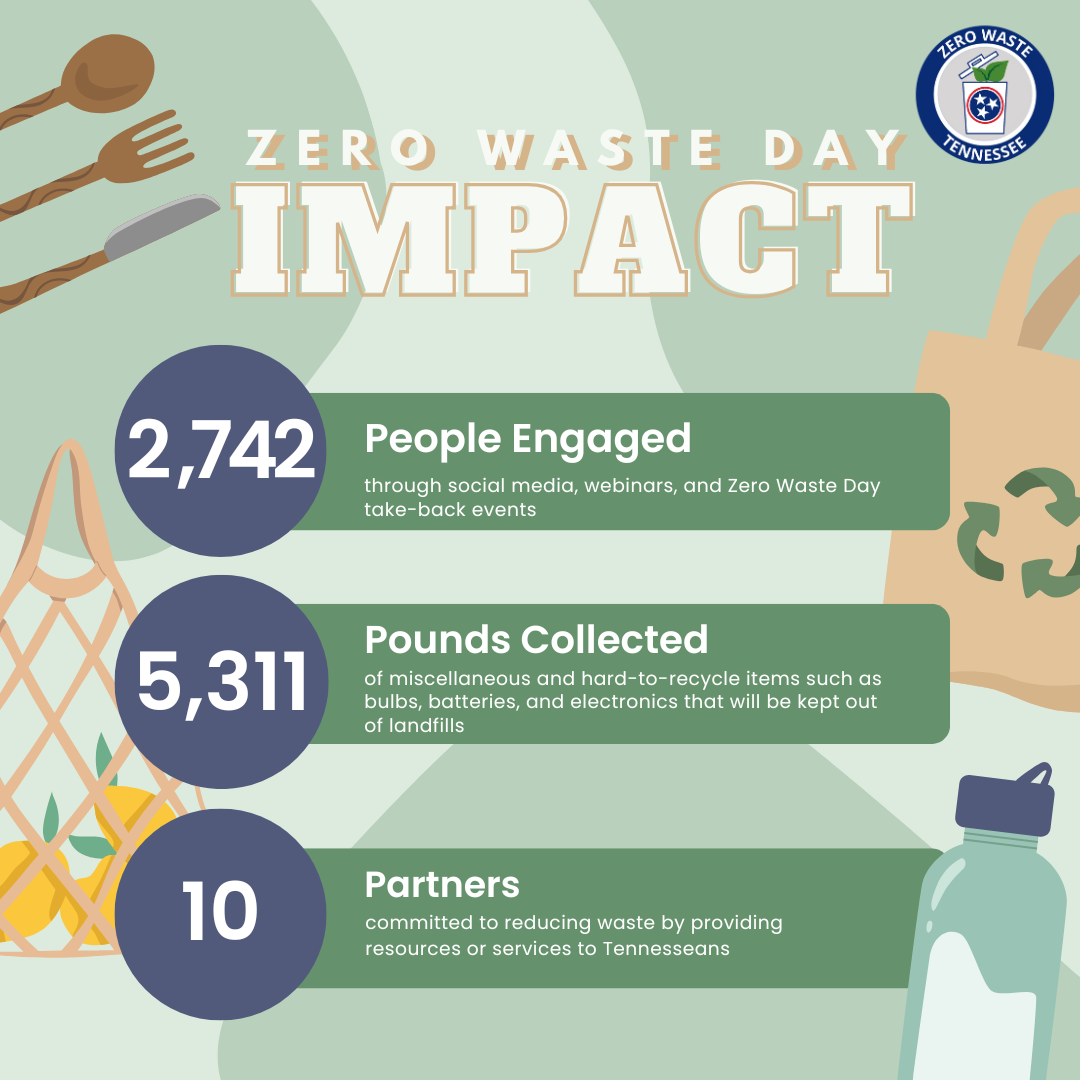
Zero Waste Day is an annual awareness day to encourage residents, businesses, and organizations to take the "Zero Waste Challenge" and reduce waste by following the challenge guidelines. TDEC and its partners provide statewide take-back locations for residents to sustainably dispose of miscellaneous and hard to recycle items with the goal of keeping them out of the landfill.
A Guide to Understanding Zero Waste
This resource reviews the key principles of waste prevention and reduction, including the need for change, and numerous benefits for our communities, environment, and economy.
Consumer's Guide to Zero Waste
This resource shares simple actions that can be taken to reduce waste in the home, on the road, in the office, and more through implementing the practices of the Zero Waste Hierarchy. By adopting these Zero Waste principles, we can greatly reduce our impact on Tennessee's environment, preserve our natural resources for future generations, and reduce the growing costs associated with the collection and disposal of our solid waste.

Kelsey Davis
Sustainability Coordinator, TRUE Advisor
Office of Sustainable Practices
731-431-7856
kelsey.davis@tn.gov