Becoming a Member
Members of the Tennessee Sustainable Spirits Program demonstrate a commitment to sustainability through conserving resources and improving operational efficiency.
Why Become a Member?
Members of the Tennessee Sustainable Spirits Program are officially recognized for their commitment to sustainability through:
- A formal recognition ceremony
- Featured article in the Catalyst newsletter, reaching 40,000 Tennessee subscribers
- Use of the Tennessee Sustainable Spirits logo on marketing materials
- A customized sustainability report to share with customers
Members receive the following support to help improve their resource conservation and operational efficiency:
- A customized sustainability report to identify potential improvements
- In-person technical assistance
- Access to the Sustainable Spirits Member Network
- Invitations to exclusive workshops and events
Through the ongoing support of the Tennessee Sustainable Spirits Program, members can cut costs by identifying and improving inefficiencies in water, energy, and waste.
Jackalope Brewing installed a CO₂ recovery system recommended by TNSS, reducing emissions by up to 50% and cutting CO₂ expenses by 50–100% (Earthly Labs, Craft Brewing Business).
Arrington Vineyards installed a 100kW solar energy system and, through TNSS guidance, reduced their energy ratio by approximately 45%, lowering electricity costs and improving long-term efficiency.(Energy use ratio: Energy use in MJ divided by gallons of product produced).
Membership Eligibility
Tennessee-based spirit producers, including breweries, wineries, and distilleries, are eligible for membership in the Tennessee Sustainable Spirits Program.
To qualify for membership, spirit producers must implement at least 25 sustainable practices from the checklist, many of which are often already in place before a formal commitment to sustainability is made. Sustainable practices marked with an asterisk (*) are little to no cost practices that are prerequisites for participation in the Sustainable Spirits program. For a detailed overview of the sustainable practices that qualify for membership, please refer to the official Sustainable Spirits Member Application Checklist.
- Low-flow toilets & faucet aerators/sensors
- Groundwater monitoring
- Water reuse (rinse water, chill water, etc.)
- Quarterly leak checks*
- Reduced water usage ratio
- Cooling system water recycling
- Effluent meets water quality standards
- Rainwater capture
- Stormwater management (e.g., pervious pavement, detention basins, spill kits, native landscaping)
- CO₂ reuse
- Air scrubbers
- Combustion alternatives
- Radon detection/mitigation
- VOC reduction (e.g., low-emission furniture, paint)
- Alternatively powered equipment
- Reduced transportation through local sourcing
- Recycling* (glass, wood, plastic, paper, metal)
- Potential exception to the requirement, based on location and recycling services available
- Composting
- Spent grain/pomace reuse
- Alternative packaging materials
- Packaging take-back & reduction
- Managing off-spec products
- Waste education initiatives
- Alternative energy sources
- EV charging stations
- Completed energy audit
- Energy Star appliances
- Efficient lighting, HVAC (>15 SEER), insulation
- Geothermal systems
- Occupancy sensors/signage*
- Efficient cooling systems
- 50% locally sourced ingredients (excluding water) for at least one product
- 50% locally sourced packaging (within 500 miles)
- Participation in sustainability events
- Clean-ups, beautification, community gardens, composting, beehives
- Give-back programs & charitable contributions*
- Venue space for community use
- Routine maintenance of forklifts, pallet jacks, delivery vehicles, HVAC, steam systems, and packaging equipment
- Use of green cleaning products (non-production areas)
Are you a spirit producer new to sustainability?
Learn how to start conserving resources and improving your operational efficiency by exploring our resources.
Membership Process
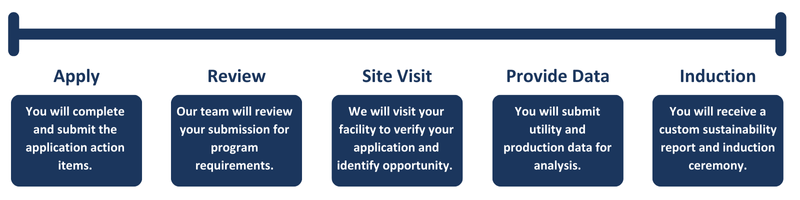
Application Materials
To apply to the Tennessee Sustainable Spirits Program, complete the following action items. Email the completed documents to Sustainable.Spirits@tn.gov.
If you have any questions, please reach out to Mark Valencia.

Mark Valencia
Special Programs Coordinator
Office of Sustainable Practices
mark.valencia@tn.gov
615-934-5826