Bobcat, Lynx rufus
Description
The Bobcat, which is a stealthy hunter aided by keen eyesight, hearing, and a well-developed sense of smell, is the most common and widely distributed wildcat in North America. It can be found all across Tennessee.
These are large mammals with long legs, a stubby tail, a broad face, a short snout, and prominent, pointed ears that sometimes have tufts. The short fur is tawny-colored with black spots and streaks. Facial fur has black lines and a ruff of fur extending from the ears down to the lower jaw. The backs of the ears are solid black with a central white spot. Underparts are white with black spots. Upper legs and tail have black barring; the tail tip is black. They have sharply curved claws that can be retracted.
Length: 22.5 - 50.0 inches
Tail: 3.8 - 7.9 inches
Ears: 2.5 - 2.8 inches
Weight: 10.0 - 40.0 pounds
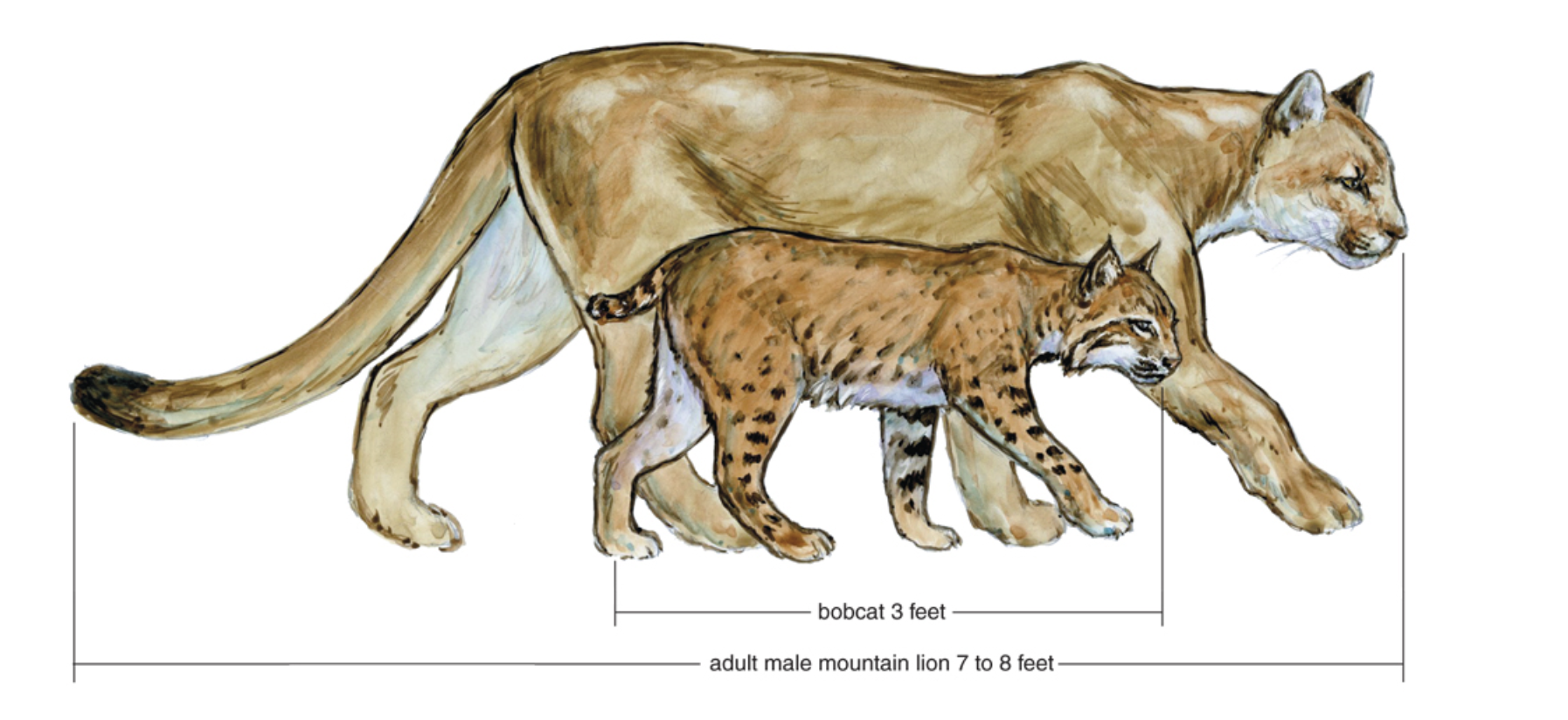
Similar Species: The domestic cat is smaller, has a longer tail usually, and is not spotted with black. Bobcats are often confused with cougars, although cougars are much larger, longer, and have a very long tail.
Habitat: Bobcats occur in a variety of habitats, but they prefer heavily forested areas with thick underbrush. They also occur in timbered swamps, farmland, scrubland, and rocky terrain such as glades, bluffs, and rocky outcrops. Maternity dens are made of dry leaves and moss and are usually located under a fallen tree, in a hollow log, or in a rock shelter.
Diet: The majority of food is small mammals, including rabbits, mice, rats, squirrels, and shrews. They will also occasionally eat deer, turkey, snakes, domestic cats, and grass.
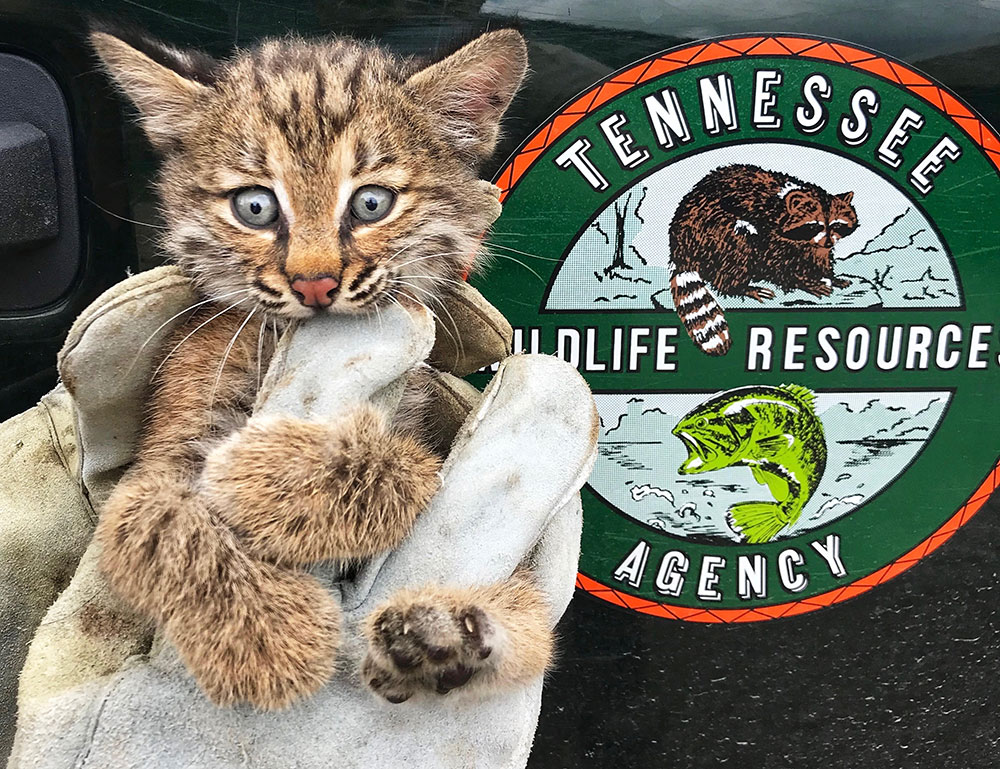
Breeding information: Mating season begins in December and may continue into summer, but usually peaks in March. A litter of 1-5 (usually 2-3) kittens is born after a 50-70 day gestation period. Kittens are born with sharp claws and spotted fur. They are able to play outside the den after their eyes open at 9-11 days old. Weaning occurs at 2 months old, but the kittens will stay with the mother until at least the fall.
Status in Tennessee: Bobcats are hunted and trapped in the state. They may be abundant in suitable habitats.
Best places to see in Tennessee: Second-growth timber with a lot of underbrush.

Fun Facts
- Like most felids, Bobcats are solitary animals.
- The Bobcat gets its name from its stubby, or "bobbed," tail.
Photos