Black Bears in Tennessee
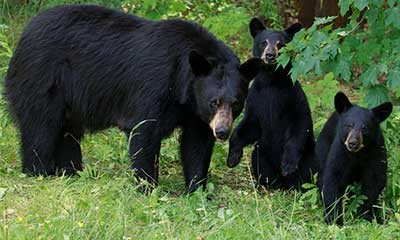
I Saw A Bear Submission
This form, I Saw a Bear Form, is for reporting a sighting only. You CAN NOT use this form to report a human-bear conflict or a sick or injured bear. Historically, black bears were found throughout the state of Tennessee. While bears are regularly seen in East Tennessee, it less common in the middle and western portions of the state. As bear populations in Kentucky, Mississippi, and Arkansas grow and expand, we expect bears to recolonize their historical range. This tool is used to help us track and verify sightings in recolonized areas.
Have a human-bear conflict?
The expansion of human-populated areas has resulted in an increase in bear sightings around people. A bear being in an area is not a cause for alarm, but proper measures should be taken to reduce the risk of bears lingering due to attractants.
Please use our TWRA Contact Us webpage to find the poaching hotline for your area to contact TWRA dispatch.
To report a bear related issue, you can contact TWRA dispatch at the numbers below.
West Tennessee (Region 1) - 1-800-831-1173
Middle Tennessee (Region 2) - 1-800-255-8972
Cumberland Plateau (Region 3) - 1-833-402-4699
East Tennessee (Region 4) - 1-800-831-1174
Human-Bear Conflict Examples Include:
A bear that has attacked or is stalking a human
A bear that is unfearful of humans or has caused property damage
A bear that has entered a vehicle, dwelling, or inhabited building
A bear that is habituated to non-natural foods
A bear that does not leave an area when humans are present

Healthy Bears
An example of a healthy black bear is one that is able to eat and move normally in a natural environment. Bears in Tennessee and the southeast are primarily black with a long, straight, brown snout but in other parts of the country, bears can be black, brown, and white. A healthy male Tennessee black bear can be between 4-7 feet long and weigh as much as 500 lbs!
This form, I Saw a Bear Form, is for reporting a sighting only. You CAN NOT use this form to report a human-bear conflict or a sick or injured bear.
To learn even more about bears, visit bearwise.org.
After reading these descriptions and you are certain the bear is sick, injured, or orphaned, find the appropriate TWRA office to contact in your area by clicking here.
A bear that is exhibiting injuries or behavior that would limit its ability to forage, climb trees or escape danger would be considered injured and warrants a call to TWRA. A bear that has been struck by a vehicle BUT is able to leave WITHOUT obvious distress or a bear with a simple limp would not be considered injured.
Black bears are tough animals and can survive many injuries and illnesses. They can function and live normally with a limp, three legs, missing eye, etc. Usually by the time the injury is noticed by a person, it is already healed and would cause more distress to fix. Juvenile and adult bears cannot be rehabilitated because they do not adapt well to captivity. This leads to increased stress such as pacing, not eating, swaying and even self-mutilation. This slows the healing process leaving the bear injured for longer or unable to heal at all. Captivity and the care needed to rehabilitate juvenile and adult bears can also lead to habituation to people and make them unable to be released back into the wild.
The best mother for a bear is a bear itself. TWRA will not remove injured cubs from the care of a female bear. TWRA evaluates each situation with injured, sick and orphaned bears and determines the appropriate action. In most cases, the agency has two options:
1. Leave the bear alone to allow natural healing or to survive on their own based on size and time of year.
2. Euthanize the bear to prevent prolonged suffering.
If the bear(s) meets the following descriptions, call TWRA:
- unable to climb a tree or flee a threat
- unable to leave the scene after a collision with a motor vehicle
- unable to properly forage or consume food
- is emaciated to the point that ribcage, spine, and hip bones are highly visible
- Bear is severely bleeding, unconsciousness, severe head trauma, bleeding from mouth or nose, seizing, etc.
-Bear has remained in the same area for over 24 hours (not a tree)
- Bear is exhibiting severe hair loss and crusty skin (signs of mange, click here)
- the mother bear is confirmed deceased and cubs are in the area
-OR the mother bear has not been sighted for 36 continuous hours or more AND the cubs appear to be less than 30 pounds (the size of a beagle or smaller)
*Insert photos of cub vs yearling and injured bears
Mange
Mange is a contagious skin disease of many wild and domestic mammals that is caused by microscopic mites that burrow into the skin. A mange infection can only be confirmed by taking a skin scrape from a bear and looking for the mite under a microscope.
Black bears can be affected by several types of mange, including Uriscoptic, Demodectic, and Sarcoptic mange, which are each caused by different species of mites.
This summary below provides information on sarcoptic mange and its impacts on both bears and people. It HAS NOT been detected in Tennessee’s black bears. It has been detected in other bear populations in the Eastern United States.
What is Sarcoptic mange?
Sarcoptic mange is a highly contagious skin disease that affects many wild and domestic mammals including black bears. It is caused by a mite known as Sarcoptes scabiei, which burrows into the skin causing itching, redness, scabs, crusts, thickened skin, hair loss, depression, loss of appetite, and weight loss.
How is mange transmitted?
Currently, there are many unknowns related to the occurrence and spread of mange in bears. Mites can transfer to a new host when an unaffected animal comes into direct physical contact with an infested host. Also, mites that fall off an infested host can persist in the environment and may infect a new animal that enters that area. Because bears are solitary, the biggest risk for environmental transmission occurs under conditions where they congregate, either naturally such as den sites or unnaturally, typically around food sources such as bait piles, garbage cans, bird feeders, etc.
Are there human and pet implications?
Sarcoptes scabiei is transmissible to humans and pets that have come into direct contact with either an infested bear or an area occupied by or item that touched an infested bear. Human infections typically result in an itchy skin rash that usually resolves without treatment and lasts from several days to several weeks. Human infections can be prevented by avoiding direct contact with bears displaying evidence of mange. If a skin rash develops that you suspect is due to S. scabiei, contact your health care provider. Contact your veterinarian if your pets have interacted with wildlife suspected to be infested with mange.
What to do if you see a bear you suspect has mange?
Safely take a picture without approaching the bear or save the photo from your security or trail camera and record the location. Contact your regional TWRA poaching hotline to report a possible mange sighting.
What can you do to prevent the spread of mange?
Minimize the congregation of bears by following BearWise® practices such as:
Never intentionally feed bears
Remove all wildlife feeders and food piles when bears are active
Secure garbage and recycling
Never leave pet food outside
Alert neighbors to do the same
Is all hair loss mange?
No, just like dogs, bears lose some of their soft, dense insulating underfur as well as some of their coarse outer guard hairs when temperatures increase. That’s why bears can look scruffy by late summer. Bears can also lose hair due to nutritional deficiencies, hormone imbalances, other parasites and even allergic reactions. Blunted hair coat may be signs of hair regrowth after recovery from mange or other hair loss-causing condition.
Can TWRA treat or help bears with mange?
Bears can and do survive mange and continue to live normally. Research has shown that bears that are treated for mange are almost equally as likely to recover as those who are not treated. Bears that have recovered naturally then have antibody resistance for future infections. Bears with severe mange may be euthanized by a wildlife manager due to animal welfare concerns and to prevent further spread in the area. TWRA participates in the Mange Working Group with other southeast states to monitor the presence of different mange species and their prevalence. TWRA will use the most up to date science to determine best management practices.
Insert photos of mange vs hair loss/shedding
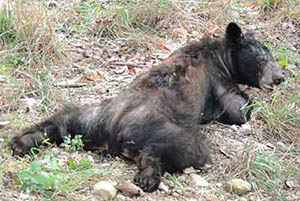
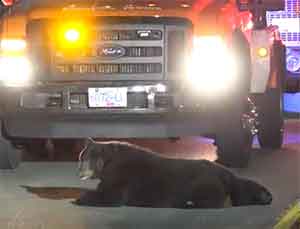
Orphaned Cubs
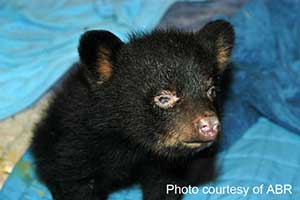
Only if the mother is confirmed to be dead or the cub remains alone for more than 36 hours and its estimated weight is less than 30 pounds should the TWRA be contacted. The best situation for a cub is to be with its mother! Therefore, please document when the cub is first observed alone and only contact after 36 hours!
TAKE NOTE!!! A bear cub that is simply alone may not be orphaned! The mother may be nearby but could be unseen for a while. An orphaned cub will be alone and is likely missing patches of fur on top of its head between the ears. While it may not be visible from a distance, they usually have scaly skin that often contains abscesses and their gums are pale from anemia as parasites are removing nutrition from their blood.


YOUR Responsibility for Black Bears!
Black bears are one of Tennessee’s state treasures and no other animal exemplifies the wilderness experience like them. They have been called a charismatic mega-fauna and for good reason – everyone from non-hunters to hunters, to wildlife watchers - we all love bears in our own special ways. For these reasons, it is everyone’s responsibility to keep them wild and keep them alive.
The age-old adages: GARBAGE KILLS BEARS and A FED BEAR IS A DEAD BEAR could not be truer. Nationwide bear management experience has clearly shown that bears attracted to human food sources, or that are deliberately fed by humans, have a relatively short life. The survival rate of bears receiving food from people is likely a fraction of that of wild bears that do not have repeated contact with humans. The deliberate and accidental feeding of bears is socially irresponsible and causes animals to become conditioned and habituated to people.
Bears that habituate to human presence eventually become a threat to human safety. The end result is that such bears are often killed by intolerant and/or fearful landowners or have to be destroyed by the TWRA. The primary corrective action to this management dilemma is to simply restrict the access bears have to human foods. However, state and federal agencies have confronted significant challenges in bringing about even moderate changes to human behavior to achieve greater safety for humans and bears.
Tennessee residents and visitors can support bears by taking steps to ensure that wild bears remain “wild” by carefully managing sources of human food or garbage that might attract bears. The wise stewardship of the habitat we share with bears is the joint responsibility of both wildlife managers and the public and will be essential for a viable future for our state treasure, the black bears of Tennessee. Encountering Black Bears
To learn about what to do when encountering a bear while Hiking and Camping visit, bearwise.org.
THINGS TO KNOW:
While black bears are usually tolerant of humans, they should always be treated as wild animals, whether in residential or backcountry areas.
Black bears are rarely aggressive towards people and typically go out of their way to avoid contact, however as human development continues and bear numbers increase, occasional interactions will be unavoidable.
Black bears are extremely powerful animals whose behaviors can be unpredictable.
Black bears are very curious animals and this should not be confused with aggression.
Startled bears will often confront intruders by turning sideways to appear larger, make woofing and teeth clacking sounds, salivate, lay their ears back and slap the ground with their paws. These are warnings for you to leave the area.
Bears will often stand on their hind legs to get a better view or a better sense of hearing and smell.
Following these simple guidelines will minimize many unnecessary and potentially dangerous encounters.
Never feed or approach bears!
If a bear approaches you in the wild, it is probably trying to assess your presence.
If you see a black bear from a distance, alter your route of travel, return the way you came, or wait until it leaves the area.
Make your presence known by yelling and shouting at the bear in an attempt to scare it away.
If approached by a bear, stand your ground, raise your arms to appear larger, yell and throw rocks or sticks until it leaves the area.
When camping in bear country, keep all food stored in a vehicle and away from tents.
Never run from a black bear! This will often trigger its natural instinct to chase.
If a black bear attacks, fight back aggressively and do not play dead! Use pepper spray, sticks, rocks, or anything you can find to defend yourself. If cornered or threatened, bears may slap the ground, “pop” their jaws, or “huff” as a warning. If you see these behaviors, you are too close! Slowly back away while facing the bear at all times.
Notify the TWRA immediately if you witness aggressive behavior by black bears! Find the appropriate TWRA office to contact in your area by clicking here.
Secure Attractants
To learn how to secure attractants from bears, click the links below.

Black Bear Biology and Natural History
Black bears (Ursus Americanus) historically ranged throughout Tennessee and most of North America.
Native Americans utilized bears not only for meat and fat but also for their heavy hides. The first explorers and settlers in Tennessee similarly harvested bears. However, settlers also feared bears and saw them as a threat to livestock and human safety. The healthy bear populations that ranged from the bottomlands of West Tennessee to the mountains of East Tennessee began a slow decline soon after settlers arrived. Extreme changes in Tennessee’s habitat along with unregulated hunting eliminated bear populations from all but 11 mountainous counties
The creation of the Great Smoky Mountain National Park and the Cherokee National Forest in the 1930s protected populations and is undeniably the greatest factor in saving bears in Tennessee. In addition, laws were created with the establishment of the Tennessee Game and Fish Commission in 1949. Still, by the mid-1960s, bear harvest data reflected diminishing bear populations.
Physical Description
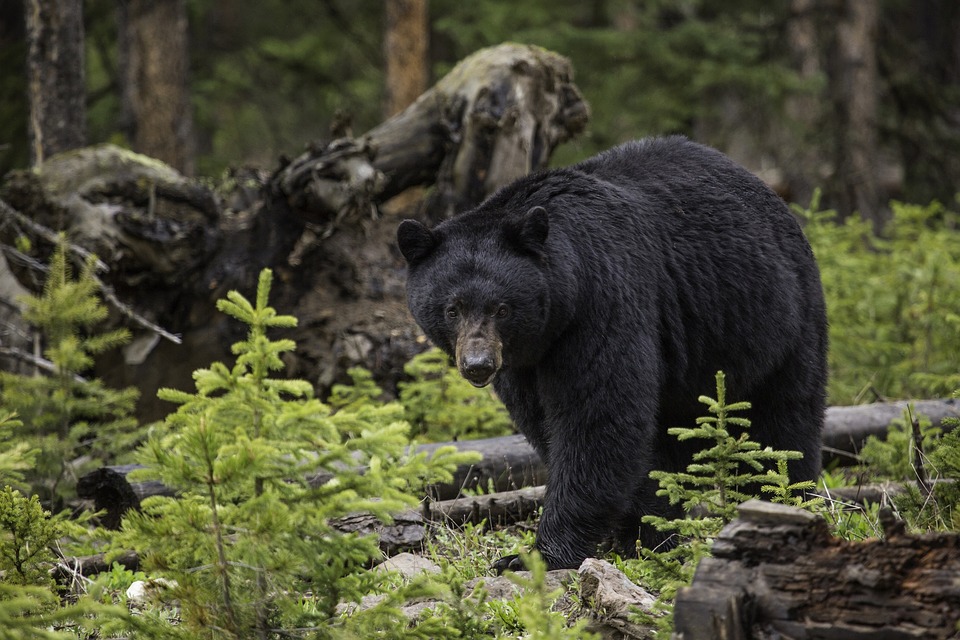
Black bear in Tennessee are primarily black with a straight, brown snout. However other color phases including brown, cinnamon and rust have been noted in the Eastern United States. White patches on the chest can also be present.
Adult bears can be three feet tall at the shoulder and six feet in length. Black bears vary greatly in weight, depending on food availability and time of year. Weights range between 125 to 600 pounds for adults. Females are generally smaller. The back end of a black bear is normally taller than the front and black bears do not have a hump at the shoulder, like their cousin the grizzly bear.
Black bears have average eyesight, fantastic hearing and an amazing sense of smell. Thought to be one of the best noses in the animal kingdom, their smell is 100 times greater than our own and seven times greater than a bloodhound.
Although cumbersome looking, bears are great swimmers and capable of running at burst of 30 miles an hour. Black bear are very dexterous and strong. They have been seen unscrewing lids of jars and easily tearing open metal containers to reach food.
Black bears are considered crepuscular animals. That is, they are most active at dawn and dusk; although they can be active any time in areas where humans are less common. Bears bed down on the hottest of days, in cooler safe locations. Healthy, normal bears avoid humans and areas around human dwellings.
Denning
Black bears use a variety of places to den including hollow trees, under boulders, tree roots and fallen trees. Occurrences of denning in shallow depressions have also been documented. Denning starts as early as November and ends as late as May. Females tend to begin hibernation earlier than males. In years of high mast production, bears can enter dens later. Bears do not eat, urinate or defecate during hibernation. They also reduce their heart rate and breathing.
Feeding
Although listed as a carnivore, black bears are primarily omnivorous feeding on seasonally abundant foods. Bear diets include berries, fruits, nuts, insects, roots, grasses, small rodents, bird eggs and carrion. Acorns comprise much of and are a significant food source in the late season diet of black bears in Tennessee. Bears, like many other wild animals, are opportunistic and look for effortless calories. They easily become habituated to human food.
Reproduction
Both male and female bears reach sexual maturity around three and a half years of age. Mating occurs in late spring to early summer and cubs are generally born in January. Female bears typically practice embryonic diapause, or delayed implantation of a fertilized egg. This allows females to extend gestation until they are in prime physical condition. Implantation generally occurs in the fall with young born in January or February.
Cubs weigh just ounces at birth, and they’re born blind without fur. They grow rapidly in the den and can weigh over five pounds upon spring emergence. Bears give birth to between one to five cubs, with two being the norm. Litters are produced every other year. Cubs stay with their mother for the first season and spend a second winter with her. Upon emergence in the second spring, mother bears drive offspring away. Young females don’t go far, often establishing territories that overlap with their mother’s. However young males move farther away to establish territories.
Signs and Tracks
Because black bear are larger creatures, tracks and signs are often distinguishable.
- Tracks: The front foot of a black bear can measure from just under four inches to over eight inches long. The rear track can measure from five to almost nine inches long. Bear claws are long and always tend to register in their tracks. Black bears are plantigrade, meaning they walk on the entire foot.
- Black bear scat: varies greatly depending on seasonal diet. Sometimes mistaken for horse manure, it is large in size. Unlike horse manure, bear scat can reveal a diet consisting of various nuts, seeds, berries and grasses.
- Black bears bed: in varied terrain throughout Tennessee, but they tend to use dense cover and thicker vegetation. They sometimes built next to good climbing trees. Beds are round or oval and during colder months might contain materials such as leaves and branches which provide protection from the cold ground.
- Black bears den: in a variety of places including under root systems, caves, rock outcrops, dense thickets and tree hollows. They’ve also been known to utilize areas under porches, decks and culverts. Natural den site entrances vary greatly, but are often between 18 to 24 inches.
- Black bear scent post, rubs, claw or bite signs: include a variety of tree species and sometimes even manmade structures such as telephone poles. Contrary to some beliefs, they are not signs of aggressiveness in bears, but simply means of communication. These signs are often located near bedding and feeding locations. Signposts note the territory, mating status, and overall health of a bear.
- Food Cache: Black bears can kill other animals for food if the opportunity arises. They will also feed on carrion. If the meal isn’t consumed in whole, bears most often cover it with available, surrounding materials such as grass or leaves. Black bears sometimes pull bark off of trees to reach or find food. Stumps pulled apart, logs or rocks flipped over and digging can show signs of bears foraging for food.

Recovery of Black Bear in Tennessee
The 1970’s marked the beginning of Tennessee’s modern era. The Tennessee Game and Fish Commission closed the bear hunting season from 1970 through 1972 with hope that the population would rebound. When the season resumed in 1973, only 16 bears were harvested; 14 of which were killed on the Tellico Wildlife Management Area. Even with the hunting season closure, it was obvious that more extensive management was needed. A report from the 1974 Eastern Workshop on Black Bear Management reported black bear remained in only 10 counties.
With the realization that the bear population was a shared resource with the states of North Carolina and Georgia, a multi-state collaboration was needed. This resulted in the formation of the Tri-State Black Bear Study in 1976 (Figure 2). From this study a committee was developed to create a venue to share management and research information among government and research institutions. Decisions made by this group played a pivotal role in the regional bear management success we realize today. The Tri-State Black Bear Study Group, now known as the Southern Appalachian Black Bear Study Group, has added three states (Kentucky, South Carolina and Virginia) and continues to meet biannually to share and discuss regional bear issues.
The early work of the Tri-State Black Bear Study Group defined two primary issues in need of resolve. Both became a priority for TWRA over the next four decades.
The first included the need to reduce illegal kills. TWRA Wildlife officers spent, and still spend, countless hours working bear enforcement. The largest undercover bear hunting sting in North America took place in the 1980’s. Called Operation Smokey, it resulted in the arrest of 43 individuals in Tennessee, Georgia and North Carolina, with a combined 130 state and federal violations involving the poaching and selling of bear parts. These efforts have continued and resulted in a steady decline in poaching.
The second issue defined by the Tri-State Black Bear Study was to protect the female segment of the bear populations. Because females hibernate earlier than males, this was accomplished simply by moving hunting season later in the year. This slight change in hunting strategy reduced the percentage of females harvested from 56% before 1981 to 37% over the next 23 years.
As populations have continued to respond positively, the agency has provided opportunities for earlier hunting seasons resulting in females making up approximately 40% of the harvest over the last eight years. Further protection of females was accomplished by the establishment of bear sanctuaries, which provided source populations of breeding females in areas with quality bear habitat, suitable for raising young. In addition, no bear hunting, dog training or raccoon hunting is allowed in the reserves during bear seasons. Including the Great Smoky Mountain National Park (241,000 acres) where hunting is prohibited, the reserves contain a total of 450,413 acres in Tennessee.

Where To Find Bears In Tennessee
2005 Bait Station Surveys
Black Bear Bait Station Survey was conducted during the month of July 2005 in 12 East Tennessee counties by 31 TWRA personnel. A total of 27 areas were surveyed that consisted of 408 bait sites. Bears visited 235 bait sites that accounted for a visitation rate of 57.6%. This was a decline of approximately 5% from the previous year. Of the 27 areas surveyed, 59% (n=16) showed declines in visitation rates. Furthermore, all counties reported declines in visitation rates except for Blount.
2006 Bait Station Surveys
Black Bear Bait Station Survey was conducted during the month of July in 12 East Tennessee counties by 28 TWRA personnel. A total of 28 areas were surveyed that consisted of 424 bait sites. Bears visited 267 bait sites that accounted for a visitation rate of 63%. This was an increase of approximately 5% from the previous year. Of the 28 areas surveyed, 64% (n=18) showed an increase in visitation rate. Furthermore, all counties except Carter, Polk, and Washington reported increases in visitation rates.
2007 Bait Station Surveys
Black Bear Bait Station Survey was conducted during the month of July in 11 east Tennessee counties by 28 Tennessee Wildlife Resources Agency personnel, interns, and volunteers. A total of 28 areas were surveyed that consisted of 418 bait sites. Bears visited 301 bait sites that accounted for a visitation rate of 72%. This was an increase of 9% from the previous year. Of the 28 areas surveyed, 71% (n=20) showed an increase in visitation rate. Furthermore, all counties except Monroe and Unicoi reported increases in visitation rates.
2008 Bait Station Surveys
Black Bear Bait Station Survey was conducted during the month of July in 11 east Tennessee counties by 26 Tennessee Wildlife Resources Agency personnel, interns, and volunteers. A total of 29 areas were surveyed that consisted of 435 bait sites. Bears visited 243 bait sites that accounted for a visitation rate of 56%. This was a decrease of 16% from the previous year. Of the 29 areas surveyed, 59% (n=17) showed a decrease in visitation rate. Furthermore, all counties except Unicoi and Washington reported decreases in visitation rates.
2009 Bait Station Surveys
Black Bear Bait Station Survey was conducted during the month of July in 11 east Tennessee counties by >25 Tennessee Wildlife Resources Agency personnel, interns, and volunteers. A total of 29 areas were surveyed that consisted of 423 bait sites. Bears visited 280 bait sites that accounted for a visitation rate of 70%. This was an increase of 14.1% from the previous year but similar to 2007. Of the 29 areas surveyed, 55% (n=16) showed an increase in visitation rate. Furthermore, all counties except Sullivan and Unicoi reported increases in visitation rates.
Black Bears in Town
As bear and human populations increase and more people move near public lands and bear inhabited areas, bear-human interactions are increasing creating potentially dangerous situations. To learn more about coexisting with bears, go to the Bear Wise Website. You can also help prevent safety concerns by following these Bear Wise Basics:
- Never feed or approach bears.
- Do not store food, garbage, or other recyclables in areas accessible to bears.
- Do not feed birds or other wildlife where bears are active.
- Feed outdoor pets a portion size they will completely consume during each meal and securely store pet foods.
- Keep grills and smokers clean and stored in a secure area when not in use.
- Talk to family and neighbors when bear activity is occurring in your area.
What to do if a bear approaches you in town:
- Bears will almost always find an escape route if they are left alone.
- Shout and throw sticks or rocks in the vicinity of the bear to encourage flight once an escape route has been established.
- Females with cubs will often climb a tree to for escape cover; never surround a tree holding any bear, especially a female with cubs!
- Locate and remove the lure that caused the bear to come into your area. There is almost always a safe escape route when bears enter towns. Crowd control is the initial concern as the behavior of a cornered bear can be unpredictable. Immediately report to the TWRA or local police any sightings of bears within areas of human population centers.
Local and State laws for reducing bear-human conflicts
As it stands, other than hunting over baited areas, there are no statewide laws against the intentional or unintentional feeding of wildlife including bears.

Black Bear Population Management
Range
Tennessee has two main black bear populations: the Appalachian Population along the Tennessee-North Carolina border and the Cumberland Population in the northern part of the Cumberland Plateau along the Tennessee-Kentucky border. Because black bears are very mobile and travel across state lines, we not only manage a Tennessee black bear population, but a shared population with many neighboring states. Collectively, this interstate population is known as the Southeastern Black Bear Population, and is shared with Kentucky, North Carolina, South Carolina, Virginia, and Georgia.
Distribution
Bear populations in Tennessee are growing, and re-colonization of former range continues.
This map shows the current distribution (annual and seasonal) of black bears in Tennessee.
Long-term Occupied is defined as areas where there have been sustainable populations of black bears for many years. Sightings can be expected during any time of the year.
Recently Re-established is defined as areas where populations have been re-established within historical range and sustainable populations have become, or are expected to become established in the short-term. Evidence of reproduction has been documented. Seasonal/Transitional is defined as areas where bear sightings can be expected during the spring or late summer when bears are roaming in the search of food or establishment of home ranges. Proximity of an area to long-term occupied or recently re-established populations impacts frequency of these sightings.
Infrequent Transient is defined as areas where random bear sightings may occur at any given time. Sightings are not related to proximity to long-term occupied or recently re-established populations.

Research
As black bear populations dwindled into the mid-twentieth century, research and recovery efforts were initiated with hopes of restoring populations. A black bear study in the Great Smoky Mountains National Park began in 1969 as a cooperative endeavor with the University of Tennessee and is the longest ongoing black bear study in the U.S.
This research coincided with the creation of the Tri-State Black Bear Study Group between Tennessee, North Carolina and Georgia in 1976.
The early work of this group identified two primary issues: 1) Enforcement of game laws to reduce illegal kills and 2) Protection of the female segment of the population. Over the next four decades these two goals were made a priority of the TWRA as well.
The TWRA strives to reach these goals by:
- Wildlife officers spent, and still spend, countless hours working bear enforcement. In 1988, Operation Smoky resulted in the arrest of 43 individuals in Tennessee, Georgia and North Carolina who were charged with 130 state and federal violations involving the poaching and selling of bear parts.
- Protection of females during hunting season was accomplished relatively easily by identifying that females typically begin hibernation earlier than males and by simply scheduling hunts later in the season. This simple change in hunting strategy reduced the percentage of females in the harvest from 56% before 1981 to 37% over the next 23 years. As populations have continued to respond positively, TWRA has provided opportunities for earlier seasons resulting in females making up approximately 40% of the harvest over the last eight years. Additional protection of females was realized by the establishment of bear reserves with the purpose of establishing a source population of breeding females that would be protected from hunting. In addition to no bear hunting, no dog training or raccoon hunting is allowed in the reserves during bear seasons. Including the GSMNP (241,000 acres) where hunting is prohibited, there are a total of 450,413 acres of bear sanctuaries in Tennessee.

Population Estimate
Monitoring a large carnivore can be extremely time-consuming and expensive. Traditionally, the Agency has used bait stations to monitor trends. Unfortunately, sensitivity to population changes will diminish with this index as visits reach high percentages on an annual basis.
Most recently, TWRA has utilized population reconstruction to estimate population trends. This chart supports evidence that the bear population in Tennessee continues to grow.
In order to minimize biases associated with population models, TWRA uses multiple harvest descriptors to estimate the bear population including tooth collection and numbers of male and female bears harvested.
The success of this method revolves around tooth collection and TWRA encourages hunters to collect and submit as many bear teeth as possible. In 2013, TWRA personnel collected teeth from over 25% of harvested bears. Not sure how to collect the right tooth?
In areas not open to hunting, bait stations, sightings, road kills, and depredation permits are utilized to monitor population trends.
Why are bears in areas with people?
The expansion of human-populated areas has resulted in an increase in bear sightings around people. A bear being in an area is not a cause for alarm, but proper measures should be taken to reduce the risk of bears lingering due to attractants.
To learn more about coexisting with bears at home and outdoors, visit Bearwise Basics and Bearwise Six Outdoor Bearwise Basics.
Is it illegal to feed bears?
It is illegal to feed bears within the city limits of Gatlinburg per TWRA Proclamation 24-15. There is not currently a statewide feeding law, however, people should never intentionally or unintentionally (garbage, birdseed, pet food) feed bears. Feeding bears causes them to change their behavior and become a risk to public safety. When this happens, TWRA has no other options than to humanely kill the bear.
Does bear spray really work?
Yes! Research shows that compared to all other methods of deterring bears, including firearms, bear spray is the most successful at stopping a bear that threatens you and preventing or greatly reducing attacks and injuries. Carrying bear spray is not a substitute for following recommended safety practices for avoiding encounters and preventing conflicts. Learn more on this Bearwise Bear Spray Ariticle.
Will TWRA relocate a bear from my property?
TWRA reserves the use of relocation in limited circumstances. Relocation is not effective with a recent study finding that 90% of relocated bears do not survive for more than four months. The other 10% return to where they originated and continue the same behavior. There are also other bears in the same area ready to take its place and relocation does not solve why the bear was there to begin with. There is no place we can take bears where there are no people living or recreating. To learn more about the study and relocation, read this article on bear relocation.
Why not take the bears back to the Great Smoky Mountains National Park?
Bears that are relocated do not stay where they are released and often travel hundreds of miles. Bears have large home-ranges, and most bears use areas greater than the national park boundaries. A study found that over 90% of male bears and over 50% of female bears utilize areas outside the boundaries of Great Smoky Mountains National Park. To learn more, read this WBIR article on bear movements in and around the Great Smoky Mountains National Park.
Why does TWRA humanely kill bears?
TWRA must maintain public safety as its highest priority. Bears that routinely obtain food sources such as garbage, birdseed, and pet food begin to lose their fear of people. These bears exhibit bold behavior such as causing property damage, breaking into vehicles and buildings, and in some cases injuring people. Once they learn these behaviors, it cannot be reversed. Relocating the bear does not change its behavior. When bears exhibit this type of behavior, it lowers the tolerance people have for bears due to cost of property damage and fear for their and others’ well-being. This can lead to increased illegal killing of bears, poisoning, requests to decrease the population size and other negative outcomes. By removing specific animals that are a public safety risk and education and securing attractants, we can keep other bears wild and safe.
Why not place bears in captive facilities like zoos or create a large sanctuary for conflict bears?
Bears cover large home ranges sometimes greater than 60 square miles. They do not transition well into being held in a captive area as their instincts’ to roam are strong. Additionally, bears live to be 20-30 years old and there are not enough captive facilities or large enough areas to hold all the bears needed.
How many calls does TWRA receive a year about bears?
The five-year average is 1215 calls with the highest call volume in 2024 of 1770 calls.
Why does Tennessee have a hunting season for bears?
TWRA regulates hunting and fishing within the state to maintain sustainable populations. There are an estimated 6000 bears in the state and we utilize hunting seasons to maintain or decrease population growth rates and to allow a recreational opportunity. Animals that are overpopulated are subject to higher rates of disease, competition between animals, and vehicle collisions.
Can people eat bear meat?
Yes, most people that harvest a bear in Tennessee consume the meat. Bear fur, bones, and fat can also be utilized for things like tools, blankets, soap, and candles.
Why not increase hunting to prevent bear conflicts?
Removing bears does not decrease conflicts either through relocation or hunting. Hunting can remove bears that are involved in conflicts but the same as relocation it does not prevent future conflicts if attractants are still unsecured.
What helps prevent bear conflicts?
An ounce of prevention is worth a pound of cure when it comes to bear conflicts. Securing attractants before bears have become accustomed to receiving them in an area will allow them to move through without losing their fear of people.
Why does TWRA not prevent development to help bears?
TWRA does not have jurisdiction governing development and building codes and zoning. An ounce of prevention is worth a pound of cure when it comes to human-bear conflict. Cities and counties could write bear management plans and change zoning to consider bears when areas are being developed. Regulations such as “all new developments must have bear resistant refuse containers installed” can prevent bear conflicts before they begin.
If I see a bear with ear tags, what does it mean?
For safety, TWRA is required to tag bears that have been chemically immobilized, because they are part of the food chain and could potentially be consumed by humans. We typically use two ear tags as bears often lose one while moving through dense vegetation. One side has the agency phone number, and the other side has an identifying number. TWRA uses orange ear tags.
The tags do not indicate that the bear has been involved in any conflict activity and TWRA DOES NOT utilize a strike policy. Each situation with a bear is evaluated individually. Bears may be tagged as part of research projects, as a non-target animal, or rehabilitated orphaned cubs, etc. Here is an Smokies Life article that talks more about bears with ear tags in and around the Great Smoky Mountains National Park.
Do black bears really hibernate?
Usually, this question is prompted after people have observed bears, or pictures of bears, that are active during the winter months. The short answer is yes, black bears hibernate throughout North America (even in Florida). Black bears need to hibernate in order to have cubs according to this Bearwise article. The hibernation process black bears go through is actually truly unique, earning them the well-deserved nickname as “Super Hibernators.” To learn more about what this means, check out this Bearwise article on Hibernation. Hibernation in black bears is largely driven by food supplies and, while natural foods remain scarce in the winter, there is an increasing abundance of human-provided foods (e.g., unsecured garbage, bird feeders, purposeful feeding of bears) available year-round. With the availability of human-provided foods in winter, there is less need for a black bear to hibernate for any length of time.
What is the average size of a black bear?
The size of a black bear varies based on genetics and diet. Male black bears typically weigh between 150 – 300 pounds and female bears 75 – 225 pounds. Bears that are extremely large weighing 400 pounds or more are typically consuming human food either in the form of bait or attractants such as garbage and birdseed.
I am seeing a small bear by itself, is it a cub?
Bear cubs are born in the end of January/beginning of February and leave the den with their mother around April. They stay with their mother for that spring, summer, fall and den with her again the next winter. They emerge from the den together again and then sometime in late May/early June she sends them away to find their own area. These bears are called yearlings or juveniles. They can weigh anywhere from 50 to 100 pounds. They are self-sufficient and able to be on their own. See the pictures below of yearlings.
I have seen a bear cub by itself, what should I do?
If you see a bear cub alone, do not approach nor attempt to feed. The mother bear may be nearby, but just out of sight. You may observe the cub from a safe distance and document when the cub is first observed alone. If the cub is injured or has been alone for 36 hours and has an estimated weight of under 30lbs, contact your nearest regional TWRA office to report the incident.
How do I secure my trash from bears?
Bearwise.org, article Keep Bears Out
How do I secure my livestock from bears?
Bearwise.org, article Electric Fencing
What should I do if I see a bear?
Bearwise.org, article Bear Safety, Bear Encounters
Can I let my dog chase bears off my property?
Sick and Injured Wildlife
