Dam’s Removal Provides Great Benefits for Elk River
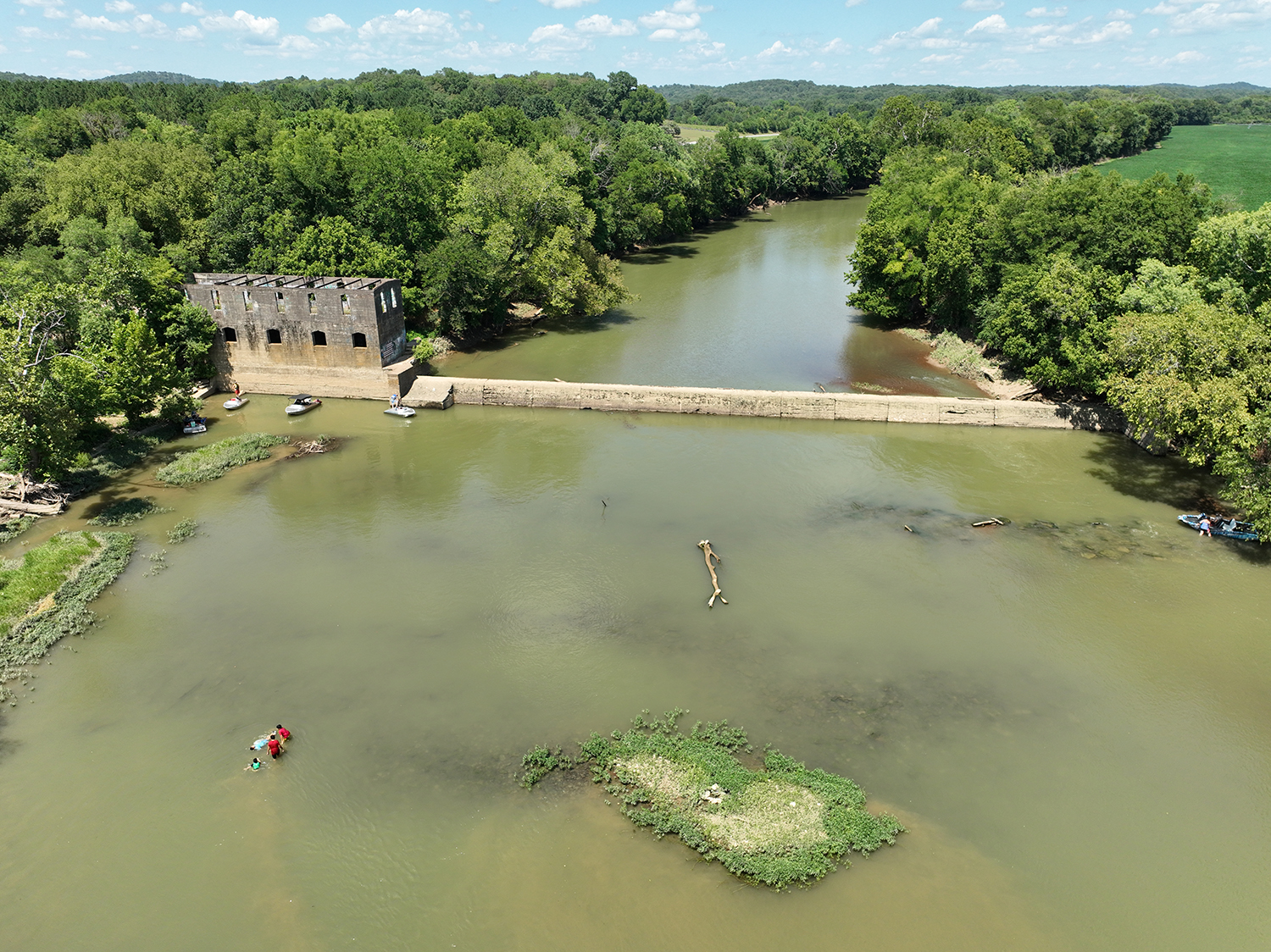
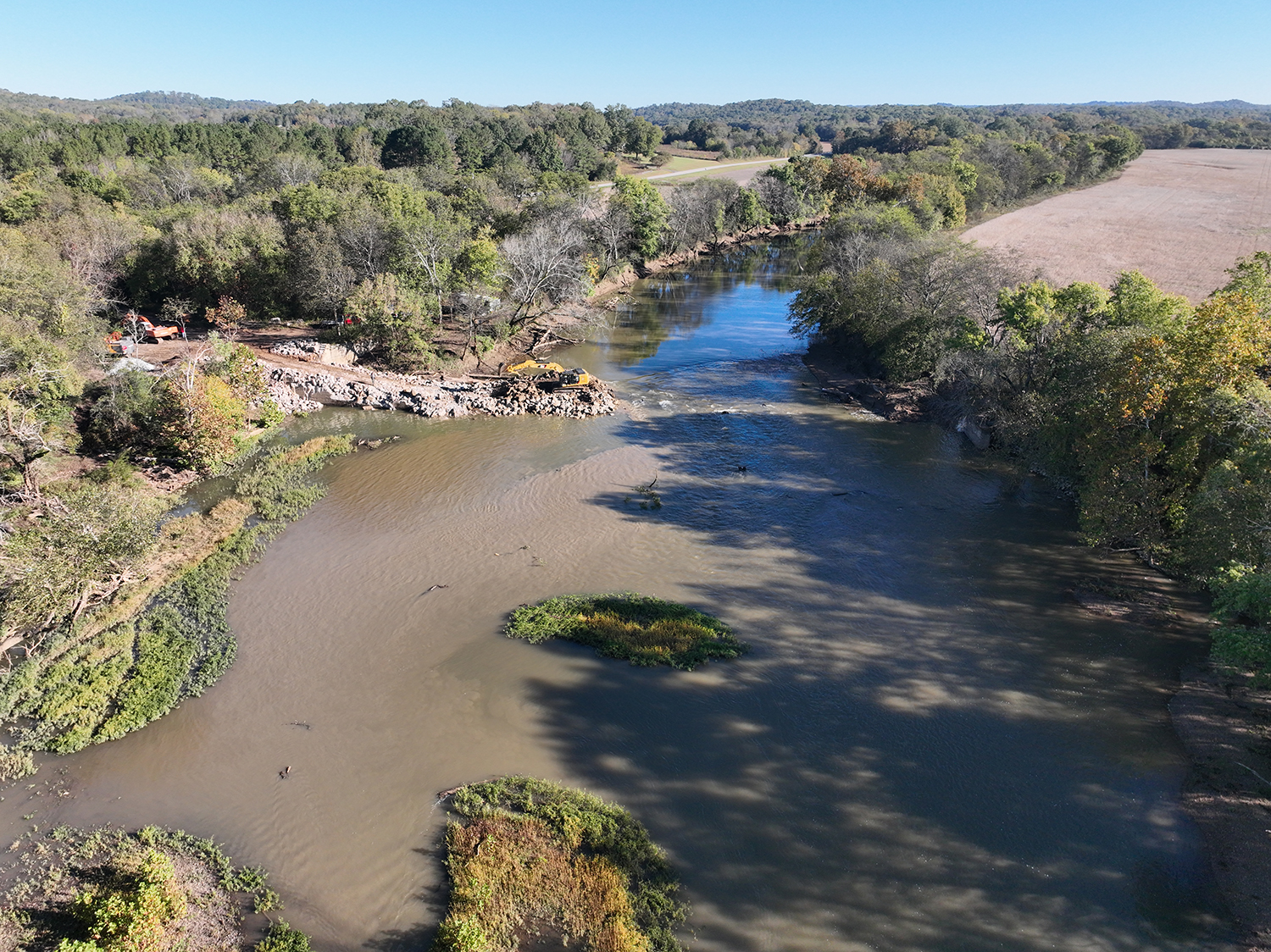
The removal of Harms Mill Dam in Lincoln County has restored the Elk River to its natural state, and the benefits are immeasurable. The completion of the project has reestablished a free-flowing river, enhanced ecological health, and allows aquatic species to pass freely throughout the river. It also offers a safer and more enjoyable experience for recreational users, from anglers to paddlers.
The U.S. Fish and Wildlife Service targeted Harms Mill Dam for removal in the late 2010s. The dam was a major barrier on the Elk River, obstructing fish migration, disrupting the natural ecosystem, and limiting recreational use. The National Fish Passage Program ranked the Harms Mill Dam removal project as the fourth-ranked in the eastern United States.
Funding was secured in 2023 through the National Fish Passage Program. The dam’s removal was the largest of its kind in Tennessee. The ambitious project, between the Tennessee Wildlife Resources Agency, The Nature Conservancy, and other partners, took more than three years to plan, assess, fund, and implement.
For decades, the dam fragmented the aquatic habitat within the river vital for fish and aquatic wildlife migration. Removal of the dam has resulted in 1,114 free-flowing miles for the Elk River and its tributaries, reconnecting these vital habitats. The Elk, one of Tennessee’s most ecologically important rivers, is home to 46 species of greatest conservation need, including 19 that are federally protected,
“There are many factors which help agencies prioritize dams for removal, including the number of imperiled species that will benefit from a removal and the number of river miles connected,” said Josh Campbell, TWRA Chief of Biodiversity. “The status of the structure being assessed is also considered. Harm’s Mill Dam was breached in two places, undermining the stability of the structure, and the powerhouse was literally falling. Their condition created significant public safety issues making their removal a top priority in the state.”
The Elk River is a biologically diverse river system, harboring numerous species of fish, mussels, and aquatic snails. The boulder darter, a small olive to gray colored fish, approximately three inches long, has been of particular concern over the years and is protected by the Endangered Species Act.
“Additionally, educational signage and photos will be placed on site as a part of the mitigation for removing a structure on the National Register of Historic Places,” Campbell said. “Parts of the dam removed will be incorporated into this mitigation as well. A small ramp will be constructed in 2026, benefiting fishermen and paddlecraft users of the Elk.”
First built by the Harms Brothers in 1870 as a textile mill, the dam was expanded with a hydro-powered generator in 1905. Fayetteville Light and Power purchased the property in 1920 and completed a new concrete dam and powerhouse in 1922. While the mill and hydroelectric facility once played an important role in the development of Fayetteville and the surrounding area, they eventually became obsolete and fell into disrepair, leaving behind the hazardous structure, which posed a major safety risk.
A 195-mile-long tributary of the Tennessee River, the Elk River winds through scenic landscapes in south-central Tennessee and north Alabama. Known for its outstanding fishing, paddling, and wildlife habitat, the Elk River is a treasured natural resource for local communities and outdoor enthusiasts alike.
--- TWRA ---
(Click on images to view larger)