Closure of Harms Mill Dam Area During Restoration Effort
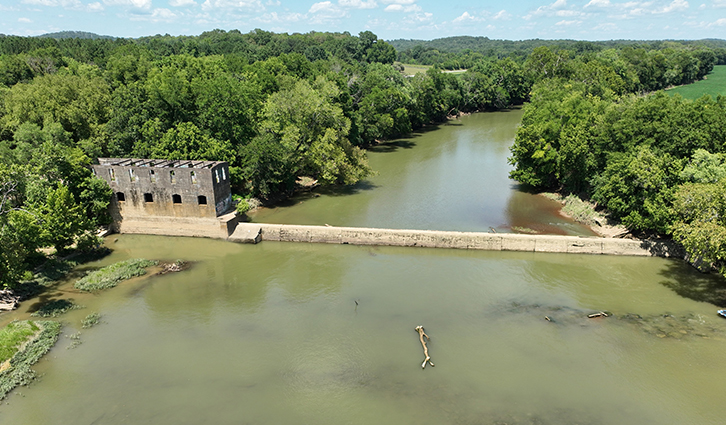
FAYETTEVILLE, Tenn. --- A major river restoration project is set to begin in October, as the Tennessee Wildlife Resources Agency (TWRA), The Nature Conservancy (TNC), and partners break ground on the removal of Harms Mill Dam, a key step toward restoring the natural flow of the Elk River. Access to the site will be closed to the public beginning Oct. 13, 2025, until completion of the restoration project.
The U.S. Fish and Wildlife Service targeted the dam for removal in the late 2010s, with funding secured in 2023 through the National Fish Passage Program. The TWRA and partners are prepared to restore the Elk River to a more natural state, to improve river health, enhance recreational opportunities, and reduce hazards.
“Forty-six species of greatest conservation need living in the Elk River will benefit from the removal of the dam, including 19 species that are federally protected,” says Josh Campbell, TWRA Chief of Biodiversity. “The Elk River is a biologically diverse river system, harboring numerous species of fish, mussels, and aquatic snails. The boulder darter, a small olive to gray colored fish, approximately three inches long, has been of particular concern over the years and is protected by the Endangered Species Act.”
The Elk River, a 195-mile-long tributary of the Tennessee River, winds through scenic landscapes in south-central Tennessee and north Alabama. Known for its outstanding fishing, paddling, and wildlife habitat, the Elk River is a treasured natural resource for local communities and outdoor enthusiasts alike.
Harms Mill Dam and its adjacent powerhouse in Lincoln County, Tennessee, were constructed in the early 1920s by the Fayetteville Light and Power Company. Listed on the National Register of Historic Places for their engineering and commercial significance, both structures are now in disrepair and have long outlived their original purpose. Today, they remain the only major barrier on the Elk River, obstructing fish migration, disrupting the natural ecosystem, and limiting recreational use
Once removed, the project will reconnect 1,114 miles of stream, enhancing ecological health and allowing aquatic species to pass freely throughout the river. The restored river will also offer a safer and more enjoyable experience for recreational users, from anglers to kayakers.
Construction activities are expected to begin mid-October, with full removal of the dam targeted for completion in mid-November of 2025.
The Tennessee Wildlife Resources Agency is responsible for protecting, managing, and conserving fish and wildlife species for the benefit of Tennesseans and visitors. The Agency also maintains public safety through law enforcement and safety education on waterways.
---TWRA---