Cannon County Teacher Leader Model
As evidenced by the Cannon County Board of Education’s strategic plan, Cannon County Schools is committed to providing support for sustained academic growth in a united effort to promote student achievement and close achievement gaps for all students. Cannon County recognizes the need to support instructional best practices within classrooms. In response to this effort, teacher leaders work to collectively empower other teachers, provide strategic academic support, and build capacity among all stakeholders.
Competencies and Beliefs
Cannon County teacher leaders believe:
- all adults can learn and grow to maximize the effect on student learning.
- all students can learn when given the right instruction and correct support.
- teachers who engage in high-quality professional learning can positively impact student success.
- professional collaboration is a driving force behind high student achievement.
- a collaborative culture builds trust and the ability to truly make a difference.
Cannon County teacher leaders have the capacity to:
- demonstrate the ability to attain excellent student achievement results in the classroom.
- plan and lead collaborative meetings and professional learning sessions with teachers and administrators.
- understand and respond to the needs of adult learners.
- advocate for student learning and teacher support.
Roles and Responsibilities
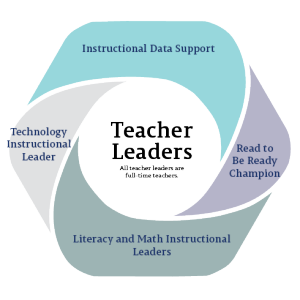
Instructional Data Support
- Enter/Analyze data from AimsWeb
- Communicate and provide coaching support from data analysis
- Assist with the development and implementation of School Improvement Plan
- Organize and support IPI initiative
- Attends training and redelivers content as needed
Literacy Instructional Leader and Math Instructional Leader
- Works with district instructional team
- Provides academic support; may include conducting model lessons and professional learning based on needs determined by data
- Develops classroom management strategies
- Researches and models best practices and share with colleagues
- Assists teachers with instructional planning
- Gives positive pedagogical feedback
- Supports professional learning community (PLC) meetings based on student work analysis
- Attends trainings and redelivers content as needed
Read to Be Ready Champion
School Level Early Elementary Reading Leader
- Utilizes Read to Be Ready (RTBR) practices
- Implements state released unit starters with validity
- Leads school PLC meetings, when appropriate
- Encourages and supports colleagues in the implementation of RTBR practices and implementation of unit starters
- Leads PD for roll out of RTBR training at school level
Technology Instructional Leader
- Instructs teachers in Google apps and other local/state technology platforms
- Builds and supports Google classrooms
- Supports school/individual webpage design and updates
- Completes and implements technology trainings with follow-up supports
- Maintains technology and related program inventory
- Develops and provides effective professional learning based on needs
- Provides in-class support
Cost and Sustainability
The Cannon County Teacher Leader Model derives its funds from ESEA Title II in order to develop and utilize teacher mentors and literacy, math, and technology leaders. The purpose of the program is to increase academic achievement by improving teacher quality, creating capacity, and building a partnership with principals to drive student academic achievement. Cannon County has used a combination of data analysis and needs assessments to determine categories of focus in leveraging high-quality teacher leadership.
Budget
| Teacher Leader Role | Number of Positions | Cost Per Position | Total |
|---|---|---|---|
| Instructional data support | 7 | $1,500 | $10,500 |
| Literacy and math instructional leaders | 5 | $1,500 | $7,500 |
| Technology instructional leaders | 2 | $1.500 | $3,000 |
| Read to be Ready chapions |
5 | $500 | $2,500 |
| Release time | $17,400 | ||
| Professional learning | $7,000 | ||
| Total teacher leaders | 19 | $47,400 |
Sustainability Strategies
- Incorporate teacher leader trainings into professional learning days to absorb extra costs.
- Foster partnerships with other agencies for training.
- Support instructional coaches with training and monthly team meetings.
- Send updates to the director of schools for school board communication.
- Celebrate teachers at the May school board meeting.
- Organize teacher leader group celebration each semester.
- Ayers Institute Partnership on Coaching and Adult Learning.