Hellbender Presence/Absence Surveys and Habitat Quantification
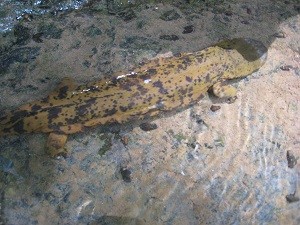
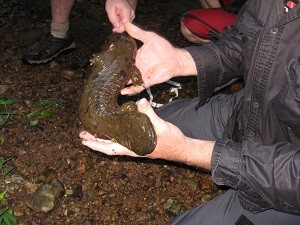
Hellbenders, Crypotobranchus alleganiensis, is the largest salamander in the state of Tennessee, reaching lengths up to three feet long. They occur only in rivers and streams and feed primarily on crayfish. Hellbenders require large slab rocks for cover and nesting and cobble for development of larvae. Once the eggs are laid, males stay at the nesting site, providing protection from predators. One of the main threats facing this species is habitat loss or degradation of current habitat. Hellbenders require clean, cool water, and siltation and sedimentation can have adverse, long lost lasting impacts on populations.
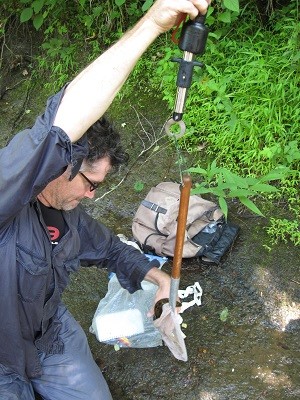
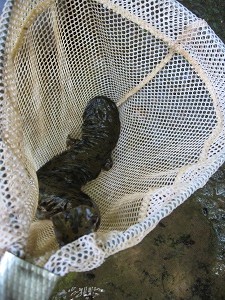
The initial goal of this project was to document the occurrence of hellbenders in as many streams in middle Tennessee as possible. Unfortunately, few individuals were captured and few populations were identified. When comparing current occurrence information to historical data, it appears several populations have possibly been lost in middle Tennessee. Habitat within several of these streams appears to have degraded not allowing populations to be supported anymore. The embeddedness of the stream substrate due to sedimentation and siltation appears to be the main reason for the loss of habitat. Despite these findings, several populations do remain and occur in areas that will be protected into the future. One goal will be to ensure land use changes upstream of these populations will not impact these remaining populations.
Currently, propagation efforts have been initiated with animals captured from across the state. One goal is to reintroduce Hellbenders into streams they once occurred. These efforts may take several years because propagation of the species is extremely difficult. Many other aspects of this species life history and reasons behind their decline within the state are also being assessed.
Photos