Red-necked Grebe
Podiceps grisegena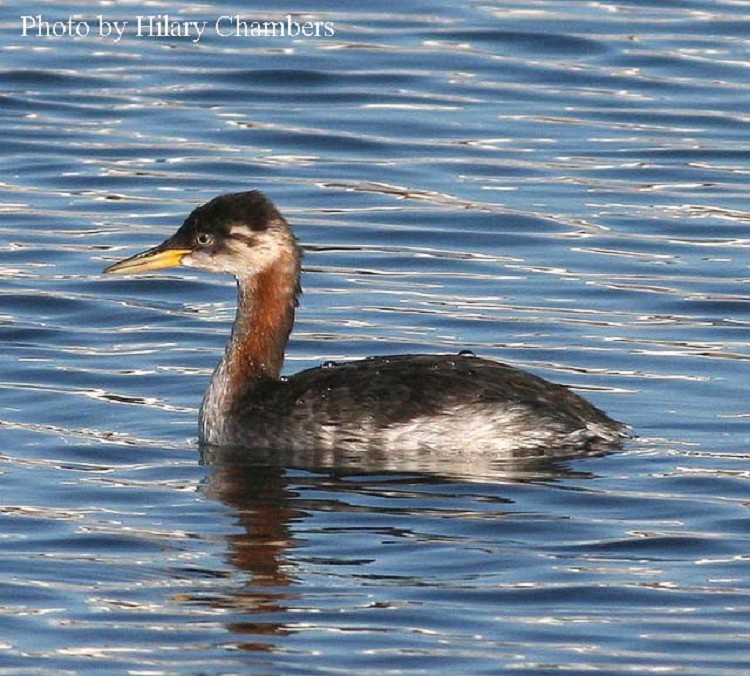
Description
A duck-like diver that is at first glance similar to a loon, Red-necked Grebes, like all grebes, are smaller, have flat, lobed toes, and appear tailless. A migratory aquatic bird, they are great swimmers, nimble divers, and respond to threats of danger by diving instead of flying.
This grebe is a rare but welcome winter visitor to the open lakes of Tennessee.
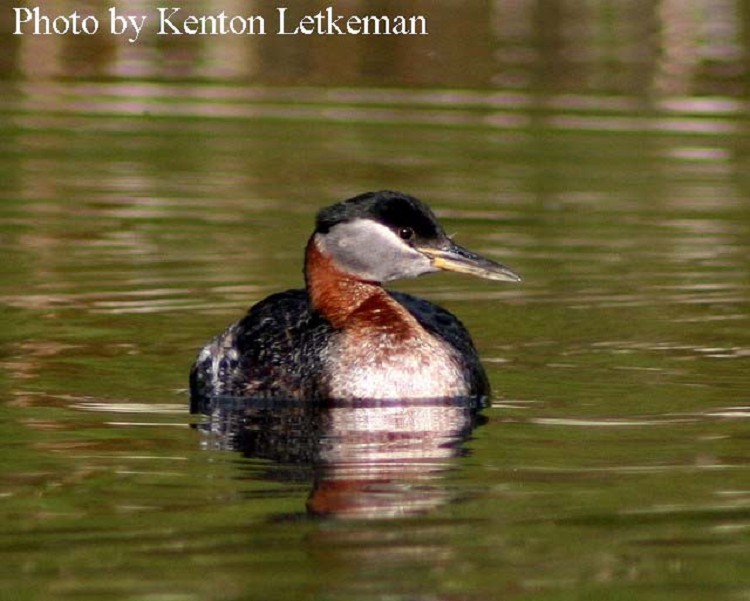
The Red-necked Grebe is a fairly large and stocky bird with a broad triangular head and thick neck. The reddish neck and breast contrasting with the white cheeks, black cap, and dark body are quite stunning when compared to the winter plumage that appears somewhat dingy with a brown body, blackish cap, and pale-gray crescent patch extending from the chin to behind the ear.
The long, heavy bill is yellow and angles downward in all plumages. Red-necked grebe flies in straight line formations with rapid, direct, strong wing beats and is the only grebe to show a white leading edge and white trailing edge on their inner wings when in flight.
Length: 18 inches
Wingspan: 24 inches
Weight: 2.2 lbs
Voice: Loud braying, chattering call with quivering endnote.
Similar Species: Western Grebe – Similar in size, long neck always white, red eye, and long, slender greenish bill. Extremely rare in Tennessee. Clarks Grebe – Larger in size, white face above and below the eye, red eye, long, slender yellow bill. Extremely rare in Tennessee. Red-breasted Merganser – Rusty brown, wispy crest, reddish thin bill.
Habitat: In Tennessee, Red-necked Grebes can occasionally be found on large, open freshwater lakes.
Diet: Small fish, crustaceans, and aquatic insects. Dives 25-30 feet to find food.
Nesting and reproduction: There are no known records of this species nesting in Tennessee.
Status in Tennessee: The Red-necked Grebe is an uncommon migrant in early spring and late fall, occasionally found in winter in Tennessee.
Best places to see in Tennessee: Nickajack Dam, Paris Landing State Park, Big Sandy Unit of Tennessee NWR, Robco Lake

Fun Facts
- Walking on land is difficult for Grebes.
- Grebes eat their own feathers and feed them to their young.
- Young grebes ride on their parents backs
- Obsolete English Names: Holbonell’s Grebe
Photos
Sick and Injured Wildlife
