Air Quality Modeling
Dispersion Modeling Basics
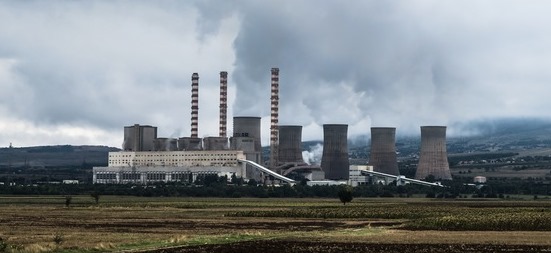
Part of the air permitting process involves estimating how pollution from a facility could affect the air in nearby areas, especially downwind from the source. This is called dispersion modeling, and the estimated pollution levels are often referred to as impacts. Tennessee’s Division of Air Pollution Control has staff trained to run these models to see how proposed facilities might affect air quality. They also review modeling results provided by companies or their environmental consultants for larger projects. Once permitting staff confirm that a facility’s emissions stay within allowed limits, the Division’s modeling team may evaluate how those emissions could affect the surrounding community. Larger facilities, known as “major” sources, are usually required to submit modeling results as part of their permit applications. For smaller facilities, the Division’s staff often completes this modeling work themselves.
Dispersion modelers use US EPA-approved modeling techniques to predict ambient impacts (pollutant concentrations in the area surrounding the facility where the source is located). After ambient impacts are predicted, the Division’s modelers assess whether the impacts may cause or contribute significantly to any expected exceedance of an air quality standard for criteria pollutants or acceptable ambient level (AAL) for hazardous air pollutants (HAPs). Ambient air quality standards and AALs are established pollutant concentration thresholds that should not be exceeded by predicted or measured ambient concentration levels to avoid adverse health effects to the citizens of the community or the community’s natural resources. National Ambient Air Quality Standards (NAAQS) are established by the US EPA for the criteria pollutants and recognized by state and local air quality agencies as the maximum air pollutant concentrations that can be measured or predicted in a community before the community is designated a Non-Attainment Area (NAA). The US EPA lists NAAQS at the following website: https://www.epa.gov/criteria-air-pollutants/naaqs-table. Tennessee's ambient air quality standards can be found here: https://publications.tnsosfiles.com/rules/1200/1200-03/1200-03-03.pdf.
Assessed pollutant concentrations for a community are the sum of predicted pollutant impacts from a proposed source and actual measured “background” pollutant concentrations in the community, when background values are available from local ambient monitors. This sum (measured concentrations plus proposed predicted impacts) for a pollutant must remain below the corresponding NAAQS or AAL for that pollutant. If this sum exceeds one of the NAAQS levels or an AAL, the predicted impacts may cause non-attainment for the pollutant or exceedances of an AAL if the source is constructed as proposed. Similarly, the subtracted difference between the NAAQS (or an AAL) and a measured “background” pollutant concentration for an area is sometimes referred to as the “remaining air quality” (RAQ) for the area. Hence, all predicted air pollutant impacts in the ambient area surrounding a proposed source should remain at or below the assessed RAQ for the community before the state will consider issuing an air pollution control permit for the source.
The Division’s modeling staff is also available to provide technical assistance regarding modeling protocols or data requirements for the regulated community. Pre-processed meteorological data for dispersion modeling is available from the APC modeling staff by request. Please get in touch with Haidar Al-Rawi or Emily Sardello for support. The current datasets available for regulatory demonstrations are for the years 2020-2024.
Dispersion Modeling Process
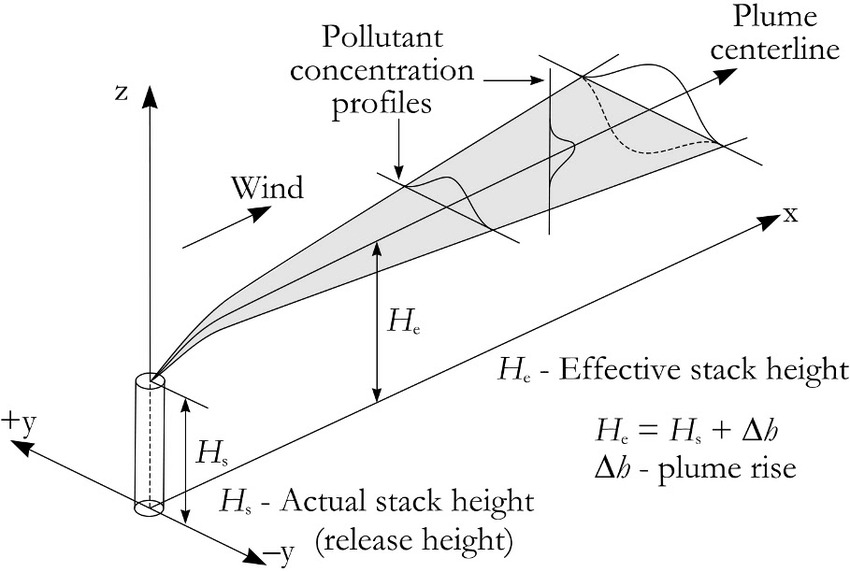
During the permitting process, the permit writer and manager decide whether or not the source should be modeled to determine whether a NAAQS or AAL may be threatened by emissions from the new source. For larger sources proposed in an attainment area covered by the US EPA’s Prevention of Significant Deterioration program (i.e., PSD sources), or for large sources proposed in a non-attainment area (NAA) covered by the US EPA’s Non-attainment New Source Review program (i.e., NNSR sources), the source owner must often provide a dispersion modeling analysis with the permit application. In such cases, a pre-application meeting is normally scheduled to discuss any modeling required of the owner.If a source is comparatively small and considered to be a “true minor” or “conditional major” source, the Division may opt to have the Division’s modeling staff provide modeling to determine whether the proposed new or modified source may threaten air quality in the surrounding area. If the state provides modeling support, the modeling staff often contacts the owner for additional information required for modeling the source, such as geographic information about the site, emission rates, and stack parameters. If the state’s modeling analysis of the source indicates that the source may threaten a NAAQS or AAL, the Division’s modeling staff will contact the owner for additional information required to refine the modeling analysis.If a modeling analysis provided by the state (or by a consultant) for a proposed source indicates that the source will likely threaten a NAAQS or AAL, then additional, more refined modeling may be provided by the company. If additional refined modeling demonstrates that the source no longer poses a likely threat to the associated NAAQS or AAL, and if a review by the Division’s modeling staff also shows that the modeling conforms to established state modeling guidance, then a construction permit may be issued for the proposed source.
Photochemical Modeling
One type of refined modeling analysis is photochemical modeling, which applies techniques similar to dispersion modeling but over larger spatial and longer temporal scales. Photochemical models incorporate chemical reactions and physical changes in the atmosphere that are not accounted for in traditional dispersion modeling. These models are more complex than dispersion models and require significantly more information, processing time, and computational effort. These models are approved by the US EPA for regulatory permitting needs and attainment demonstrations. APC staff are versed in photochemical modeling and can perform these refined analyses in-house, as well as review photochemical modeling analyses provided by facilities if required by the results of dispersion modeling.
Contact Us
If you have any questions or need additional information, you may contact any of the individuals below.
Haidar Alrawi | 615-426-1814
Emily Sardello | 615-483-4900
Michelle Oakes | 615-812-1119