Statutory Requirements for Wind and Solar Facilities
Wind Facilities
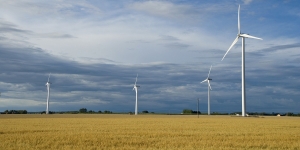
During the 2018 session, the Tennessee General Assembly established minimum requirements for wind facilities, Public Chapter Number 825. These statutory requirements include, but are not limited to, a minimum setback requirement (i.e., facilities must be set back from any non-participating landowner’s property line equal to 3.5 times the total height of the turbine structure, from base to maximum height of the blade tip) and a noise limit (i.e., no turbine[s] may exceed 35 decibels [dBAs] at a non-participating landowner’s dwelling or 45 dBAs at a non-participating landowner’s property line). Additionally, any permit applicant must first establish financial security of 100% of the total cost to decommission and remove the facility. These requirements apply to all wind facilities constructed or redeveloped on or after April 24, 2018, the effective date of this legislation.
This legislation also tasks the Municipal Technical Advisory Services and County Technical Assistance Services (MTAS and CTAS, respectively), local governments, and the Tennessee Public Utility Commission (TPUC) with the following responsibilities:
- MTAS and CTAS must disseminate model legislation for use by local governments interested in establishing conditions on the issuance of permits for the construction and/or expansion of wind facilities.
- For questions regarding model legislation, please contact MTAS at (865) 974-0411 and mtas@tennessee.edu or CTAS at (615) 532-3555 and ctas@tennessee.edu.
- Local governments may adopt regulations (e.g., ordinances and rules) on wind facility construction and operation through a two-thirds vote by their local legislative bodies.
- Local governments adopting regulations shall furnish a certified copy of the local legislation to the Tennessee Department of Environment and Conservation (TDEC). Certified copies shall be submitted to TDEC.OEP@tn.gov.
- These local governments must also submit a yearly report to the Agriculture and Natural Resources Committee of the House of Representatives and the Energy, Agriculture, and Natural Resources Committee of the Senate, detailing the number of approved and denied permits, results of environmental impact assessments, and data on all wind facilities.
- TPUC is tasked with administering “certificates of public convenience and necessity” to wind facility construction projects before their permitting by local governments. These certificates may not be issued to wind facilities that are taller than 350 feet (from base to blade tip) on mountain ridges 2,500 feet mean sea level or 500 feet or more above mean sea level of the adjacent valley floor. However, this limitation does not apply to turbines shorter than 100 feet tall that generate electricity to be consumed on-site. After receiving a certificate of public convenience and necessity from TPUC, local governments may award, revoke, or deny wind facility construction permits, contingent on first providing public notice and holding a public hearing prior to making a decision on the permit application.
- For questions regarding certificates of public convenience and necessity, please contact TPUC at 1-800-342-8359.
Local Requirements for Wind Facilities
Once a local government adopts, certifies, and submits to TDEC any regulatory wind facilities legislation, that legislation will be added to this webpage for public reference. Please contact TDEC.OEP@tn.gov with questions on this process.
Archived content is provided for reference purposes only and is not maintained to current accessibility standards.
• Cumberland County Wind Regulations (archive)
• Gibson County Wind Regulations (archive)
Solar Facilities
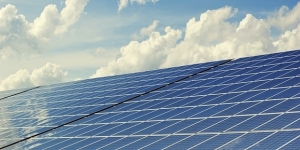
During the 2022 legislative session, the Tennessee General Assembly established the “Decommissioning Law,” Tenn. Code Ann. § 66-9-207, which imposes requirements on solar power facilities regarding decommissioning obligations and the required removal of solar power facilities upon or prior to the expiration or termination of the solar power facility agreement. The Decommissioning Law includes requirements that must be present in agreements between landowners and owners or operators of solar power facilities entered into on or after June 1, 2022, the effective date of the legislation.
The original Decommissioning Law addressed solar-generating devices or structures at least 10 MW in size. However, effective July 1, 2024, the law was amended to apply to solar-generating devices or structures at least 5 MW in size. “Solar power facilities,” as defined in the Decommissioning Law, do not include solar-generating devices or structures less than 5 megawatts (MW) in size, measured at the point of interconnection; however, parties to a solar power facility agreement may elect to apply the requirements of the Decommissioning Law to smaller structures.
Submitting Agreements to TDEC:
The 2024 legislation also tasks the TDEC Office of Energy Programs (OEP) with the responsibility of receiving and storing solar power facility agreements. Any information submitted to TDEC OEP may be considered public record and will be subject to disclosure, as required by Tennessee law. However, TDEC OEP is required by Tenn. Code Ann. § 4-3-514(b)(1) to “maintain the confidentiality of all proprietary information it may acquire.” Proprietary information is defined in Tenn. Code Ann. § 4-3-514(b)(2) as “trade secrets and commercial or financial information that is used either directly or indirectly in the business of any person submitting information to the office under this chapter, and that gives such person an advantage or an opportunity to obtain an advantage over competitors who do not know or use such information.” Those responsible for submitting solar power facility agreements to TDEC OEP shall identify any proprietary information in the submitted documents. TDEC will review all submitted information to determine whether it contains any proprietary information. Further, TDEC will maintain a log of the documents that contain proprietary information to ensure that such is redacted prior to being produced in response to a records request or disseminated for other purposes.
Any personally identifying information, as defined in Tenn. Code Ann. §10-7-504(a)(29), contained in a solar power facility agreement will also be kept confidential, in accordance with State law.
In addition to filing the agreement with TDEC OEP, the filing party must notify the county mayor and municipal mayor, if applicable, of the local government where the solar power facility is located of the filing of the agreement with TDEC OEP.
Solar power facility agreements may be submitted to TDEC OEP via email to TDEC.OEP@tn.gov.
This Page Last Updated: September 30, 2026 at 11:09 AM