Breaking Down Barriers: How Tennessee Providers Help People Get Out in the Community
Editor’s Note: Some people’s last names have been withheld for privacy.
When the front door opens, new opportunities begin to happen. For many Tennesseans with disabilities, leaving home and getting out into the community takes planning, support, and providers who understand that being truly independent isn’t about doing everything alone. It’s about having the right supports to live the life you choose.
Last season’s Breaking Ground looked at housing options for Tennessee’s disability community. Now comes the next big questions: How do we get out of the house? What does real community participation look like, and who makes it happen?
There are a few things to know before start:
- Most people with intellectual and developmental disabilities (IDD) get unpaid support from family members and other people they know. You may hear this called “natural supports.” These folks are not enrolled in any formal services.
- Thousands of Tennesseans with IDD do get paid government services delivered by disability provider agencies. We call these home and community-based services, or HCBS. These services happen through many different programs, including Employment and Community First CHOICES and Medicaid Alternative Pathways (MAPs). Some people live in homes or places where paid staff support them. Some live with their families or on their own but still get support from paid staff a few hours a week to help them with different parts of daily life.
- There are hundreds of different disability service providers. Some have been around for decades; some are newer. Some are very large with dozens or hundreds of staff and people served; others are very small. Some do really creative and inspiring work to support the people they serve; others, we know from people we talk to every day, fall short of the vision for quality, person-centered services.
We know that home and community-based services are not working well for everyone. But we believe there is power in stories that show how this can and SHOULD work. Whether you or a loved one are getting services now or may in the future, we want you to know what is possible so you can advocate for the very best version of these supports.
One more word about our process: When writing this article, we didn’t start from scratch. We began with success stories that TennCare has already gathered through its Employment and Community First CHOICES program.
These are real examples of people using home and community-based services to work, volunteer, and belong. From there, we followed up with interviews from provider agencies across the state. We asked them what they see working well, where the gaps are, and how they’re helping people go from just “having a place to live” to actually belonging to their communities.
What Does "Person-Centered" Mean?
Person-centered means putting the person at the center of all decisions about their life and support. Instead of fitting people into pre-made programs, person-centered support asks:
- What does this person want?
- What are their goals and dreams?
- What are their unique interests and strengths?
- How can we help them live the life they choose?
For example: Instead of saying "We have a job opening at a grocery store, who wants it?", a person-centered approach asks, "Where do you want to work?" If someone loves tractors, you try to help them find a job with tractors - not just any available job.
Person-centered support recognizes that everyone is different. What makes one person happy might not work for someone else. The person receiving support leads the way, and the support team follows their direction.

From Segregation to Integration
Phil Garner is the Executive Director of Buffalo River Services. He’s worked in the disability field for 40 years and has seen a lot of change during that time. “In the early 90s, services were still very segregated,” he explains. “You had sheltered workshops where people would come every day to be in groups of 20 people or more, trying to find work for them to do, earning very little pay. Then there were folks in what was basically adult day care, where they would spend the entire day just trying to keep everybody busy.”
Things started changing because of new laws, new ways of thinking, and new funding. “Tennessee went through a philosophical change that was accompanied by an increase in payment for getting people out,” Garner notes. “The incentive was there for providers to say, ‘If I can pay for staff to go out, we [can] go out and do things and engage the community rather than sit here for six hours out of the day.’”
The change that happened wasn’t just about taking people to different places. The whole way of thinking had to change.
Focusing on Each Person’s Wants and Needs
“We have a no walls philosophy at St. John’s,” explains Cherry Webb, Regional Director for St. John’s Community Services. St. John’s serves rural West Tennessee counties. “We don’t have any programs that are indoors. They’re all out in the community doing whatever that person wants to do, what their goals are, their outcomes are, their dreams are.”
This idea is bigger than just getting people outside. It’s about seeing each person as unique, with their own interests, goals, and support needs. Amanda Erwin is the Director of Marketing and Development for St. John’s.
She puts it this way; “Every person that we support is an individual in all of our programs. Nothing is cookie-cutter about what we do. Even our employment services…it’s not about where we can find somebody a job. It’s where they want to work.”
More Than Just a Job
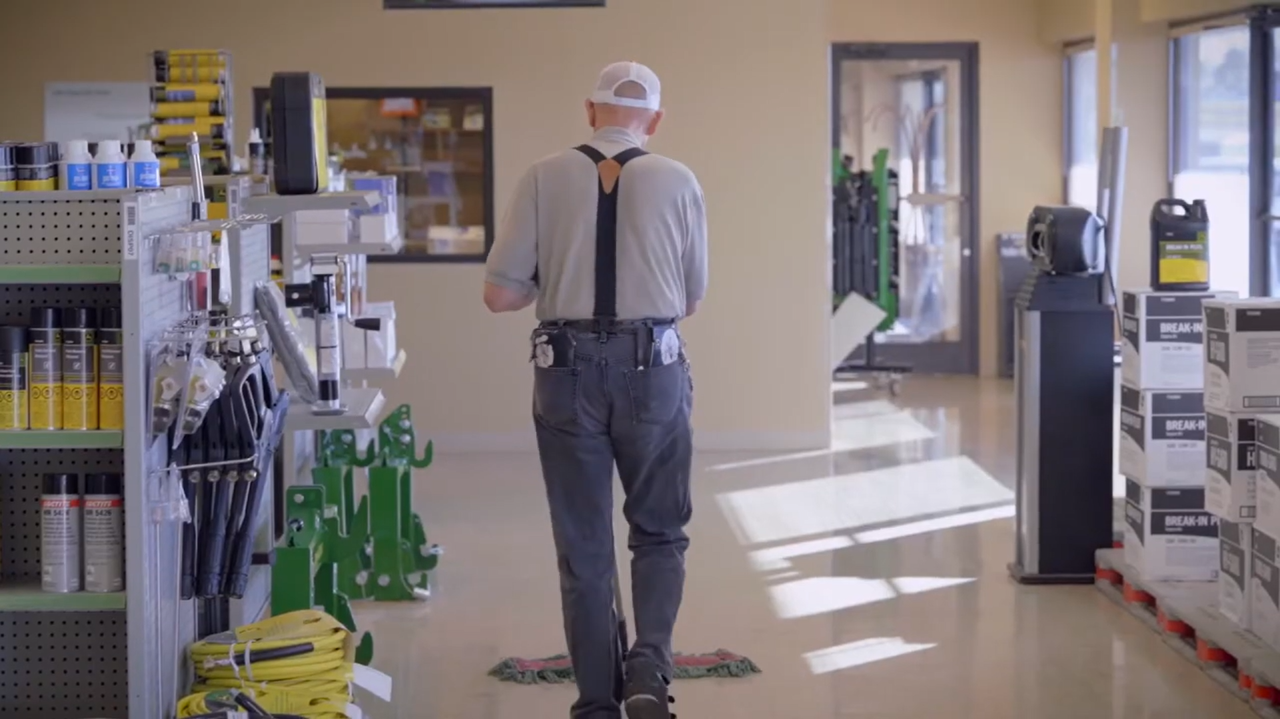
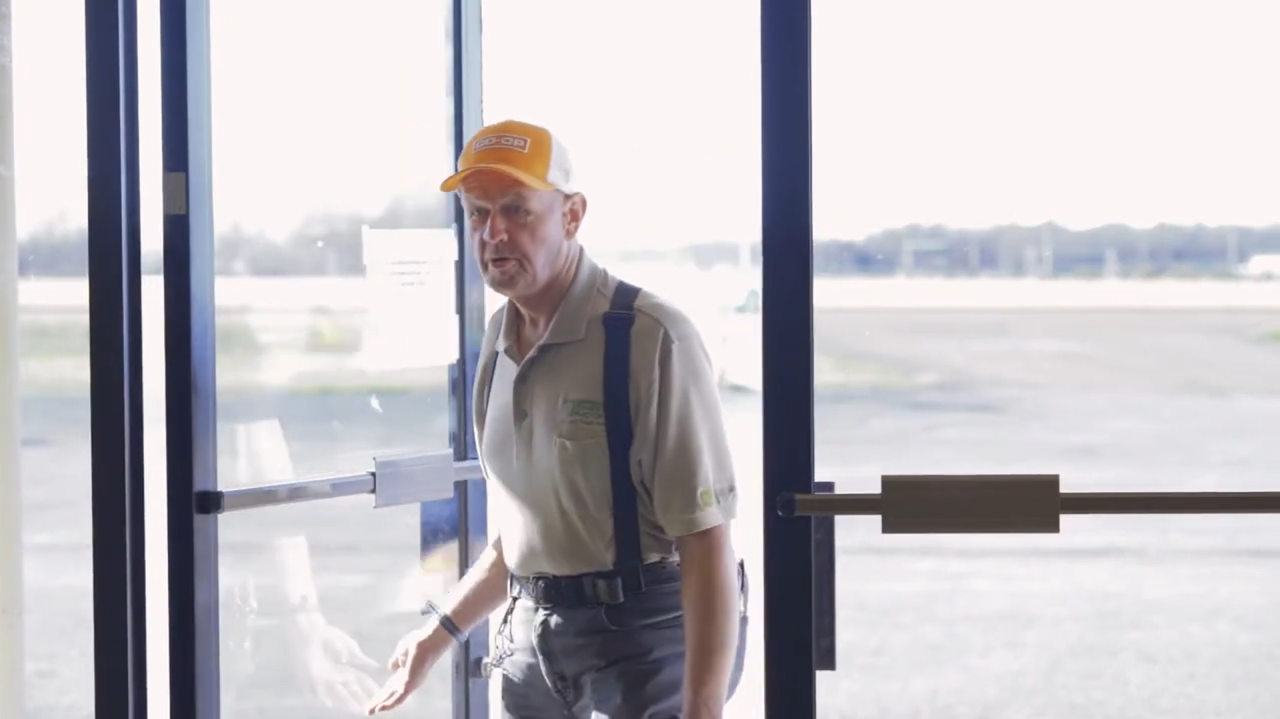
When you match someone’s passion with the right job, the power of this personalized approach becomes clear in the stories of people like Danny Simmons, who worked at Tennessee Tractor in Martin for over a decade. Danny didn’t just kind of like tractors; he loved them. Tractors, combines, hay bailer; all of it.
“I told Dwayne Webb, ‘I want me a job at John Deere,’” Danny shared in a video interview before his recent passing. When Dwayne Webb, State Director of Tennessee operations for St. John’s, approached Tennessee Tractor, the business didn’t just give him a job. They welcomed him as part of their community.
“He grew up not just in our community but in our farming community,” explained Mitch Hobby, Danny’s supervisor. “They come in, they know Danny and appreciate him being here. That’s really made him as good a fit as any other employee that we would hire that has agricultural background.”
Danny couldn’t contain his excitement. “I like my job here. I like all my friends here. Todd! There’s Todd, Charlie, Vicky, Glenda... I like it here. I’m part of the team. I got a job, and it makes me feel happy.”
His success opened doors for others. “The experience was great with Danny, it was great with St. John’s, and so we’ve hired individuals with disabilities at four or five other of our locations,” Mitch noted. “I think it’s helped us to learn that everybody in our community should have a right to work; a place to work if they want to.”
Being part of a community means more than just going to work. JT Davis shows what this really looks like. JT has always loved motorcycles, and since 2012, he’s worked at Appleton’s Harley-Davidson in Clarksville.
“JT has a busier social calendar than I ever will,” laughs his mother, Margaret Davis. With help from Community Integration Support Services, JT does all kinds of activities with his direct support professional, Mike. They go shopping, eat at restaurants, watch movies, and work out together. JT also volunteers with Bikers Who Care, a charity group. He’s even learning how to fix motorcycles. He dreams of starting his own business called “Big Daddy’s Lift Ups.”
When asked how his life has changed because of the supports he gets through the ECF CHOICES program, both he and his mother said in unison, “Freedom.”
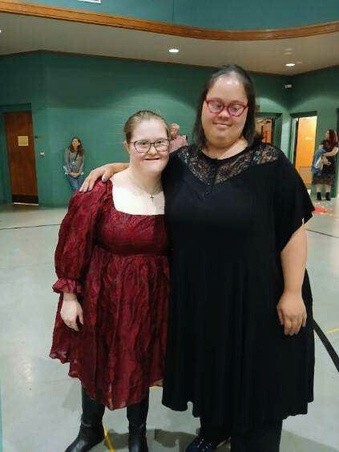
Jackie Taylor from Buffalo River Services knows what real friendship looks like. In February, Jackie attended a Valentine’s Dance. She hung out with friends, met new people, and had a blast. As the quarterly newsletter published by Buffalo River services says, “If you know Jackie, you know how much she loves to dance.”
Jackie and her direct support professional, Nancy, also love watching the girls’ Wildcat Basketball games, including their alumni game. The team always welcomes Jackie with open arms. At a recent game, they gave her a Wildcat shirt to wear to show her support for the team. Jackie also didn’t just sit and watch, either. She took center stage at halftime and danced right alongside the cheerleaders.
The Exploration Process
Not everyone starts their community journey with clear goals. Brandon Richardson and his grandmother were worried at first about Brandon working. They were concerned about his safety, losing Social Security benefits, and being away from family support. After enrolling in ECF CHOICES in 2018, Brandon participated in Exploration – a service that lets people tour businesses, shadow jobs, and identify interests without making any commitments.
This process gave Brandon and his grandmother the information they needed about benefits counseling and job coaching. He moved on to Discovery, a more detailed analysis of his interests and skills, and eventually applied to Goodwill, where he’s worked since 2019. Brandon has received pay raises, increased hours, and was even recognized as Employee of the Month in June 2021.
According to the story published on the TennCare website, “He is confident and no longer needs job coaching. Brandon is loving his independence and newfound friendships through work. Grandma couldn’t be more proud!”
Going from Isolation to Independence
Donald’s story shows what happens when someone gets the chance to be a part of their community. His sister-in-law, Beth, describes the change: “His personality’s come back, his ability to share his social skills... his pride.” When she thinks about how isolated he used to be, she tears up. “I just hate that he was so stagnant for so long. It’s just like light turning back on, that’s been the biggest thing.”
These days, Donald works at a restaurant in Paris, Tennessee. His boss, Connie, has watched him grow; “When you start a new job, you’re always shy and quiet, but he’s really come out of his shell. You talk to him and he’s just as friendly as can be.” His direct support professional, Victoria, observes: “He doesn’t even need me, I’m in the background, he just does his own thing. It’s great.”
The difference in Donald’s life is huge. “He used to be so sheltered and so kept to himself and now he has friends, and he has his own social life,” Victoria explains. Donald himself puts it even simpler: “I don’t have anything that I couldn’t do. I can do anything I want to do.”
The MAPs Program
Tennessee’s Medicaid Alternative Pathways (MAPs) program helps young people with disabilities figure out what life after high school could look like and helps them move into adulthood. Matthew Lineberry works at Buffalo River Services and runs their MAPs program. Over recent years, he has watched the program change lives.
“I think he was the second person approved for the service statewide,” Lineberry says about one participant who is now finishing his third year in the program. “He’s about to graduate and finish the program in February. During this time, he’s gotten employed more than once, he’s tried two different secondary education options…he attended TN Rehabilitation Center (TRC) in Smyrna, he’s now going to Columbia State. He’s got his driver’s license during this time. He’s doing a lot of great stuff.”
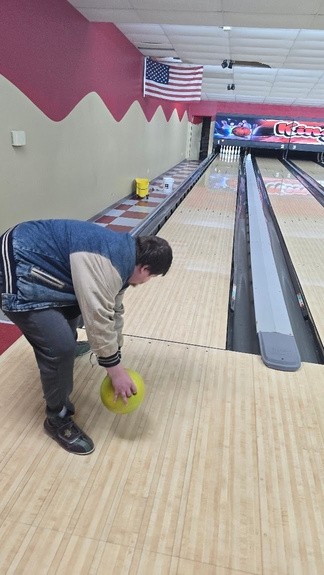
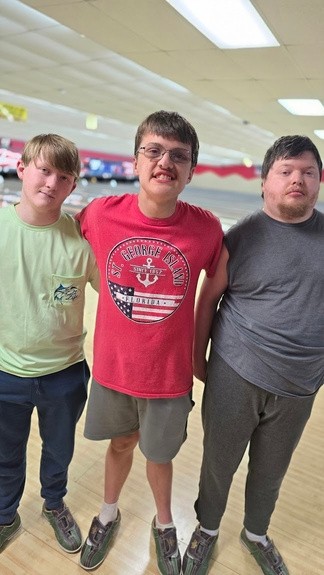
Buffalo River Services is growing their MAPs program, too. Earlier this year, they welcomed their eighth MAPs participant. Part of what makes the program work is by helping people connect with their community. They do group activities, go out socially, and hang out - which helps participants make real friends and build their own support network. In late February, they had a Guys’ Night Out at Kingpin Lanes in Lawrenceburg; two people from the MAPs program, Karsen and Sam, and Matt, from the supported Living program. They bowled, ate pizza, and had a good time together.
The MAPs program gives young adults the support they need to try new things and become more independent. The kind of wraparound support it provides helps make community participation possible. Because of MAPs, they can explore different paths and take on new challenges, while still having consistent support.
Direct Support Professionals
Behind many successful stories of people joining their communities, you’ll find direct support professionals (DSPs). Joseph Hendrick supports three people in the ECF CHOICES program. His approach is simple, but powerful; “We had a saying when I was a peer buddy: see the ability not the disability.”
Joseph plans activities based on what each person needs and wants to do. He walks on the treadmill at Planet Fitness with one person who is recovering from hip surgery. He goes with another person to Special Growers, where she grows herbs for local restaurants. He helps with everyday stuff like ordering at restaurants so people can practice doing things on their own.
“It has changed my thought process,” Joseph says. “Just being with the [person] one-on-one, just you and them, has really impacted me and shown me different ways I can open up and teach them.” What he loves most are “the little things,” seeing someone’s face light up when they bowl a strike, excitement after using free weights for the first time, or singing along in the car between activities.
Healthcare and Beyond
Being part of the community includes all parts of life, even healthcare settings. Kezia’s story shows how the right job can match what someone’s good at while helping them feel more confident. Working in a hospital, she found her calling: “It showed me that I have the ability to actually be myself... to know that I could do something that there was to actually do something that anyone else could do.”
Her supervisor says; “Kezia comes in about 8 o’clock... always just ready to go, bouncing down the hall, always in a good mood... one of the hardest workers I have ever seen.” During flu season, “we had a very low incidence of the flu and I think that was due to her being so clean.”
For Kezia, this job connects to bigger dreams. “I want to be a CNA someday. That’s one of the things I really want to do.” Her message to others with disabilities: “To have a disability it doesn’t mean that you are less than and doesn’t mean that you’re not equal to... it just means that you’re unique.”
Rural Challenges Mean Creative Solutions
Serving rural communities has unique challenges, but also unexpected advantages. “We have more barriers in our larger areas than in our more rural areas,” St. John’s Webb observes. “We have smaller communities, and we just have such great partnerships. It’s kind of odd, but that’s really the truth.”
Marketing Director Erwin agrees: “It’s almost easier in the more rural communities because the towns are so small. The people that we support who are working out in the community…people know them. They go to their church, they see them out at restaurants, and they’re working in places that they frequent.”
This personal connection creates ripple effects throughout communities. Danny’s story showed this. One person’s success opened doors for others and changed how employers think about what people with disabilities can do.
Enabling Technology
Enabling Technology is also changing how people with disabilities live on their own. Enabling Technology helps people live more independently. Buffalo River Services recently became a “technology first” organization. They use devices that help people manage medications, monitor home safety, and stay in touch with support staff.
“We have sensors in homes that alert people if the stove is left on, or devices that connect to someone’s CPAP machine that lets them know it’s not on properly,” Webb explains. “A lot of things that staff would have to go in and assist with…having those things in place gives the person so much more independence because they can do all that by themselves.”
This technology doesn’t replace human connection. Instead, it helps by reducing the need for someone to trade privacy for being supported. This keeps people safe and independent at the same time.
Meeting People Where They Are
Being part of a community looks different for everyone. Some people with disabilities go to college and work full-time. Others have different goals and support needs. What matters is meeting each person where they are and supporting their own vision of a good life.
“We have people that work 40 hours a week in a job. We have a guy that just celebrated his 35th or 37th year at the same company,” Webb notes. “He works there independently with just a drop-in job coach checking in a few times a week. Then we have people that have permanent job coaches because they need that assistance. We really try to tailor-make the employment experience for whatever that person’s needs are.”
This personal approach works for more than just employment. Some people join local clubs. Others focus on communities centered around faith, like a church or temple. Some find their place in volunteer work or playing sports.
Most importantly, one of the biggest goals of community participation is building natural connections; friendships and relationships that aren’t paid staff. “Nobody wants to live a life where their only friends are paid supports,” Webb says. “We want people to have lives outside of their homes, outside of their community participation programs. We want to get them connected with people.”
This philosophy was beautifully shown when Danny passed away. His case manager wrote his obituary and chose not to mention St. John’s Community Services. She explained that she “wanted him to be remembered for him…what he had done with his community and his friends…just make sure that people understood that Danny was Danny, and the things he had in his life were just supports for him.”
The funeral itself showed the success of this approach. Many employers, friends, and community members whose lives Danny had touched came to remember him.
Looking Forward
Things are getting better, but there are still problems to solve. In rural areas, people struggle to find transportation. Funding is complicated. There aren’t enough workers. All of this makes it harder to provide good services that people deserve.
For providers like Buffalo River, the state’s move to a managed care system several years ago has made things harder. “It’s really challenging,” Garner explains. With fixed payments from managed care organizations, “it is more difficult to support people than it used to be.”
“We basically start with funding,” Garner says. “We really can’t do much in terms of scholarships or volunteering because we are nonprofit. Our margin for excess revenue is really slim.”
Still, many providers continue to find new solutions. They get creative, mixing different types of services together, using technology, and teaming up with community groups to help people participate in ways that matter.
As Tennessee’s disability community moves forward, these success stories show what’s possible. For years, people with disabilities lived in segregated services. Now, things are changing. Communities are opening up, and it’s not just when it comes to new policies. It’s about recognizing that everyone deserves the right to be a part of their community.
The door from home to community is open wider for more people than it’s been in the past. When people with disabilities get the right support and others are willing to partner with them, incredible things happen. Tennesseans with disabilities are enriching their communities, one relationship, one job, and one friendship at a time.
As Beth, Donald’s sister-in-law, puts it: “The world’s better because of him.”
For more information about services to support community participation in Tennessee, or to read more about the stories shared in this article, visit: