Traffic Analysis
Signal Warrants
Signal warrants determine whether an intersection meets the criteria for the implementation of a traffic signal.
· These studies evaluate factors such as traffic volumes, pedestrian activity, crash history, and vehicle delays using criteria established in the Manual on Uniform Traffic Control Devices (MUTCD).
· The Traffic Modeling Office completes the warrant analysis using TDOT’s Signal Warrant Analysis Tool, which is a spreadsheet tool that applies the MUTCD criteria to the collected traffic data.
· The results help determine whether a traffic signal is likely to improve safety and traffic operations, while engineering judgment is used in the final decision.
Intersection and Interchange Evaluation (IIE)
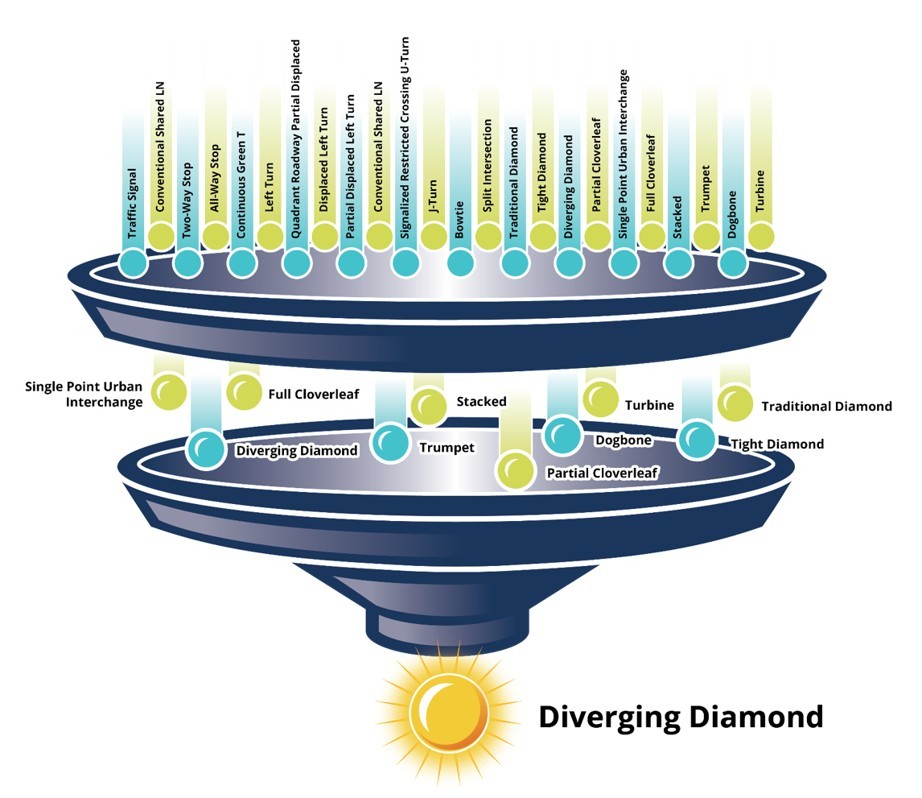
TDOT’s Intersection and Interchange Evaluation (IIE) process, established in the Highway System Access Manual (HSAM) Volume 2, helps practitioners select the best intersection or interchange design at a given location.
· The IIE process utilizes the Federal Highway Administration (FHWA) Intersection Control Evaluation (ICE) guidance as its foundation.
· This approach is data-driven and performance-based to objectively screen intersection and interchange options to ensure practitioners consider all reasonable improvement options.
· TDOT’s IIE process utilizes a planning-level capacity tool to calculate volume-to-capacity (V/C) ratios with minimal data required, such as CAP-X and VJuST.
TDOT’s IIE process is implemented in two stages:
1. A “Stage I – Scoping” step to determine the short list of all possible options that merit further consideration and analysis because they meet project needs and are practical to pursue.
2. A “Stage II – Preferred Option Selection” step to determine the preferred option based on more detailed evaluations conducted during typical preliminary engineering activities.
Traffic and Safety Analysis Reports (TSARs)
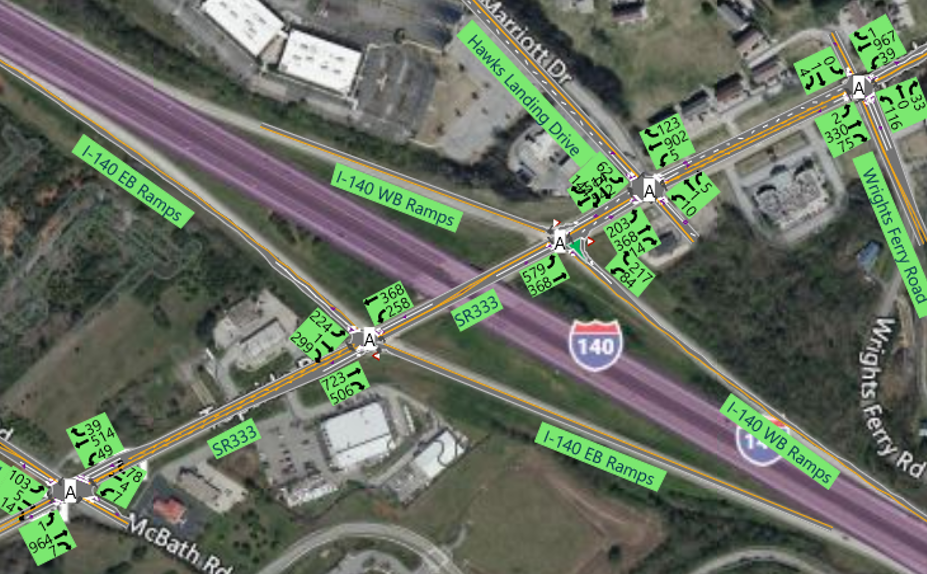
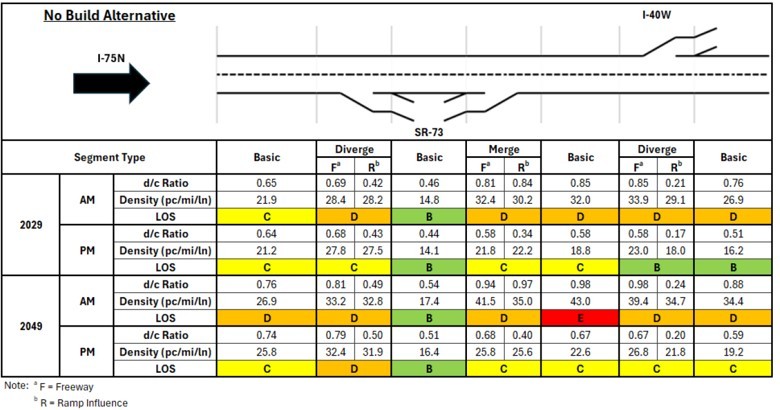
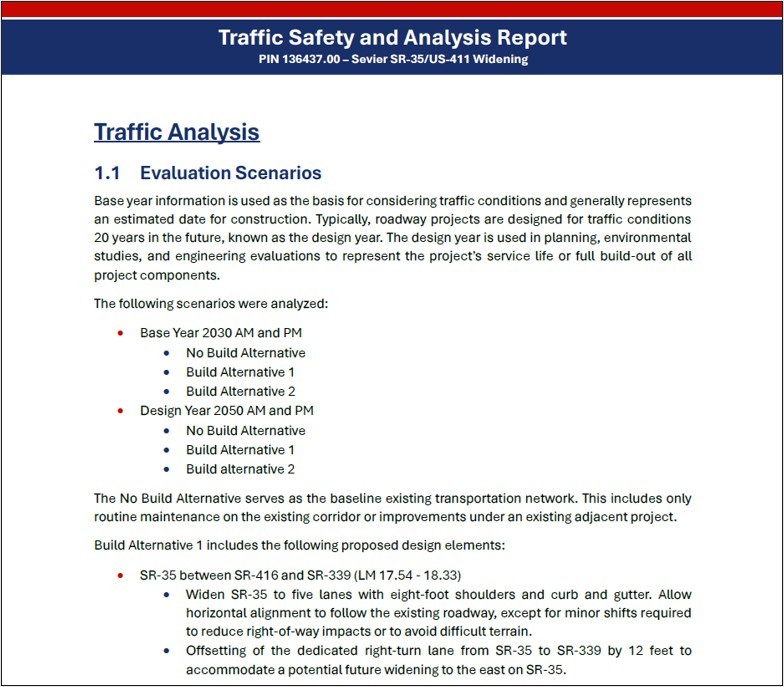
The Traffic Modeling Office uses the conceptual layouts from Concept Design to develop recommendations for lane geometries, storage lengths, and certain design configurations. The traffic analysis methodology and results that support project recommendations is documented in a Traffic Safety and Analysis Report (TSAR).
Traffic analysis is conducted by:
· Determining the level of project complexity
· Verifying the limits of the analysis and intersections for inclusion to match those included in the traffic forecast
· Including the following scenarios in the analysis – opening year no-build, opening year build, design year no-build, and design year build
· Completing the analysis in accordance with the level project complexity
· Utilizing traffic modeling software, including but not limited to, Highway Capacity Software (HCS), Sidra Intersection, Synchro, SimTraffic, VISSIM, and Vistro to evaluate operational performance
· Recommending innovative operational strategies to address system reliability improvements
· Finalizing the TSAR, including the Safety Alternative Evaluation Report, and providing the completed document to Concept Design for inclusion in the Concept Report
Resources
· TDOT PDN: https://www.tn.gov/tdot/pm/pdn.html
· Signal Warrants
o Signal Warrant Analysis Tool: Coming Soon
· IIE
o HSAM Volume 2: https://www.tn.gov/tdot/traffic-design/operations-and-safety/access-manual.html
o TDOT IIE Form: TDOT IIE Form v2
o CAP-X and VJuST Spreadsheet Tools: https://www.highwaysafetymanual.org/Pages/Tools.aspx
· TSARs
o Traffic Operations and Safety Analysis Manual (TOSAM): Currently under development
This Page Last Updated: October 7, 2026 at 12:35 PM