Tennessee hosts first unmanned aircraft master trainer course
SMYRNA, Tenn. – Twelve Tennessee Army National Guard Soldiers became the first graduates of Tennessee’s new Small Unmanned Aircraft System Master Trainer course led by the 1-117th Military Police Battalion at Smyrna’s Volunteer Training Site, June 16-29.
For two weeks, Soldiers from across Tennessee conducted new, pioneering training preparing them to be SUAS instructors, pilots, and subject matter experts in various unmanned aircraft for their home units as Tennessee continues to modernize and implement cutting-edge technology, increasing lethality on the battlefield.
“This is the most advanced training we’ve ever provided to Soldiers on these systems,” said Master Sgt. Jeffery Barber, Chief Instructor for the 1-117th. “And it’s just the beginning of what we are capable of.”
Unlike the Army's basic SUAS Operator Course, which is also taught in Smyrna by the 1-117th and teaches Soldiers how to safely fly and employ these systems, the Master Trainer Course prepares experienced operators to become instructors and advisors for their units. When the graduates return to their commands, they are qualified to certify new operators, manage training programs, advise commanders on system employment, and help build local SUAS programs.
“Everybody attending the course already knows how to fly and has attended a pilot’s course or equivalent,” said Barber. “We dive deep into training methodology and understanding various platform capabilities so our course graduates can train others and brief commanders on capabilities, what's possible, and what risks they're accepting.”
While most students have completed the Army's operator course, the pilot program also allows commanders to nominate Soldiers with equivalent military or civilian experience, including Federal Aviation Administration Part 107 certified drone pilots, allowing experienced operators to begin advanced instruction.
Over the two-week period, students learned SUAS doctrine, advanced meteorology, crew coordination, airspace management, risk management, various Army regulations, instructor methodology, training management, and flight proficiency. After the classroom instruction phase was completed, students flew missions and performed various flight exercises at Tullahoma’s Volunteer Training Site. Each student planned missions, conducted aerial reconnaissance, analyzed terrain, collected imagery, and demonstrated their ability to safely employ unmanned aircraft systems in realistic situations.
“We ensured that all our graduates were tested and capable of flying and teaching any mission they may be called to perform in combat,” said Barber.
During the course, students trained primarily on the Skydio RQ-28A, a portable, 5-pound quadcopter that provides infantry units with the ability to rapidly deploy and provide intelligence, surveillance, and reconnaissance capabilities during day and night operations. Soldiers were also familiarized with other systems like the RQ-28C and the Neros Archer First Person View quadcopter.
“The technology and systems are changing and updating so fast, we designed the course to be flexible, allowing Soldiers the ability to quickly incorporate new quadcopters, drones, or other systems into their units with minimal training time,” said Barber. “Our curriculum reflects this while using the newest doctrine and lessons observed from current conflicts and other theaters of combat. It is our responsibility to ensure students receive the best guidance and information available before returning to their home units.”
For Capt. Travis Robinson, commander of 3rd Battalion, 278th Cavalry Regiment’s Multipurpose Company, attending the course was about more than learning a new aircraft. As the commander of one of Tennessee's newest Mobile Brigade Combat Team formations, Robinson said that understanding how to build and sustain a successful SUAS program is essential to preparing Soldiers for future operations.
“This course is very different from the Operator Course,” said Robinson. “It teaches us how to train Soldiers, manage records, control airspace, and understand the requirements behind building a successful program. If we, as leadership and command teams, don't understand what it takes to be proficient at these systems, then it becomes a wasted asset.”
Robinson said unmanned aircraft systems significantly expand a commander's ability to collect information while reducing risk to Soldiers on the ground.
“Instead of putting ‘eyes on,’ we can put ‘eyes over,’” Robinson said. “It gives us a different angle to see threats and provides us with a safer means to acquire valuable, real-time intelligence on the battlefield.”
The course directly supports Tennessee’s 278th Cavalry Regiment (MBCT) as they continue their transition from an Armored Brigade Combat Team to a Mobile Brigade Combat Team, which is a lighter, faster, more agile Infantry based unit. As one of the first National Guard brigades selected for this transformation, the 278th is integrating advanced capabilities and new technologies such as the Infantry Squad Vehicle, unmanned aircraft systems, extended-range precision fires, and electronic warfare.
“This training isn't something you learn once and walk away from,” said Robinson. “The technology changes. The battlefield changes. If you don't do this on a regular basis, you're going to be left behind. Tennessee and the 278th is at the forefront of this new technology and will remain leaders in this field.”
The 1-117th Military Police Battalion plans to host another Master Trainer Course in 2027, pending National Guard Bureau evaluation of the pilot program and approval.
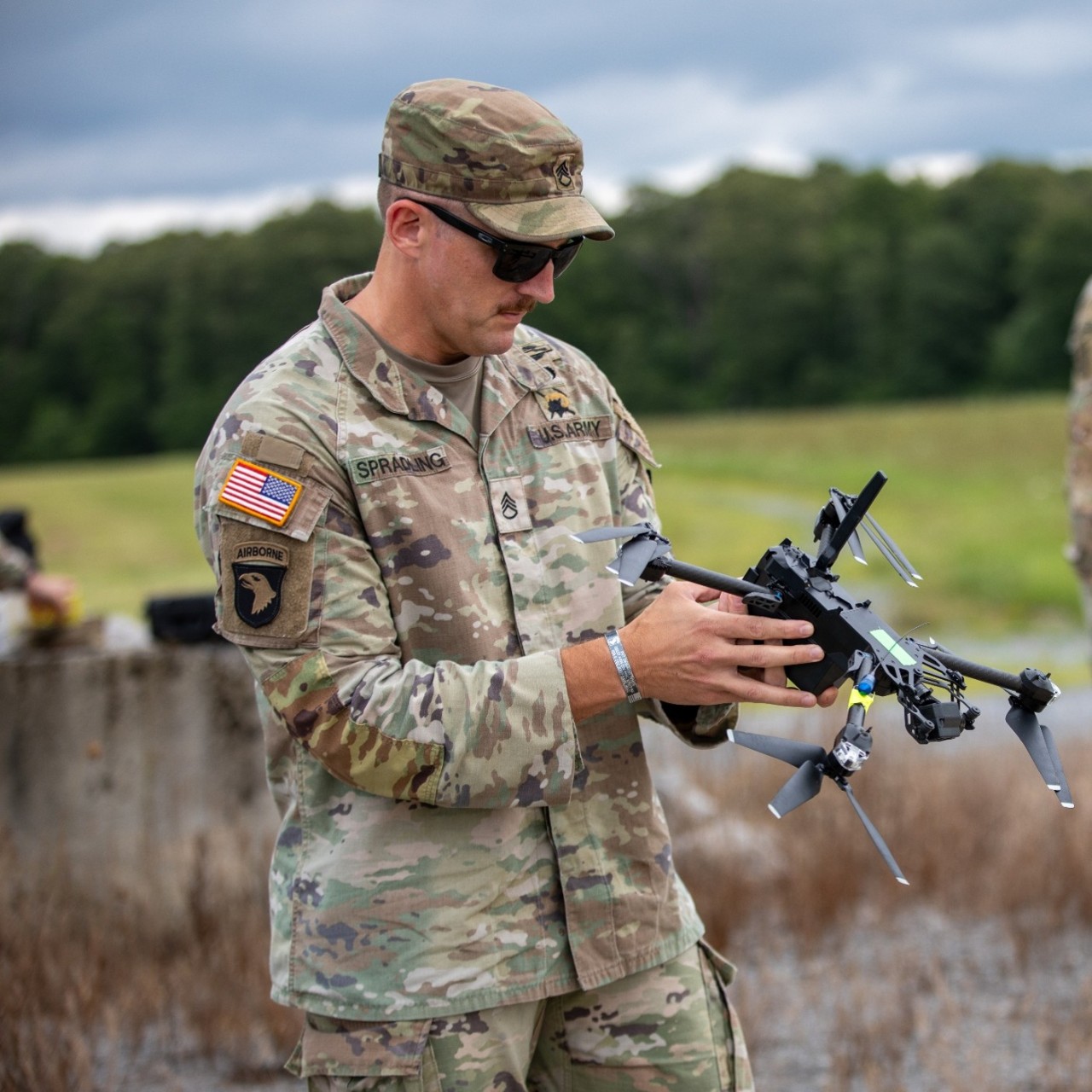
Staff Sgt. Alexander Spradling, an instructor with the 1-117th Military Police Battalion’s Multifunction Company prepares to launch an RQ-28A, a small, unmanned aircraft during the Small Unmanned Aircraft System Master Trainer pilot course at Tullahoma’s Volunteer Training Site, June 23. Unlike the Army’s basic operator course, the Master Trainer Course prepares experienced operators to certify future SUAS pilots, manage unit training programs, and advise commanders on unmanned aircraft system employment. Facilitated by Tennessee’s 117th Regional Training Institute, this is the first course of its kind in the Army National Guard. (photo by 1st Lt. Bailey Breving)
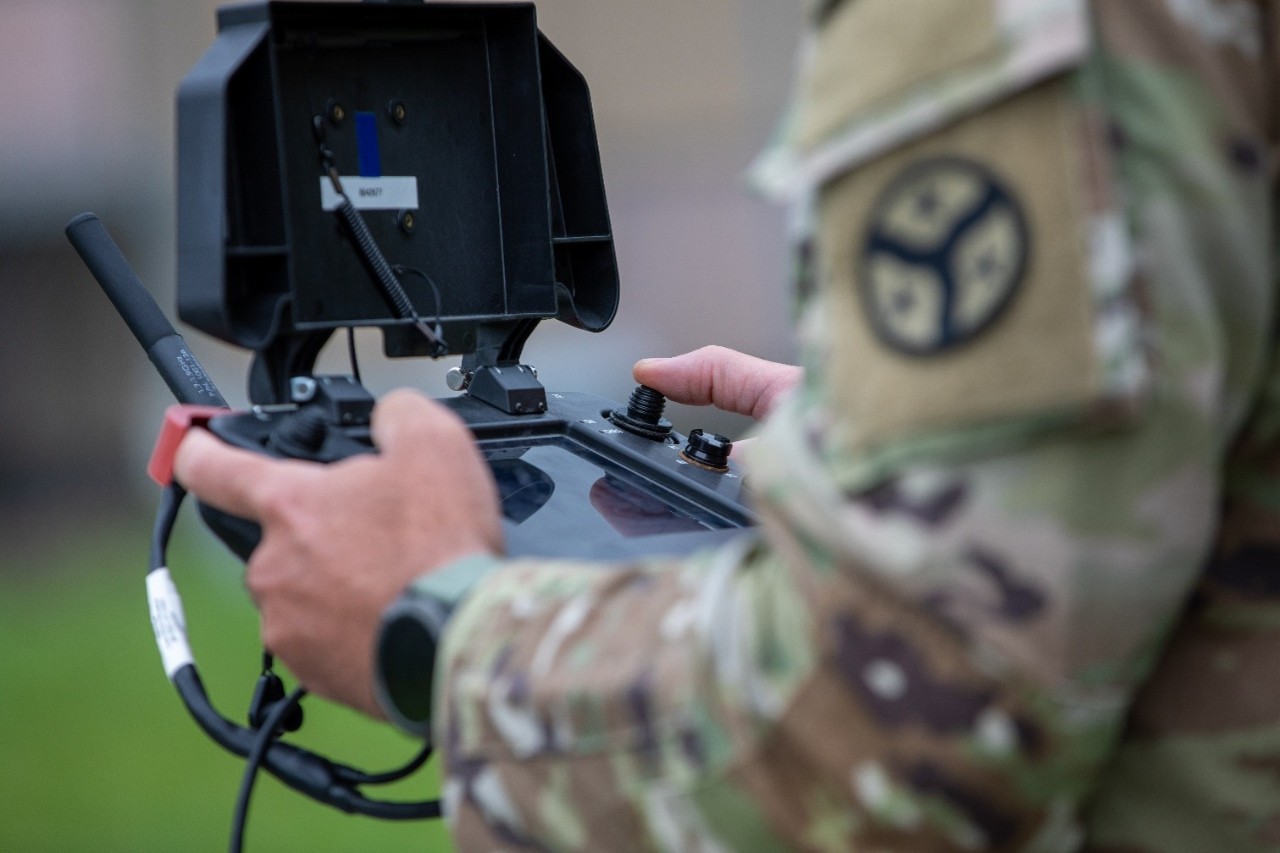
A Soldier with the 278th Cavalry Regiment (MBCT) pilots an RQ-28A, a small, unmanned aircraft during the Small Unmanned Aircraft System Master Trainer pilot course at Tullahoma’s Volunteer Training Site, June 23. Unlike the Army’s basic operator course, the Master Trainer Course prepares experienced operators to certify future SUAS pilots, manage unit training programs, and advise commanders on unmanned aircraft system employment. Facilitated by Tennessee’s 117th Regional Training Institute, this is the first course of its kind in the Army National Guard. (photo by 1st Lt. Bailey Breving)