May 2025

From Our Chief Strategy Officer

Dear readers,

Happy unofficial start of summer! If you have school-age kids, you’ve likely been with me this month in the throes of “Maycember.” It’s that end-of-year rush, crammed with field days, award ceremonies, final exams, graduations, teacher appreciation activities, and more. I wasn't the only one feeling it.

My kids’ eyes were glazed, and they were telling me with words and actions that they were exhausted and ready for a break.

Just in the past couple weeks, we had a 504 meeting for my son about new accommodations and near-daily conversations with school staff about my daughter’s behavior supports. We were white knuckling it to the finish line. Now we’re there!

The May rush probably explains why I’ve been reading a book about how to slow down in a world that pushes us to “hurry sickness.” (The book is The Ruthless Elimination of Hurry. A note that it’s written by a pastor and takes a Christian approach.) The author is reminding me of principles I tend to let slip as endless responsibilities and distractions creep in. The start of summer break feels like the perfect time for a reset. (I first mistyped that as “rest” – which is equally true.)

My guess is I’m not alone in needing a reset. So, I’m issuing an invitation: If you’re reading this, join me in slowing down. Breathe long and deep. Pause. Rest, for just a moment.

There is a great deal about the disability experience that is hard – much harder than it should be. But there is also joy, in hard-won milestones and community bonds of shared experience, and in our clear purpose of making things a little better for those who come behind.

As summer begins, let’s look together for ways to slow down and notice the joy. Even in the struggle, it’s there – calling us to pause and renew our spirits.

In fact, I’d love to hear where you find joy in your disability experience. Drop just a few sentences here on this form (you can stay anonymous, if you’d like!) or email me any time at Jolene.Sharp@tn.gov. I’ll plan to share your responses in the next couple issues of this newsletter.

Here’s to a slow summer with as much joy as we can find!

- Jolene Sharp, Chief Strategy Officer

Upcoming Opportunities 

Kindred Stories of Disability 

Do you have a story about safety, police, or the justice system? We want to hear from you.

A project called Kindred Stories of Disabilites is collecting stories from people with IDD and their families. Your story can help leaders make things better.

What they want to hear about:

  • A loved one who wandered off or went missing, and how first responders helped
  • Times when police or school officers got involved during a hard moment
  • Traffic stops or car accidents when someone had a disability
  • Trouble getting help when calling 911
  • Times when a person with IDD was arrested, charged, or taken to jail
What is involved if you choose to take part:
  • A one hour zoom call with a Vanderbilt student
  • You can stay anonymous if you’d like.
  • You’ll get the questions ahead of time.
  • If you would like, you can have a photo taken to include in the story. This is optional.
Want to share your story? Fill out the form at redcap.link/qjr2z43k, or email courtney.taylor@vumc.org with "Kindred Stories" as the subject.

New Funding to Expand Programs for Children with Disabilities

There's good news for Tennessee families and the organizations that serve them. The Department of Disability and Aging  is offering $500,000 in grants to help recreational programs serve more children with intellectual and developmental disabilities.

What is the money for?

Nonprofit groups can ask for up to $25,000 in one-time funding. The money helps them grow programs they already run, like summer camps and other non-school activities for school-aged kids.

The goal is to make room for more children with disabilities to join in the same activities as other children, and the funding can also help programs support kids with complex medical needs.

Which organizations can apply?

To be eligible, a nonprofit must:

  • Already run a recreational, non-school program for youth ages 5 to 22 with IDD or other disabilities
  • Have a plan to serve more children than it serves now
  • Submit a clear plan with a timeline, staffing needs, a budget, and ways to reach new families
  • Groups serving children with IDD in foster care will be given preference.

    Why does this matter?

    Commissioner Brad Turner has said that children with disabilities and kids in foster care are often overlooked when it comes to recreational programs, or existing programs simply don't have enough room for everyone. The grant is a direct response to that need.

    How do I apply?

    Applications are open until June 8, 2026. Find full details on the DDA Grant Opportunities page, and watch a short video about how the program will help Tennesseans with disabilities.

    Precious Cargo Awareness Survey

    Our friends at the Tennessee Department of Revenue want to know how familiar the disability community is with the Precious Cargo program.

    Precious Cargo is a free, voluntary program. It adds a confidential note to a vehicle's registration. That note tells law enforcement when a driver or passenger may need extra time or help during a stop.

    Former Council member Martez Williams advocated for this program during his time on the Council. He helped make Precious Cargo a reality for Tennesseans with disabilities.

    Please take a few minutes to fill out the short, anonymous survey.

    Your feedback will help the Department improve its outreach. It will also help them better support the disability community across Tennessee.


    Policy Corner: Council News to Know

    Dear readers,

    The Tennessee legislature adjourned from the second year of its regular legislative session on April 23.

    We tracked and shared input with policymakers about many bills that did not end up passing. We know many of you were active in advocating about various issues, too!

    Below, 4 bills are outlined that the Council educated policymakers about that DID pass and are either now state law or soon will be.

    2 bills related to children with disabilities in state custody

    • HB 2188 / SB 2362; Sponsors: Rep. Mary Littleton, Sen. Becky Massey
      DCS and DDA Collaboration
      • What it does: This bill was written to help two state departments work together — the Dept. of Children's Services (DCS) and the Dept. of Disability and Aging (DDA). The wording changed during the session, which changed the bill's impact.
        • The earlier version would have required DCS to enter a formal agreement with DDA and follow DDA's recommendations on evaluations, placement, oversight, staff training, and disability care coordination.
          • The version that passed removed that requirement.
        • The version that passed authorizes (but does not require) the two departments to work together on training, oversight tools, and referrals of children suspected to have an intellectual or developmental disability and allows them to sign interagency agreements to support that work.
        • The yearly report no longer has to cover where kids are placed, but it must now include how the state is building tools to check on the companies that provide housing and care to kids with disabilities.
      • Why we were involved: This bill is about children with intellectual or developmental disabilities; the people the Council works for. Because it affects how these kids are cared for in the foster care system, it fits within the Council's focus.
    • HB 2526 / SB 1868 ; Sponsors: Rep. William Lamberth, Sen. Jack Johnson
      Child in Need of Heightened Supervision
      • What it does: This bill was first written to define a new group of children; those "in need of heightened supervision" and to change the rules for when they could be detained or committed. The wording changed during the session, which changed its final impact.
        • Under the bill that passed, a child can stay in state custody usually up to six months, with a possible extension if the child assaults a staff member; but not if that behavior was caused by the child's disability.
        • It also creates a task force to study the services and needs of children with disabilities, court cases, or competency issues.
        • The task force will share its findings with the Governor and lawmakers by February 2027.
      • Why we were involved: This bill affects children whose disabilities overlap with the foster care and juvenile justice systems, including kids found unable to take part in their own court case. It also adds a rule so a child's time in custody is not made longer for behavior tied to their disability.
    Related reading:

    2 bills related to public school students with disabilities and behavior

    • HB 1273 / SB 591; Sponsors: Rep. Clay Doggett, Sen. Ferrell Haile
      Threats of Mass Violence
      • What it does: This bill makes it a serious crime (a Class E felony) to recklessly threaten an act of mass violence at a child care center, preschool, or religious site.
        • The offense does not apply to a person with an intellectual disability.
        • It lets a court order a mental health evaluation before letting the person out on bail.
        • The court also can make the person pay for costs caused by the threat.
        • A young person found guilty loses their driver's license (or the right to get one) for one year.
        • It also requires that anyone who knows about a real, believable threat must report it right away to the police and the place being threatened.
          • Not reporting it is a lesser crime (a Class B misdemeanor).
      • Why we were involved: This bill says the crime does not apply to a person with an intellectual disability. Because that part affects how people with disabilities are treated under the law, it fits within the Council's focus.
    • HB2327 (SB2055); Sponsors: Rep. Brock Martin, Sen. Page Walley
      Private Pay ABA Services in Schools
      • What it does: This bill lets parents bring in their own privately paid provider to give a student ABA therapy (applied behavior analysis) during the school day, at school. It is for students with autism or developmental delays.
        • The provider has to be properly trained and licensed, pass a background check, follow student privacy rules, and work with the school and the student's IEP team so the therapy fits into the day without disrupting class.
        • Parents must say yes in writing and can pick their own provider.
        • Schools cannot charge a fee, block the provider, or punish anyone for using these services; but they do not have to pay for them and are not responsible for the provider's actions.
        • The therapy is meant to add to a student's IEP, not take the place of it.
        • Schools must make a plan for how this works, and the state will create guidelines and sample agreements.
        • This bill starts with the 2026–2027 school year.
      • Why we were involved: This bill is about students with autism and developmental disabilities and how they get help at school. Because it shapes the services and support these students can get during the school day, it fits within the Council's focus.
    Related reading:
    - Emma Garton, Director of Public Policy

    Celebrating Ashley Hill! 

    1eed24b0c96198a41b25d79b

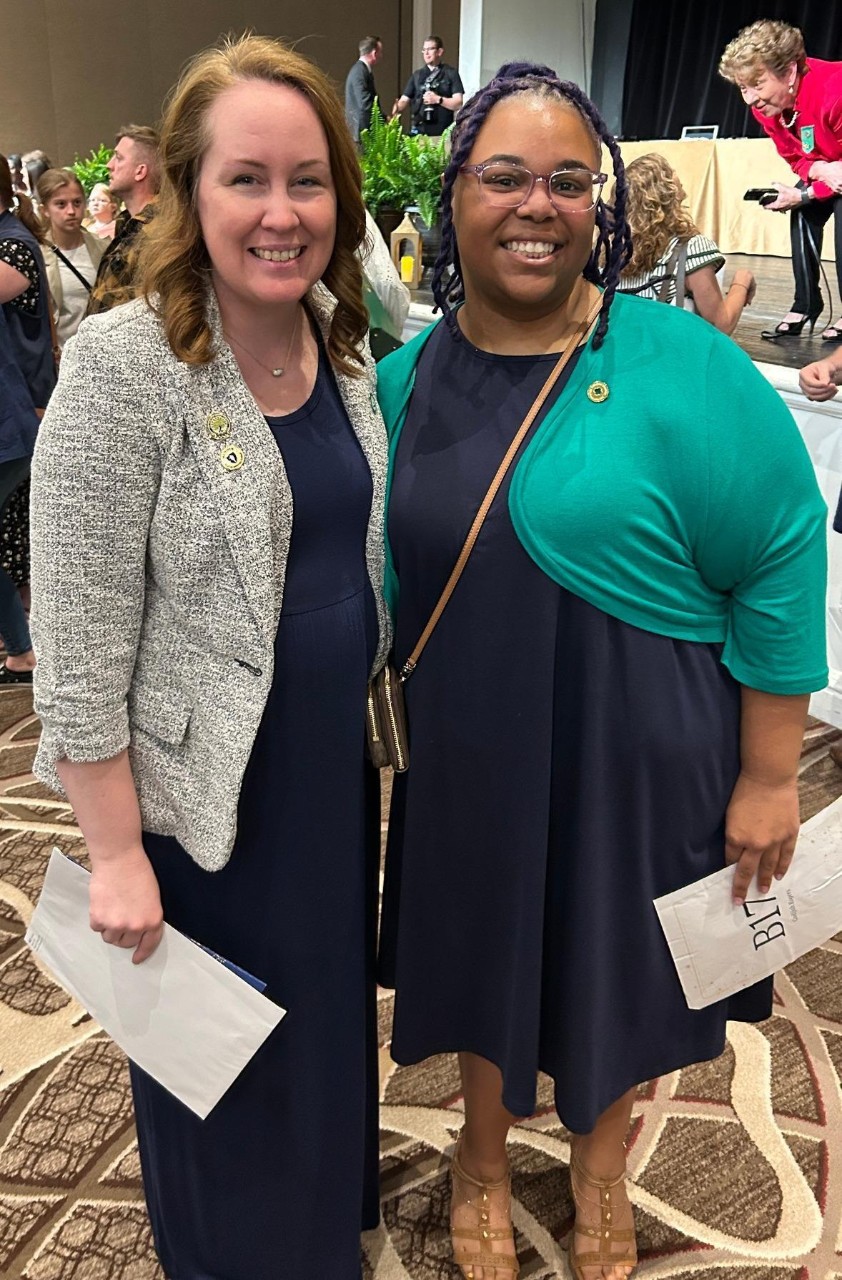
    We're thrilled to share some wonderful news about our own Ashley Hill (on the left in the photo)!

    Girl Scouts of Middle Tennessee has awarded Ashley the Honor Pin, a recognition reserved for exemplary service.

    The award honors her work as a dedicated advocate for Girl Scouts with disabilities; someone who makes sure every girl feels included, supported, and empowered in her troop.

    Ashley raises awareness about the challenges these Girl Scouts can face, and she pushes for leaders to have the training, resources, and confidence they need to meet every girl's needs.

    We're so proud of the difference Ashley is making for Girl Scouts, and even prouder to call her part of our Council team.


    Community Events & Training

    Parties in the Park: Nashville, Chattanooga, Memphis 

    The Tennessee Disability Coalition is hosting Parties in the Park this summer. These are free, family-friendly, outdoor events held across the state.

    They're a chance for the disability community to come together to connect, learn, and have fun. Each party will have free food, games, and resource tables, plus an adult-sized changing table at every location.

    There are three parties that will be happening, so you can choose the one closest to you. 

    Memphis: Saturday, May 30, 11:00 a.m. – 1:00 p.m. CDT, East Parkway Pavilion, Overton Park

    Nashville: Saturday, June 6, 11:00 a.m. – 1:00 p.m. CDT, Naval Hill Shelter #2, Shelby Bottoms Park

    Chattanooga: Saturday, June 13, 11:00 a.m. – 1:00 p.m. EDT, Riverview Park, Hope Inclusive Playground

    The Coalition has done their best to make the day welcoming for everyone. The park sits near para-transit routes, and they have a few $25 gas and gift cards to help cover travel. You will be able to find these at the TN Disability Coalition table while they last.

    For accessibility details specific to your needs, the venue’s website is a good place to check.

    An RSVP is required to attend. You can RSVP here.

    Questions? Email the Tennessee Disability Coalition at coalition@tndisability.org or call 615-383-9442.