Respiratory Viral Illness Information and Prevention
Information and resources so Tennesseans can protect themselves from severe respiratory viral illness that include the common cold, coronaviruses, influenza, and respiratory syncytial virus (RSV).Protecting Yourself from Respiratory Viral Illness
When viruses attack the respiratory system, they can cause illnesses.
Respiratory viral illnesses include the common cold, coronaviruses, influenza, and respiratory syncytial virus (RSV).
These illnesses share similar symptoms, risk factors, and prevention strategies.
This page includes information and resources so Tennesseans can protect themselves from severe respiratory viral illness
Stay Up-to-Date with Immunizations
- Immunizations are available from providers and local health departments for COVID-19, flu, and RSV.
- Vaccines help your body prepare to fight against viruses.
- Vaccines can reduce your chance of getting really sick.
- Getting a vaccine can mean fewer days off work or out of school.
- When you get vaccinated, you help protect others from getting sick.
Practice Good Hygiene
- Learn and use proper handwashing techniques.
- Wet hands with clean, running water
- Apply soap
- Make a lather and scrub well, include back of hands, between fingers, and under fingernails
- Rub hands for a lest 20 seconds
- Rinse hand thoroughly
- Dry hands using a clean paper towel, or air-dry
- Clean surfaces frequently with soap or detergent to remove germs and dirt.
- Cover coughs and sneezes to limit the spread of germs and protect others.
- Other, less studied hygiene practices, such as nasal rinsing, may be beneficial. If you are considering nasal rinsing, follow CDC recommendations.
- Use boiled, distilled, or sterile water to prevent a rare infection from Naegleria fowleri.
- If tap water is the only option, be sure to boil the water for 1-to-3 minutes and let the water stop boiling and cool before using as a rinse for sinuses or nasal passages.
- Talk with your provider about whether nasal rinsing is a good, safe hygiene practice for you.
Treatment
- Plan with a healthcare provider about accessing treatment before you might need it.
- Use the online treatment locator from the Administration for Strategic Preparedness and Response to find sites that have medications in stock to treat either COVID-19 or influenza.
- Talk with friends and family about antiviral treatments as options to reduce the chances of being hospitalized or dying from respiratory viruses.
- Follow the treatment guidance of a healthcare provider and take all medications only as prescribed.
Resources
Find out if respiratory viruses are causing a lot of illness in your community.
Learn more about the risk factors for severe illness from respiratory viruses.
Frequently asked questions (May 20, 2025 for providers about respiratory viral illness.
Provider toolkit for respiratory disease reporting and outbreak response.
Prevent the Spread of Respiratory Viruses When You're Sick
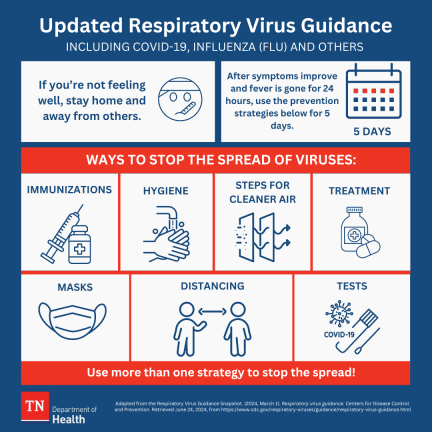
Description: This image provides information and guidance on respiratory viruses with recommendations to stay home if you are sick and ways to stop the spread of viruses. If you do stay home if you're not feeling well, wait 24 hours after your symptoms improve before returning to work or to school or before being around others. It's a good idead to practice the prevention strategies, such as proper hand hygiene, getting tested or further treatment, or talking with your provider about vaccine options, after your symptoms do improve.
Stay Home if You're Not Feeling Well... And...
- Stay away from others (including people you live with who are not sick) if you have respiratory virus symptoms that aren't explainable by another cause.
- Symptoms can include fever, chills, fatigue, cough, runny nose, and headache, among others.
- You can return to your normal activities when your symptoms are improving and you have been fever-free for at least 24 hours without using fever-reducing medication.
- When you go back to your normal activities, take additional precautions over the next 5 days when you will be around other people indoors.
- Additional prevention strategies include masking, distancing, and testing.
- Prevent the ability of respiratory viruses to spread and lower the risk to others of getting sick.
Steps for Cleaner Air
- Bring as much fresh air into your home as possible by opening doors and windows and/or using exhaust fans.
- If your home has a central heating, ventilation, and air conditioning system (HVAC, a system with air ducts that go throughout the home) that has a filter, set the fan to the “on” position instead of “auto” when you have visitors and use pleated filters. Change your filter every three months or according to the manufacturer’s instructions.
- Use a portable high-efficiency particulate air (HEPA) cleaner.
- Move activities outdoors, where airflow is best.
Tennessee Respiratory Virus Data Dashboards
Respiratory Viral Illnesses by Total
Respiratory Viral Illnesses by Age
Influenza Sentinel Provider Network
Use these tools to report influenza-like illnesses as a sentinel provider and access seasonal flu data.
2026-2027 Tennessee Influenza Sentinel Provider Network (ILINet) Protocol
This Page Last Updated: October 13, 2026 at 1:23 PM