Breastfeeding in Tennessee
The Breastfeeding in Tennessee Program offers education and resources for moms, providers, and businesses to support breastfeeding as a key health measure.Breastfeeding in Tennessee
Breastfeeding is one of the most highly effective preventive measures a mother can take to protect the health of her infant and herself. The American Academy of Pediatrics (AAP) recommends exclusive breastfeeding for about the first six months of a baby's life, followed by breastfeeding in combination with the introduction of complementary foods until at least 12 months of age, and continuation of breastfeeding for as long as mutually desired by mother and baby.
Tennessee Breastfeeding Hotline
The Tennessee Breastfeeding Hotline, staffed by International Board Certified Lactation Consultants (IBCLC), is available to nursing mothers and partners, their families, expectant mothers, and health care providers seeking breastfeeding support and information.
The Tennessee Breastfeeding Hotline operates 7 days a week, 24 hours a day.
Individuals are welcome to call the Tennessee Breastfeeding Hotline anytime they need support, regardless of language barriers. Interpretative services available directly include: Spanish, French, Arabic, and Mandarin.

The Tennessee Breastfeeding Hotline provides accurate, up-to-date information for common breastfeeding issues and questions, such as:
- Not making enough milk
- Over supply of milk
- Baby refusing to nurse
- Breast or nipple pain
- Engorgement
- Medications and breastfeeding
- Breast pumps
- Working and breastfeeding
- Breastfeeding in public
- Weaning
Referral information is provided to outpatient lactation services, the Women, Infant and Children (WIC) Program, breastfeeding advocacy groups, and breast pump rental locations. Please note that the hotline cannot provide a medical diagnosis. All medical questions should be directed to a health care provider.
Tennessee Breastfeeding Hotline Reports
Quarterly Reports
Annual Reports
Breastfeeding protects against:
Respiratory illnesses
Ear infections
Gastrointestinal diseases
Allergies including asthma, eczema and atopic dermatitis
Sudden infant death syndrome (SIDS)
Obesity
Breast and ovarian cancers
Support for You and Your Baby
There are various professionals and support groups available during your breastfeeding journey.
Lactation Professionals
An International Board Certified Lactation Consultant (IBCLC) or Certified Lactation Counselor (CLC) is an invaluable asset to encourage you when breastfeeding is going well and to provide information and support to help prevent and manage your common concerns. IBCLCs and CLCs help you with:
- Prenatal counseling to address factors that may affect breastfeeding
- Basic position and latch of your infant
- Information about practices that promote successful breastfeeding
- Preventing and managing common concerns such as poor latch, inadequate milk transfer or supply, nipple or breast pain, and calming a fussy baby
- Milk expression and storage if you must separated from your baby
- Strategies for breastfeeding after returning to work
- Breastfeeding in challenging situations, such as breastfeeding twins or triplets, a premature or sick infant, or infants in special medical situations
La Leche League is an international, nonprofit, nonsectarian organization dedicated to providing education, information, support, and encouragement to women who want to breastfeed. All women interested in breastfeeding are welcome to attend the monthly group meetings or call a Leader for breastfeeding help.
Find a La Leche group near you.
Other Community-Based Support Groups
Check with social media groups such as Facebook and Meetup.com for local peer support in your community. Classes may also be available through your delivery hospital, local health department, or insurance provider.
Breastfeeding Advocacy and Community-Based Groups
Local breastfeeding coalitions bring individuals and organizations together. They enable women, families, and community members to share ideas, break institutional and cultural barriers, and solve problems related to breastfeeding, in addition to empowering and educating the public. There are five local breastfeeding coalitions across the state:
East Tennessee Breastfeeding Coalition Serving the Greater Knoxville Area
East Tennessee Breastfeeding Coalition (Facebook)
Nashville Breastfeeding Coalition Serving Nashville / Middle Tennessee Area
Nashville Breastfeeding Coalition (Facebook)
Shelby County Breastfeeding Coalition serving Memphis and Shelby County
Shelby County Breastfeeding Coalition (website)
Tennessee Breastfeeding Coalition
TNBreastfeeds (Facebook)
Additional Resources
USDA WIC Breastfeeding Support
FLSA Protections to Pump at Work
Your Guide to Breastfeeding: This easy-to-read publication by U.S. Department of Health and Human Services' Office on Women's Health provides women the how-to information and support needed to breastfeed successfully.
- It explains why breastfeeding is best for baby, mom, and society and how loved ones can support a mother's decision to breastfeed
- Expert tips and illustrations help new moms learn how to breastfeed comfortably and how to overcome common challenges.
- The wisdom of real moms is shared in personal stories that reassure and encourage.
Start Discussing Breastfeeding Early in Prenatal Care
What you say to expectant mothers and their families can influence their decision whether or not to breastfeed. The American College of Obstetricians and Gynecologists (ACOG) recommends 3-step counseling:
- Ask the patient open-ended questions and listen to her response.
- Summarize her response in your own words.
- Provide education, based on her concerns.
Some suggested open-ended questions and discussion points:
What have you heard about breastfeeding?
Review the benefits for mom and baby: For babies, breastfeeding lowers the risk of acute illnesses (such as respiratory and ear infections), obesity, and asthma/allergies. For women, breastfeeding lowers the risk of diabetes, heart disease, and some cancers.
What have you heard about how long to breastfeed?
Discuss the recommendation to exclusively breastfeed for the first 6 months of life, followed by breastfeeding in combination with complementary foods until 1 year of age or longer if mutually desired by the woman and baby.
How does your partner or family feel about breastfeeding?
Offer to provide education to a partner or family member who may not be supportive of breastfeeding.
What are your plans for returning to work or school after the baby's birth?
Discuss options for expressing milk at work or school and the TN law that employers must accommodate breastfeeding moms at work.
How did feeding go with your older child or children (if applicable)?
Congratulate the patient for any previous breastfeeding. Identify any previous challenges and discuss strategies to avoid potential problems.
Consider a prenatal consult with a Lactation Professional.
Learn about Local Resources that can Support Your Breastfeeding Patients
Locate an International Board Certified Lactation Consultant (IBCLC).
Learn about La Leche League.
Join Tennessee Initiative for Perinatal Quality Care (TIPQC)
TIPQC seeks to influence health outcomes for mothers and infants in Tennessee by engaging provider- and community-based stakeholders in a perinatal quality collaborative. The collaborative identifies opportunities to improve birth outcomes through data-driven performance improvement initiatives.
Complete a Lactation Course
Healthy Children's Center for Breastfeeding - Lactation Certification Courses
International Board of Certified Lactation Examiners - IBCLC Certification
Check Out These Additional Resources
American College of Obstetricians and Gynecologists (ACOG) - Breastfeeding Toolkit
LactMed, a free online database with information on drugs and lactation
Provide and Ensure
- Breastfeeding education for health clinicians who care for women and children in your facility
- Access to lactation professionals (e.g., International Board Certified Lactation Consultants or Certified Lactation Counselors) to your patients
- Breastfeeding support from delivery through discharge by incorporating the recommendations of UNICEF/WHO’s Baby-Friendly Hospital Initiative.
Implement Baby-Friendly USA Hospital Initiative
Baby-Friendly hospitals and birthing facilities must adhere to the Ten Steps to Successful Breastfeeding to receive, and retain, a Baby-Friendly designation. The Ten Steps are evidence-based breastfeeding practices that were developed by a team of global experts.
- Around the world, mothers who give birth at Baby-Friendly hospitals and birthing centers are more likely to initiate breastfeeding, exclusively breastfeed, and sustain breastfeeding longer.
- In the United States, new mothers exposed to at least six of the Ten Steps were 13 times more likely to continue breastfeeding at 6 weeks postpartum when compared to mothers who had not been exposed to any of the Ten Steps during their birthing hospitalization.
- Additionally, adherence to the Ten Steps decreases racial, ethnic, and socio-cultural disparities in breastfeeding rates in U.S. hospitals.
Click here to find a list of Baby-Friendly designated hospitals by state.
Check Out These Additional Resources
Centers for Disease Control and Prevention - Maternity Practices in Infant Nutrition and Care (mPINC). This report describes specific opportunities to improve mother-baby care at hospitals and birth centers nationally.
Breastfeeding Support for Businesses
Breastfeeding Benefits Society
The nation benefits when mothers breastfeed.
- Recent research shows that if 90 percent of families breastfed exclusively for 6 months, nearly 1,000 deaths among infants could be prevented
- The United States would also save $13 billion per year because medical care costs are lower for fully breast-fed infants than for never-breastfed infants
- Breastfed infants typically need fewer sick care visits, prescriptions, and hospitalizations
- Breastfeeding also contributes to a more productive workforce because mothers miss less work to care for sick infants. Employer medical costs are also lower
What Can Businesses Do?
Start and maintain high-quality breastfeeding support programs for employees. Breastfeeding support requires few resources. Companies both large and small benefit from providing a breastfeeding support program. When the following simple, cost-effective components are provided, companies enjoy the biggest savings.
Privacy to Express Milk
If women do not work in a private office, a small, private space (as small as 4’ x 5’) can be set up as a lactation room. A woman produces milk on a constant basis. This means she needs to express milk approximately every 3 hours to maintain a healthy milk supply and relieve uncomfortable fullness while separated from her infant. Milk can be refrigerated or stored in a personal cooler to provide to the baby later. Some companies also provide a hospital-grade electric breast pump that makes pumping quicker and more efficient. Employees should never be asked to express milk or breastfeed in a restroom. Breast milk is food, and restrooms are an unsanitary place to prepare food. In addition, electrical outlets are usually unavailable and it is difficult and uncomfortable managing breast pump equipment in a toilet stall.
Flexible Breaks
Each milk expression session usually takes around 15 minutes plus time to get to and from the lactation room. Breastfeeding employees typically need no more than an hour per work day to express milk, which can easily be divided between usual paid breaks and the meal period. If milk expression takes longer than expected, a common solution is to allow employees the flexibility to come in early or stay late, or to use a portion of their lunch period, to make up time.
Supportive Policies
Supportive policies and practices that enable women to successfully return to work and breastfeed send a message to all employees that breastfeeding is valued. Management can encourage supervisors to work with breastfeeding employees in making reasonable accommodations to help them reach their breastfeeding goals and can encourage other employees to exhibit a positive, accepting attitude. Providing support is a temporary need for each breastfeeding employee. Once babies begin eating solid foods at 6 months, milk expression requirements gradually diminish.
Lactation Education
Employees value information they receive during their pregnancy about continuing to breastfeed upon returning to work. Pamphlets, resources, lunchtime prenatal classes, and access to a lactation professional can help employees feel more prepared.
Additional Resources
- Supporting Nursing Moms at Work: Employer Solutions
- U.S. Department of Labor Fact Sheet #73: FLSA Protections for Employees to Pump Breast Milk at Work
- Womenshealth.gov has resources to personalize breastfeeding support for the unique needs of your company.
- The Business Case for Breastfeeding : Easy Steps to Supporting Breastfeeding Employees
Tennessee has laws in place to support and protect breastfeeding families:
TCA 68-58-101: A mother may breastfeed in any public or private place she is authorized to be.
TCA 68-58-102: Breastfeeding shall not be considered public indecency or nudity, obscene, or sexual conduct.
TCA -68-58-103: Local governments shall not prohibit breastfeeding in public by local ordinance.
TCA 50-1-305: Employers must accommodate breastfeeding mothers at work.
PUMP for Nursing Mothers Act (“PUMP Act”): Expanding rights to more nursing employees

How Does Tennessee Compare to Other States?
According to the most recent National Immunization Survey by the Centers for Disease Control and Prevention (CDC),
- 79.1 percent of Tennessee infants born in 2018 had ever breastfed, which is below the national estimate of 83.9 percent.
- At 6 months of age, 49.2 percent were breastfeeding (22.4 percent exclusively).
- The rate of breastfeeding at 12 months of age was 32.0 percent.
The large difference between the rate of mothers who have the intention of breastfeeding and those still breastfeeding at six months indicate that many obstacles exist for mothers in their attempt to breastfeed. Some of those obstacles are:
- Lack of experience or understanding among family members of how best to support mothers and babies
- Not enough opportunities to communicate with other breastfeeding mothers
- Lack of up-to-date instruction and information from health care professionals
- Hospital practices that make it difficult to get started with successful breastfeeding
- Lack of accommodation to breastfeed or express milk at the workplace
Maternity Practices in Infant Nutrition and Care (mPINC)
Maternity practices in hospitals and birth centers can influence breastfeeding behaviors during a period critical to successful establishment of lactation. The literature, including a Cochrane review, found that institutional changes in maternity care practices to make them more supportive of breastfeeding increased initiation and duration of breastfeeding.
In 2009, CDC administered the first national Maternity Practices in Infant Nutrition and Care (mPINC) survey. All hospitals and birth centers in the U.S. that provide maternity care are invited to participate. This report describes specific opportunities to improve mother-baby care at hospitals and birth centers across the country to more successfully meet national quality of care standards for perinatal care. For more information about the mPINC survey and view past state reports, visit www.cdc.gov/breastfeeding/data/mpinc/index.htm.
Click here to view Tennessee's 2020 mPINC Survey Report.
Note: The mPINC survey was redesigned in 2018. Results from the 2018 and 2020 mPINC surveys cannot be compared with results from previous mPINC surveys.
Breastfeeding Welcomed Here Campaign

Breastfeeding Welcomed Here Campaign
Breastfeeding mothers need the community's support. The Tennessee Department of Health recognizes businesses that support breastfeeding families through the “Breastfeeding Welcomed Here” campaign. This campaign aims for businesses to:
- Demonstrate their support for breastfeeding
- Make a commitment through a pledge
- Display the Breastfeeding Welcomed Here window decal visibly.
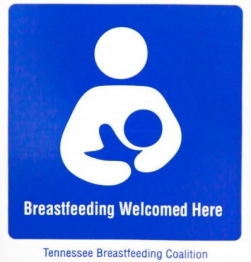
This decal will help moms identify public locations where they can breastfeed comfortably and encourage the perception that breastfeeding is normal, accepted, and welcomed. By taking the “Breastfeeding Welcomed Here” pledge your business agrees to provide an environment where breastfeeding mothers are able to sit anywhere and enjoy a welcoming attitude from staff, management, and other patrons while breastfeeding.
Resources for Businesses
Breastfeeding Welcomed Here Pledge
Breastfeeding Welcomed Here Directory
Below is a list of businesses that have pledged their support of breastfeeding mothers and families through the Breastfeeding Welcomed Here Campaign.
Using the box below, you can search by:
- Business Name
- Street Address
- City
- Zip Code
- County
This Page Last Updated: March 25, 2026 at 9:59 PM