The Tennessee Quantum Utilization Buildout Infrastructure and Technology (QUBIT) Grant Program
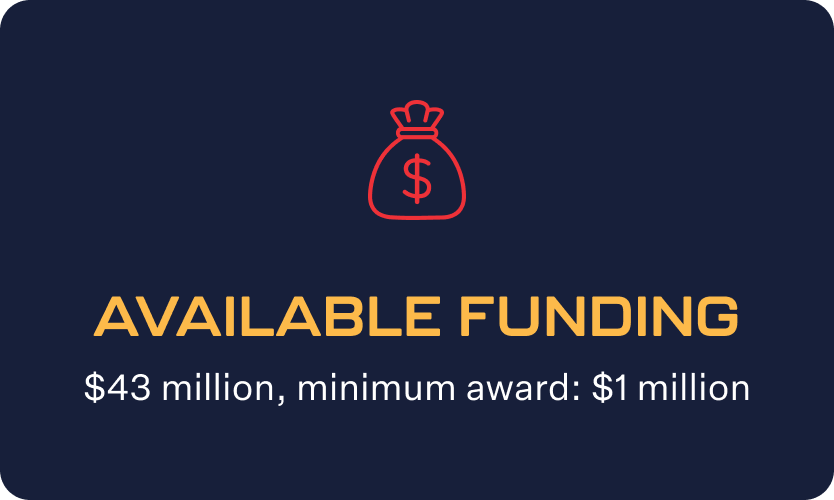
The QUBIT Grant Program allocates $43 million in support of the Tennessee Quantum Initiative Strategy to fund infrastructure to connect Tennessee’s quantum technologies across the state. The program is administered by the Tennessee Department of Economic and Community Development (TNECD). Funding is intended to build and strengthen regional quantum hubs; support a coordinated statewide architecture; expand quantum cloud and network access; enable open-access testbeds; and support research, education, commercialization, industry deployment, workforce development and federal partnerships.
Program Snapshot

Program Eligibility
Eligible applicants must be one of the following Tennessee entities: public or private nonprofit higher education institutions, development districts, Oak Ridge National Laboratory or public utilities.
The eligible applicant must: (1) execute the Grant Contract, (2) serve as fiscal agent, (3) receive and account for grant funds, and (4) be responsible to TNECD for all project activities, partners, subrecipients, expenditures, assets, deliverables and contractual obligations.
Consortia and Project Partners
An eligible applicant may apply as the lead for a Consortium. Consortia may include Project Partners such as for-profit companies, national or regional laboratories, nonprofit organizations, utilities, educational institutions, economic development organizations and other public or private entities.
Geographic Requirement
Funded infrastructure and the project’s primary public benefit must be located in Tennessee. Remote access may extend beyond the host site when it supports statewide participation and remains consistent with the approved project purpose.
Project Categories
Regional quantum network expansion
Fiber, optical equipment, quantum networking equipment, trusted nodes, control systems, repeaters and connections among research, education, utility and commercial nodes.
Institutional and regional access nodes
Secure endpoints, laboratories, user facilities, off-campus research nodes and related connections that broaden participation in the statewide ecosystem.
Supporting infrastructure
Site preparation, power, cooling, secure space, limited renovation and other enabling costs directly necessary to install and operate eligible quantum infrastructure.
Open-access quantum networking testbeds
Shared environments supporting research, workforce development, technology validation, commercial pilots and federally sponsored demonstrations.
Quantum sensing and secure communications infrastructure
Shared equipment and deployment environments supporting energy, advanced manufacturing, healthcare, logistics, transportation, financial services, nuclear, cybersecurity, national security and other priority applications.
Statewide quantum cloud access
Multi-user access to commercial quantum computing platforms, hybrid computing tools, simulators, software environments, user support and related curricula that expand access regardless of geography.
Cybersecurity and interoperability infrastructure
Identity and access management, monitoring, standards testing, orchestration, network management and integration required for secure shared operation.
Eligible Project Costs
- Equipment, hardware, software, licenses, cloud access, installation, integration and
commissioning, subject to the sustainability requirements - Fiber, conduit, electronics, secure connectivity and network management directly attributable to the project
- Architectural, engineering, technical, cybersecurity and interoperability services, including compatibility and modularity features supporting multiple vendors, emerging technologies and future network expansion
- Limited project management, user onboarding, documentation and training necessary to place infrastructure into service
- Minor renovation, site preparation, power, cooling and security improvements necessary for installation
- Independent testing, validation, audit and performance measurement
Ineligible Project Costs
- General operating costs
- Basic research without infrastructure component
- Land acquisition or major construction
- Lobbying
- Any single-user equipment
- Pre-contract costs
- Double-charged costs
Applicant Match
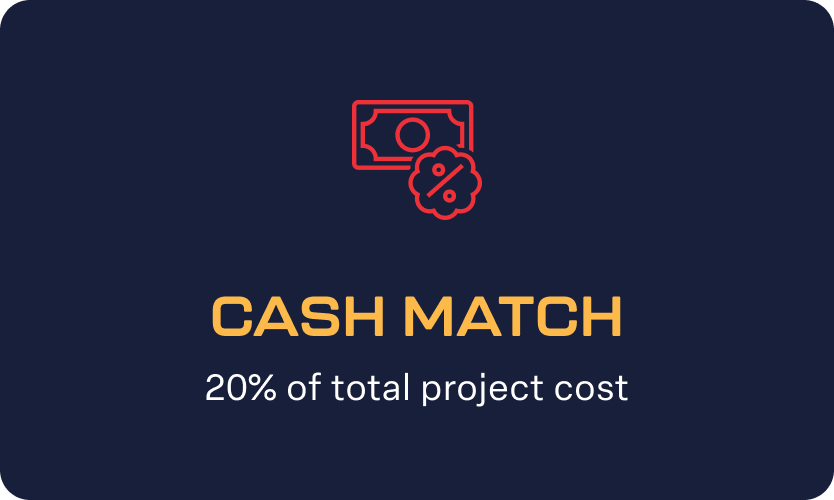
A twenty percent (20%) Cash Match for total eligible project costs is required. Before contract execution, the selected applicant must provide evidence satisfactory to TNECD that the required match has been committed and will be available when needed under the approved project schedule.
Cash-match sources may include applicant funds, local funds, private investment, philanthropic funds and federal funds when authorized by the applicable federal award and law. The following funding sources may not be used as a Cash Match: other TNECD funds and QUBIT funds.
In-kind contributions may be reported as additional leverage but do not satisfy the required match.
Match example: For a project with $1,000,000 in total eligible costs, the minimum Cash Match is $200,000 and the maximum QUBIT grant request is $800,000. The calculation is $1,000,000 × 20% = $200,000.
Project Period and Reimbursement
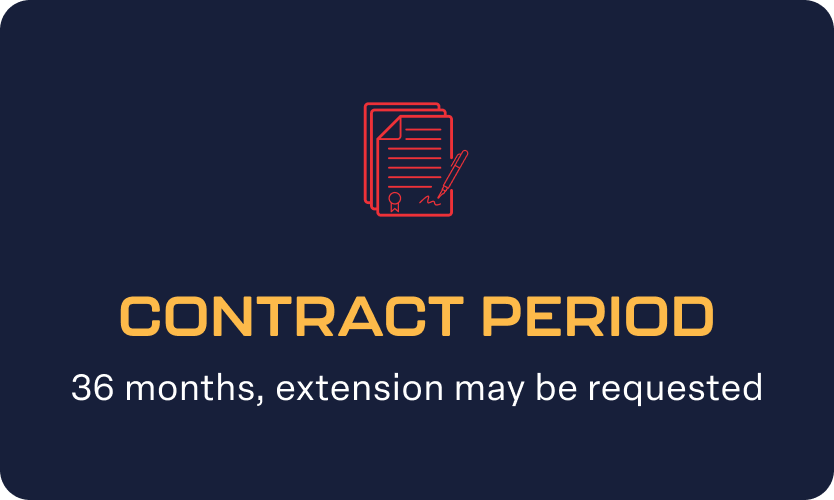
The project period is for up to 36 months. Grants are based on reimbursement.
Application Review and Selection
Applications are reviewed by a team. TNECD reviews applications for completeness and eligibility using the criteria below. Reviewers consist of TNECD staff and/or external subject-matter experts who have completed conflict of interest disclosure requirements.
Evaluation Criteria
- Strategic alignment and statewide benefit;
- Technical merit, interoperability and vendor neutrality;
- Readiness and implementation feasibility;
- Access, utilization, partnerships and geographic inclusion;
- Economic, workforce, federal and commercialization impact;
- Cybersecurity, resilience and supply-chain risk management; and
- Budget, leverage, cost effectiveness and sustainability.
When determining awards, TNECD may consider geographic distribution, connections among regional hubs, alignment with the statewide quantum architecture, technology diversity, avoidance of duplicative investments, available funding, project sequencing, leverage and risk.
How to Apply
Find the application and read more about program guidelines here.
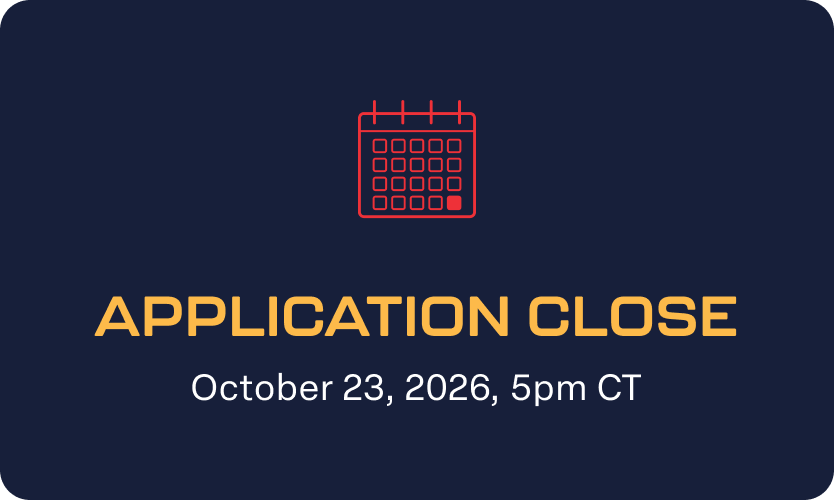
The application deadline is 5pm CT on October 23, 2026. Note: A webinar for interested applicants was held on Tuesday, September 29th, at 10:00 a.m. CT. View the presentation here.
As part of the QUBIT application, all applicants must complete this disclosure form. Alternatively, applicants may download, sign and upload the PDF version to the application.
Frequently Asked Questions (FAQ)
As you develop your QUBIT Grant Program application, these FAQs will help you understand the program’s intent and requirements so you can better prepare a strong application. They supplement the program webpage and address questions asked by potential applicants. If there is a difference between these FAQs and the executed grant contract, th (e grant contract controls.
Hub locations are not predefined. Applicants should identify potential hub sites by considering existing national labs, utilities, and other state-based assets, and describe how their project builds on those ongoing investments to expand Tennessee’s quantum infrastructure.
A project may include more than one location if the sites are part of a coordinated project. Applicants should explain the purpose of each location, how the sites will work together, and how the consortium will manage the project as a whole.
Applicants should demonstrate a reasonable path for the proposed infrastructure to work with other systems, equipment, or vendors when appropriate. The application should identify relevant technical interfaces, standards, dependencies, and compatibility considerations.
No. QUBIT funds infrastructure—such as testbeds, computing equipment, and networks—that enables quantum research. It does not fund research itself.
Only costs incurred within the contract period are eligible. The grant cannot cover anything after the contract end date, including upfront payments for multi-year bundles, such as cybersecurity packages, that extend beyond it.
Many vendors bundle maintenance into a system’s purchase price. Applicants should itemize and separate any maintenance that falls outside the contract window because that portion would be ineligible.
Only labor directly tied to eligible project categories—such as architectural design, engineering, minor renovation, construction, and similar work—may be eligible.
Only to the extent that it directly supports infrastructure development. Standalone workforce development is not an eligible cost on its own.
No. Applicants should not purchase equipment, begin construction, or incur project costs before the grant contract is fully executed and approved in the State’s Edison contracting system. Costs incurred before that time may not be reimbursed.
Applicants may identify other committed, pending, or anticipated funding sources in the application. The budget should clearly explain how QUBIT funds will be used and should not include costs paid for or reimbursed by another funding source.
No. The State retains no ownership of equipment, intellectual property, or other assets funded by the QUBIT grant. These remain owned by the grantee within the consortium established for the project.
The application should identify the organization that will own or manage each major asset, along with the responsibilities of each consortium member. Applicants should also explain how the consortium will manage equipment, maintenance, access, security, and long-term operations.
QUBIT grant contracts are 36 months. An extension may be requested and may be granted or renewed at TNECD’s discretion. Extensions are not automatic and are subject to approval and applicable state requirements.
Spending does not need to be distributed evenly across the contract period, but applicants should provide a realistic spending and implementation schedule.
No. A notice of award is not a final award. It does not authorize work to begin, does not permit incurring costs, and does not guarantee funding.
Before final award, TNECD may negotiate scope, budget, schedule, match, access communications, performance measures, and other conditions. No funds may be spent until the contract is fully signed by both parties and approved in the State’s Edison contracting system.
Potential changes should be discussed with TNECD as soon as the need is identified. Applicants and grantees should not assume that a change is approved until TNECD provides written approval and completes any required contract amendment or other state process.
Contact
For questions, please contact the Office of Innovation at ECD.Innovation@tn.gov