Positive & Adverse Childhood Experiences (PACEs)
Support for children’s mental and physical health throughout their lives, to help them achieve in school and work settings and to become responsible citizens in adulthood, as a foundation for building strong communities.About Positive and Adverse Childhood Experiences
The early years of life matter to lifelong health and prosperity. Investing in the early childhood years supports children’s mental and physical health throughout their lives, their ability to achieve in school and work settings, and their ability to become responsible citizens in adulthood. Healthy child development is the foundation that leads to strong communities and a healthy economy.
Positive Childhood Experiences (PCEs) are experiences during childhood that promote safe, stable, and nurturing relationships and environments. These experiences can include close relationships with any parent or safe, stable adult; feeling safe at home, at school, and in the community; and having chances to learn and belong in a community. PCEs can help children develop a sense of belonging and connectedness and build resilience.
Adverse Childhood Experiences (ACEs) are potentially traumatic experiences during childhood that may disrupt the formation of brain architecture, affecting lifelong health. Experiences during childhood, such as abuse, neglect, or family dysfunction, can disrupt the safe, stable, and nurturing environments that form healthy brains and help children thrive. Community factors that undermine a child’s sense of safety or stability – such as poverty, community violence, or lack of safe and affordable housing –are also considered ACEs.
3 Realms of ACEs (Adverse Childhood Experiences)
Adverse childhood and community experiences (ACEs) can occur in the household, the community, or the environment, and can cause toxic stress. If left unaddressed, toxic stress from ACEs can harm children and families, weaken organizations, stress systems and communities, and reduce the ability to respond to difficult events with resiliency.
Research shows there are many ways to reduce and heal from toxic stress and build healthy, caring communities.
1. Household ACEs
Household ACEs include experiences that occur within a child’s home or immediate family environment. Examples include:
- Incarcerated family member
- Physical and emotional neglect
- Homelessness
- Parental mental illness
- Alcoholism and drug abuse
- Emotional and sexual abuse
- Domestic violence
- Maternal depression
- Bullying
- Divorce
These experiences can be influenced by broader root-cause conditions, such as:
- Discrimination
- Historical trauma
- Structural racism
- Violence
- Substandard schools
- Lack of jobs
- Food insecurity
- Poor water and air quality
- Poverty
- Poor housing quality and affordability
- Lack of social capital and mobility
- Substandard wages
2. Community ACEs
Community ACEs occur when the conditions surrounding families create chronic stress or hardship. These overlap with the root-cause conditions listed under household ACEs. Examples include:
- Substandard wages
- Poverty
- Poor housing quality and affordability
- Lack of jobs
- Lack of social capital and mobility
- Substandard schools
- Food insecurity
- Poor water and air quality
- Structural racism
- Historical trauma
- Violence
3. Environmental ACEs
Environmental ACEs include large-scale events or environmental changes that affect children, families, and communities. Examples include:
Climate-related events
- Record heat and droughts
- Wildfires and smoke
- Record storms
- Flooding and mudslides
- Sea level rise
Natural disasters
- Tornadoes and hurricanes
- Volcanic eruptions and tsunamis
- Earthquakes
- Pandemics
Additional Information
This information is adapted from the Building Community Resilience Collaborative and Networks and the International Transformational Resilience Coalition.
For more on ACEs and ways to prevent trauma and build resilience, visit:
ACEs Connection – https://www.acesconnection.com/
Health Outcomes Associated with ACEs
Research exploring ACEs reveals that ACEs are associated with increased risk for negative health outcomes such as smoking, substance abuse, depression, obesity, and heart disease. Fortunately, the negative effects of ACEs on child development can be buffered by PCEs. Encouraging safe, stable, and nurturing relationships and environments for children has lifelong positive effects on the health of Tennesseans. Children with PCEs are less likely to engage in risky health behaviors, less likely to experience long-term illness, and more likely to enjoy better mental health and overall health later in life.
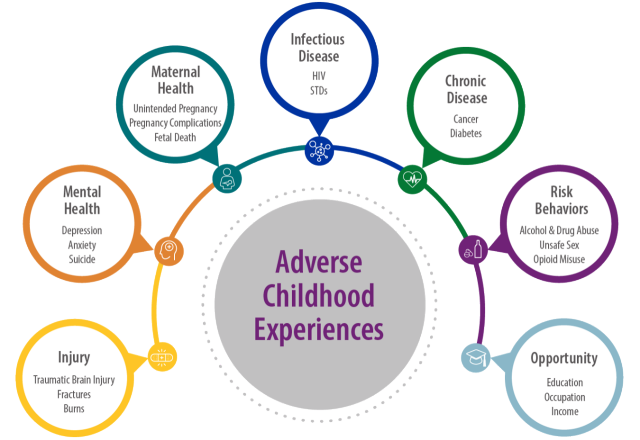
Positive Childhood Experiences (PCEs) Pathways
High levels of Positive Childhood Experiences (PCEs) can create a strong foundation for lifelong health. PCEs contribute to:
- Better mental and emotional well-being
- Lower likelihood of adopting risky health behaviors
- Improved overall health throughout the lifespan
- Stronger community resilience and long-term prosperity
PCEs support healthier individuals, families, and communities.
Data and Statistics
The PCEs data tell us that encouraging safe, stable, and nurturing relationships and environments for children has lifelong positive effects on Tennesseans' health. For more information on PCEs in Tennessee, this PCEs Factsheet shares findings from the Tennessee Department of Health PCEs data, collected from the 2021 Behavioral Risk Factor Surveillance Survey.
ACEs Prevalence
Experiences
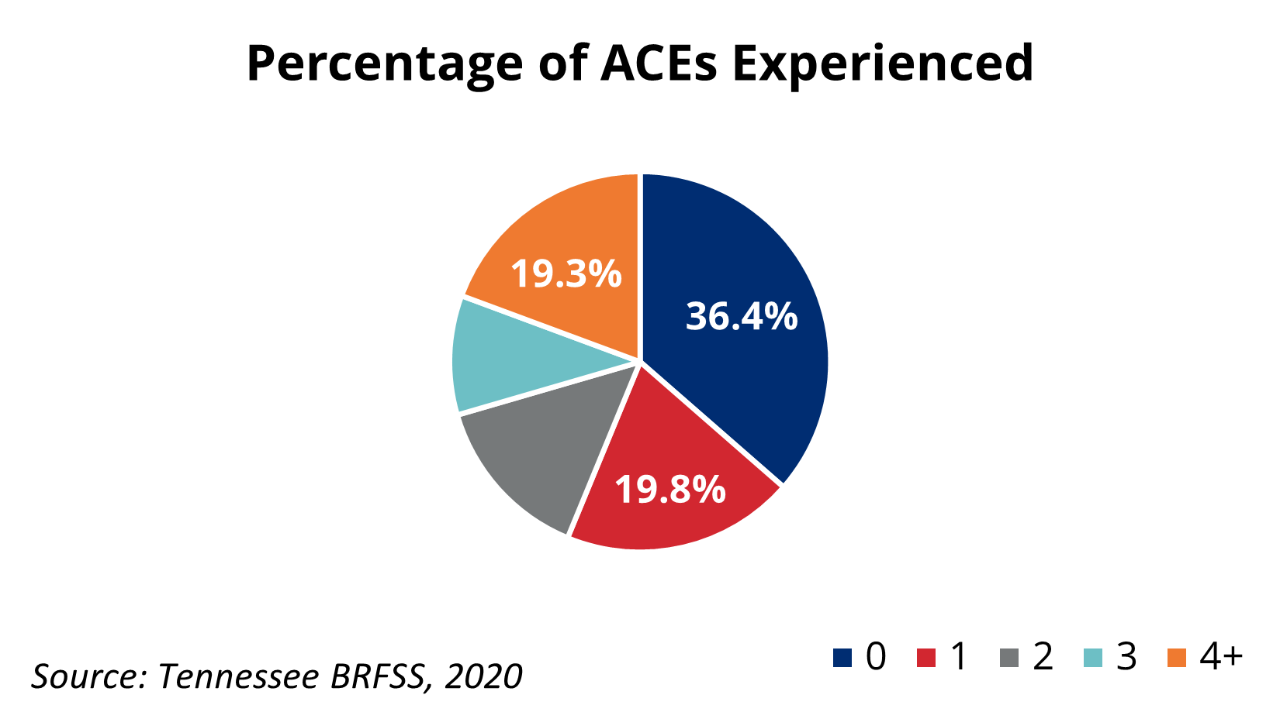
This graphic shows the distribution of Adverse Childhood Experiences (ACEs) among Tennessee adults in 2020.
- 36.4% reported 0 ACEs
- 19.8% reported 1 ACE
- 19.3% reported 4 or more ACEs
- The remaining percentage is split among adults reporting 2 ACEs or 3 ACEs.
Source: Tennessee BRFSS, 2020.
Race and Ethnicity
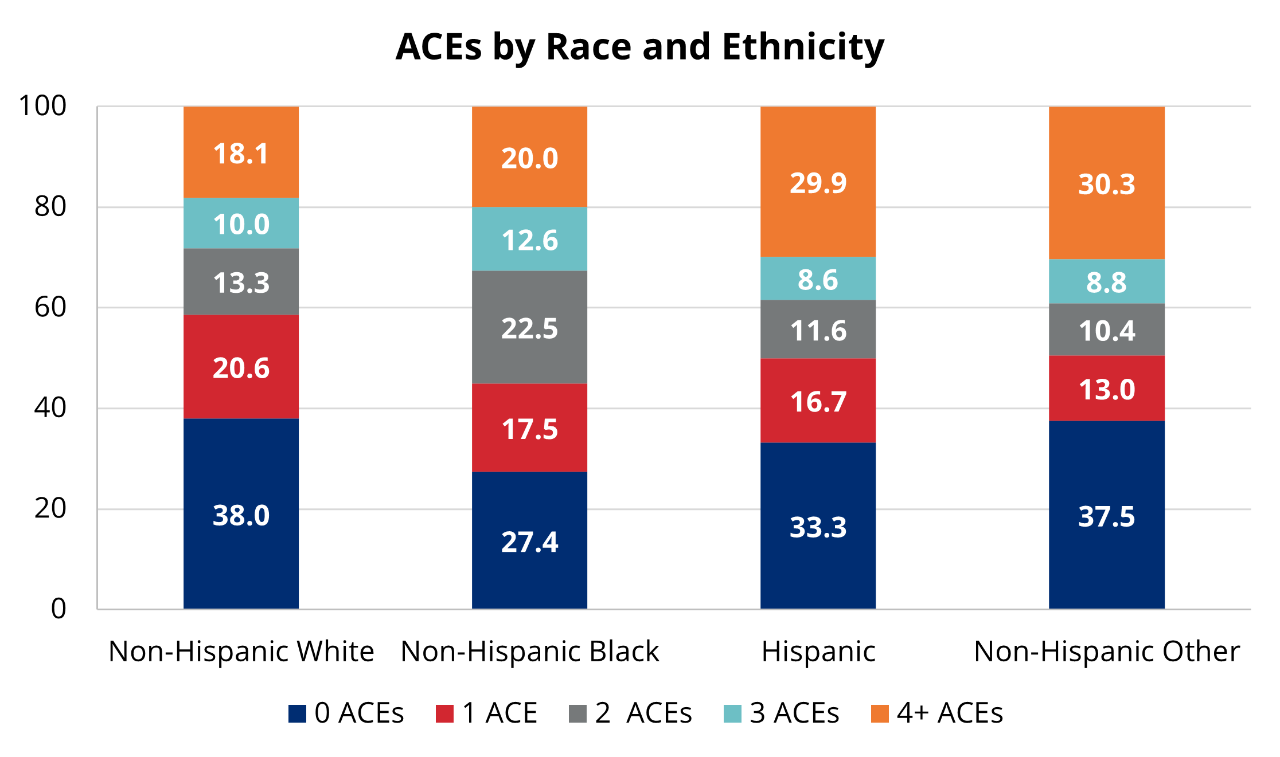
This chart compares ACEs among Non-Hispanic White, Non-Hispanic Black, Hispanic, and Non-Hispanic Other adults.
Key findings include:
- Non-Hispanic White: 38% reported 0 ACEs; 18.1% reported 4+ ACEs.
- Non-Hispanic Black: 27.4% reported 0 ACEs; 20% reported 4+ ACEs.
- Hispanic: 33.3% reported 0 ACEs; 29.9% reported 4+ ACEs.
- Non-Hispanic Other: 37.5% reported 0 ACEs; 30.3% reported 4+ ACEs.
Overall, higher ACE counts (4+) appear more frequently among Hispanic and Non-Hispanic Other adults.
ACEs and Health
Depression
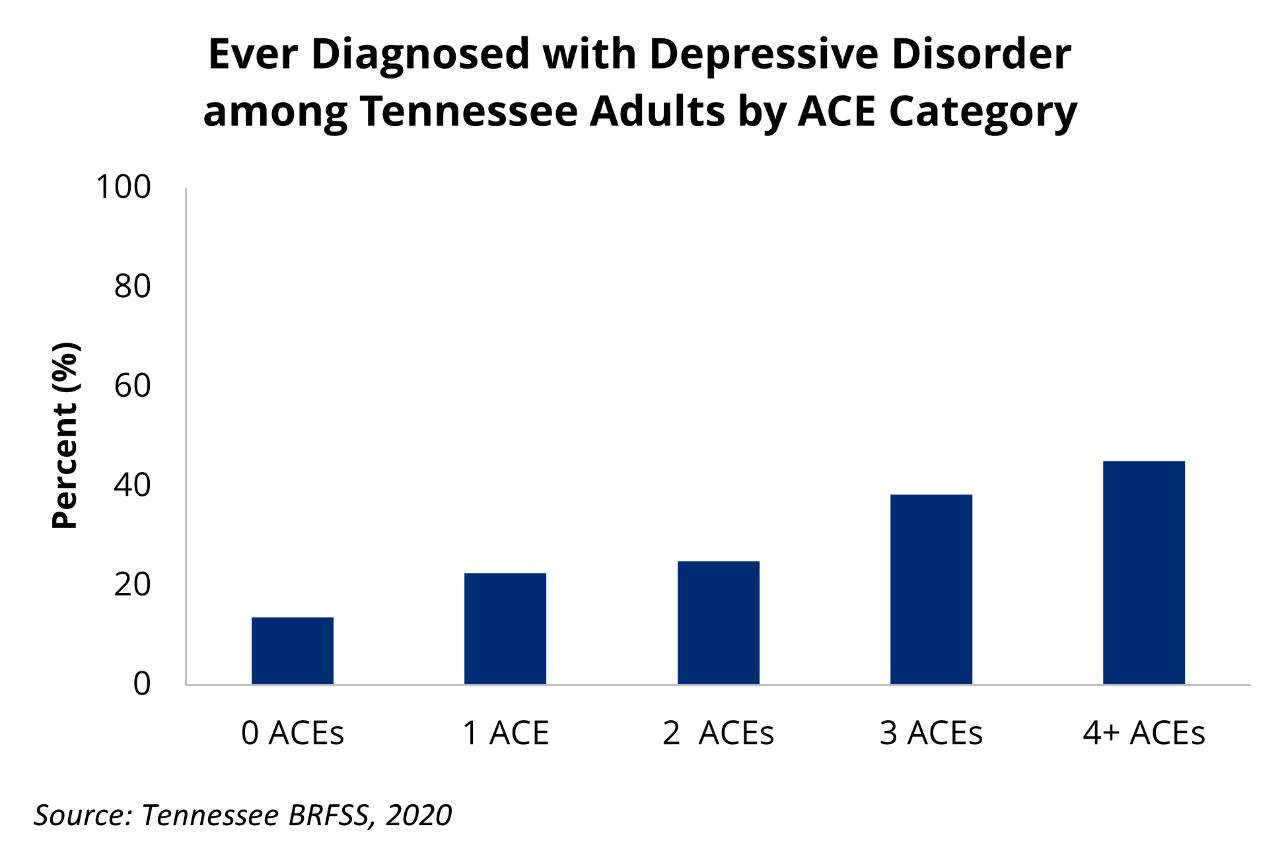
This chart shows that depression diagnoses increase sharply with higher ACE counts:
- 0 ACEs: about 13% diagnosed with depression
- 1 ACE: about 22%
- 2 ACEs: about 25%
- 3 ACEs: about 37%
- 4+ ACEs: over 45%
Higher ACE exposure is strongly associated with higher rates of depressive disorder.
Source: Tennessee BRFSS, 2020.
Current Smoking Status
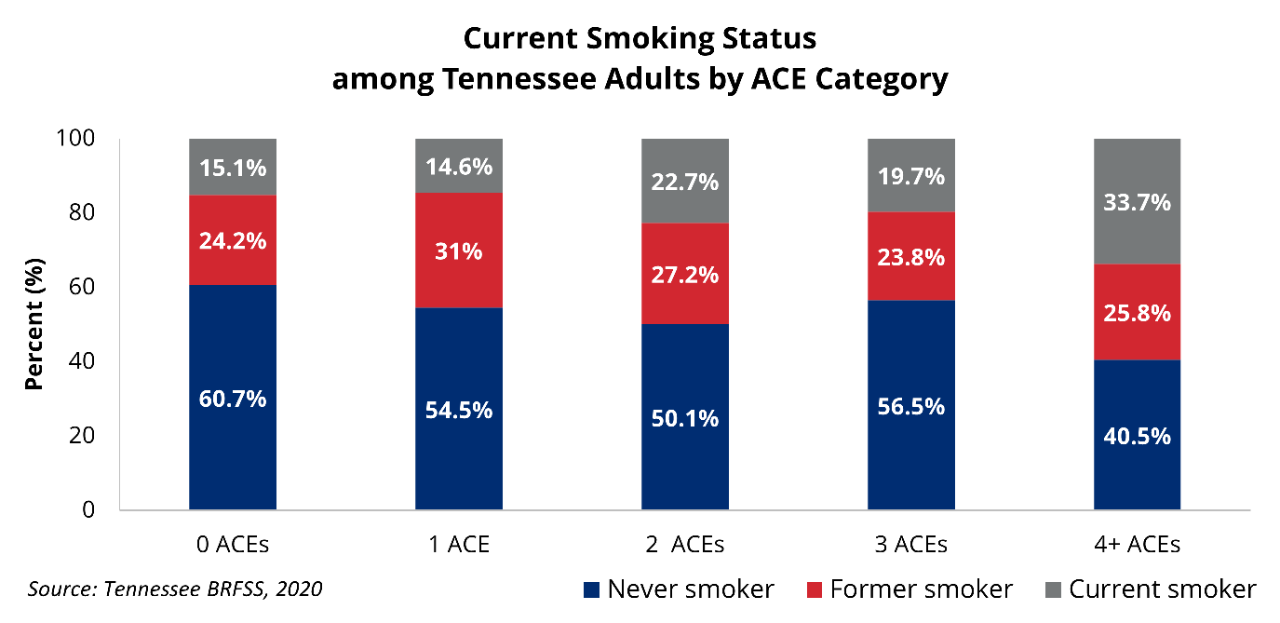
This chart shows smoking status among Tennessee adults based on the number of ACEs reported.
- Adults with 0 ACEs: 60.7% never smokers; 24.2% former smokers; 15.1% current smokers.
- Adults with 1 ACE: 54.5% never smokers; 31% former smokers; 14.6% current smokers.
- Adults with 2 ACEs: 50.1% never smokers; 27.2% former smokers; 22.7% current smokers.
- Adults with 3 ACEs: 56.5% never smokers; 23.8% former smokers; 19.7% current smokers.
- Adults with 4+ ACEs: 40.5% never smokers; 25.8% former smokers; 33.7% current smokers.
Higher ACE exposure is associated with more current smoking.
Source: Tennessee BRFSS, 2020.
Physical Health
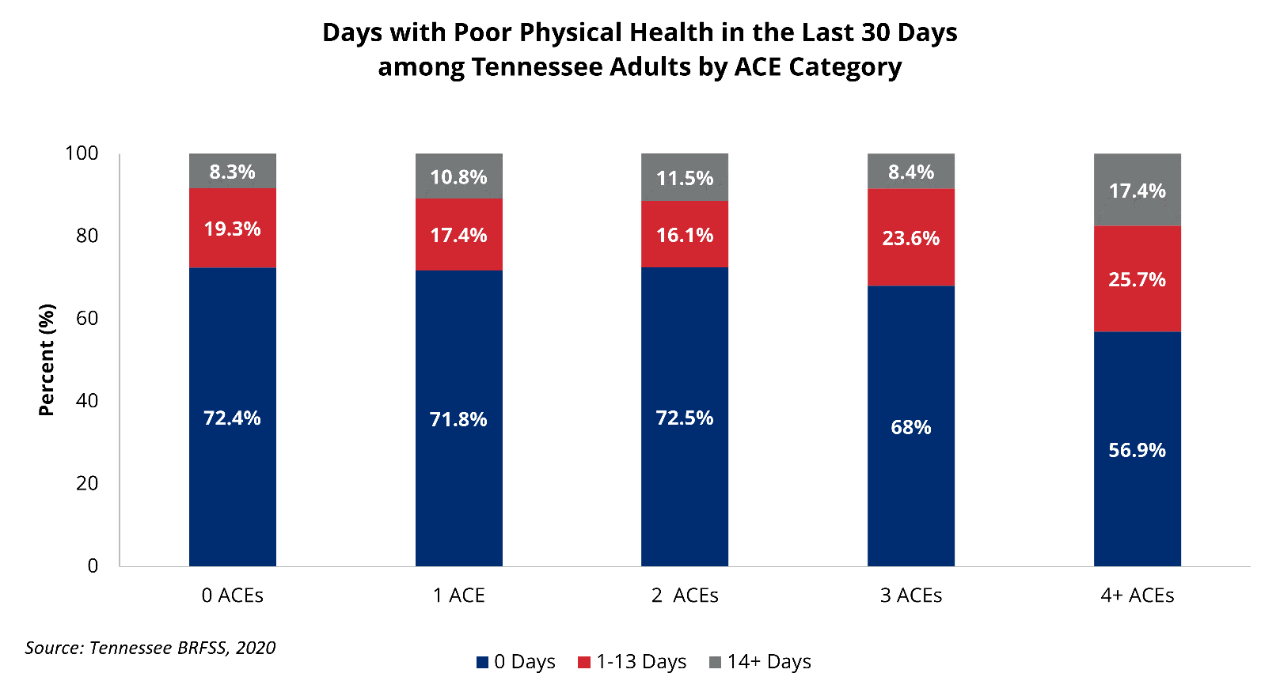
This graph shows how ACE exposure relates to self-reported days of poor physical health in the past 30 days.
- Adults with no ACEs: 72.4% had 0 poor health days; 19.3% had 1–13 days; 8.3% had 14+ days.
- 1 ACE: 71.8% had 0 days; 17.4% had 1–13 days; 10.8% had 14+ days.
- 2 ACEs: 72.5% had 0 days; 16.1% had 1–13 days; 11.5% had 14+ days.
- 3 ACEs: 68% had 0 days; 23.6% had 1–13 days; 8.4% had 14+ days.
- 4+ ACEs: 56.9% had 0 days; 25.7% had 1–13 days; 17.4% had 14+ days.
Adults with 4+ ACEs report significantly more physical health problems.
Source: Tennessee BRFSS, 2020.
PCEs Prevalence
Experiences
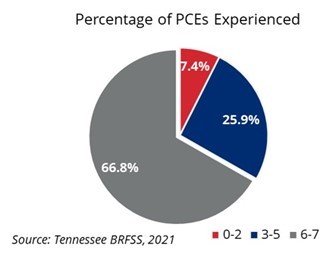
This chart shows the distribution of Positive Childhood Experiences among Tennessee adults.
- 78.2% reported 0–2 PCEs
- 25.8% reported 3–5 PCEs
- 7.4% reported 6–7 PCEs
Source: Tennessee BRFSS, 2021
PCEs and Health
Depression
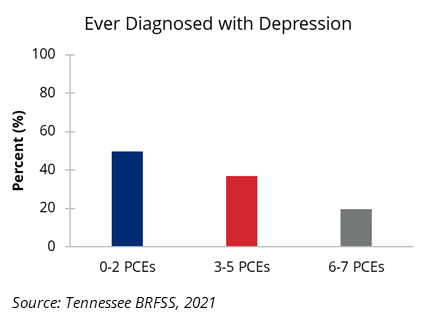
Rates of depression differ by number of PCEs:
- 0–2 PCEs: Highest depression rate
- 3–5 PCEs: Moderate depression rate
- 6–7 PCEs: Lowest depression rate
Higher numbers of positive childhood experiences are associated with lower rates of depression in adulthood.
Source: Tennessee BRFSS, 2021.
Current Smoking Status
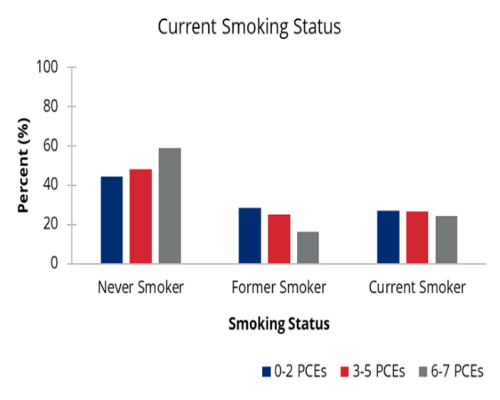
Smoking behaviors vary by PCE exposure:
- Never Smokers: Highest among adults with 6–7 PCEs
- Former Smokers: Most common among adults with 0–2 PCEs
- Current Smokers: Similar across groups, with slightly higher rates among adults with 0–2 PCEs
Overall, more positive childhood experiences are associated with higher rates of never smoking.
Health Status
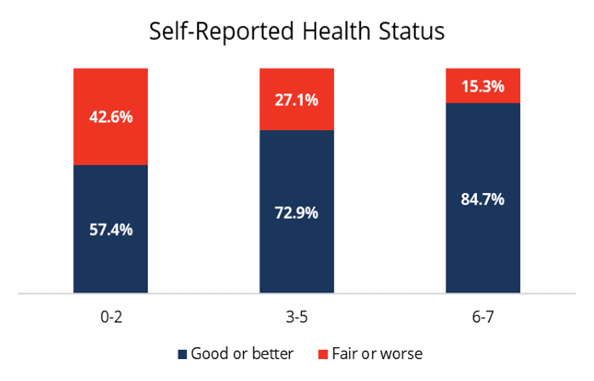
Self-reported health improves with higher numbers of PCEs:
- 0–2 PCEs: 57.4% reported good or better health; 42.6% reported fair or worse
- 3–5 PCEs: 72.9% good or better; 27.1% fair or worse
- 6–7 PCEs: 84.7% good or better; 15.3% fair or worse
People with more PCEs report better overall health.
Tennessee Programs
The State of Tennessee offers a variety of programs and services that address issues related to Positive and Adverse Childhood Experiences. These programs focus on promoting safe, stable, and nurturing relationships and environments while protecting against trauma and adversity for children.
Tennessee Department of Health (TDH) - Division of Family Health and Wellness
Early Childhood Programs
Early childhood programs support healthy development during the critical early years of brain development, establishing strong foundations through PCEs.
- Evidence-Based Home Visiting (EBHV) – An early-intervention strategy to improve the health and well-being of children and parents. Learn more about EBHV.
- Community Health Access and Navigation in Tennessee (CHANT) – Provides care coordination through local health departments, connecting eligible individuals to resources and support for health and medical needs. Learn more about CHANT.
- Women, Infants, and Children Program (WIC) – Offers nutrition assistance, education, breastfeeding support, and health care referrals for mothers of young children. Learn more about WIC.
- Breastfeeding Services – Provides resources and support to new mothers to help foster a nurturing relationship between mother and baby. Learn more about Breastfeeding Services.
- Newborn Screening – Screens infants to detect treatable health conditions. Learn more about Newborn Screening.
Injury and Violence Prevention
TDH's Division of Family Health and Wellness coordinates various projects to implement evidence-based injury and violence prevention programs, which can prevent ACEs.
- Child Fatality Review – Brings together a team of professionals to investigate child deaths. Information from each case helps strengthen preventative systems, including preventing ACEs-related deaths. Learn more about Child Fatality Review.
- Rape Prevention and Education – Implements programs to prevent sexual violence perpetration and victimization, which is considered an ACE. Learn more about Rape Prevention.
- Suicide Prevention – Offers resources and support for all Tennesseans to prevent suicide and promote mental health initiatives. Learn more at PreventSuicideTN.com.
- Overdose Prevention – Focuses on increasing education and awareness of prescription drug abuse, which is associated with ACEs. Learn more about Overdose Prevention.
- Tobacco Use Prevention and Control Program (TUPCP) – Coordinates programs to prevent tobacco use across Tennessee. High ACEs scores are associated with tobacco use, making tobacco prevention an ACEs-related strategy. Programs include efforts to prevent initiation among youth and support tobacco cessation among pregnant women. Learn more about TUPCP.
Other TDH Programs That Promote PCEs and Prevent ACEs
- Tennessee Child and Adolescent Psychiatry Education and Support (TCAPES) – Supports the integration of mental healthcare into pediatric primary care. Learn more about TCAPES.
- Children and Youth with Special Healthcare Needs (CYSHCN) – Assists children, youth, and transitioning adults with complex chronic health conditions or developmental delays to access resources and services that help them thrive. Learn more about CYSHCN.
- Tennessee Adolescent Pregnancy Prevention Program (TAPPP) – A state-funded program providing community-based awareness and prevention education through services, education, collaborations, and partnerships. This helps reduce unintended teen pregnancies, which can be associated with ACEs. Learn more about TAPPP.
- Childhood Lead Poisoning Prevention Program (TNCLPPP) – Provides case management, local outreach and education, and lead investigations to eliminate lead in children’s environments, a major environmental health risk. Learn more about TNCLPPP.
Tennessee Commission on Children and Youth
- Resilient TN Collaborative – A statewide public education initiative focused on promoting culture change to emphasize Positive Childhood Experiences (PCEs) and prevent and mitigate Adverse Childhood Experiences (ACEs). The initiative aims to help all children in Tennessee thrive through public awareness, sustainable funding, and policy change. Learn more about Resilient TN.
- Home Visiting Leadership Alliance (HVLA) and Young Child Wellness Council (YCWC) – Collaborative action groups that unite stakeholders across Tennessee to improve young child health and promote Evidence-Based Home Visiting. For more information on collaborating with HVLA or YCWC, email Rob Burke at Rob.Burke@tn.gov.
Learn more about child- and family-related programs on the Tennessee Commission on Children and Youth website.
Resources and Additional Information
Explore these resources to learn more about Adverse Childhood Experiences (ACEs), brain development, and the role of Positive Childhood Experiences (PCEs) in supporting healthy child development.
External links and accessibility notice:
Some of the following resources link to external websites not managed by the Tennessee Department of Health (TDH). TDH is not responsible for the content, accessibility, or privacy practices of these external sites.
- Overview of ACEs and Brain Science – Learn about Adverse Childhood Experiences and their impact on brain development.
- ACEs and Brain Fact Sheet – Browse key facts about ACEs and brain development. View the fact sheet.
- KIDS COUNT – Provides data, policy recommendations, and tools to support policies at local, regional, and state levels that promote children’s well-being. Access yearly trends and the annual State of the Child report. Explore KIDS COUNT publications and recommendations.
- Healthy Outcomes from Positive Experiences (HOPE) Network – Uses research to show the importance of Positive Childhood Experiences (PCEs) in human development and offers a hub of resources on PCEs and ACEs. Learn more about the HOPE Network.
- CDC Resources on ACEs – Offers handouts, videos, reports, and strategies for preventing and mitigating ACEs. Access CDC ACEs resources.
- Harvard Center on the Developing Child – Offers resources on toxic stress and early child development. Explore Harvard Center resources.
This Page Last Updated: August 27, 2026 at 8:35 AM