Elm Zigzag Sawfly
The elm zigzag sawfly (Aproceros leucopoda), an invasive pest, poses a significant threat to elm trees (Ulmus spp.) across North America. Measuring approximately 5 mm in length, this small insect causes extensive defoliation, undermining the health of elm populations.
Historical Spread
First detected in Europe in 2003, the elm zigzag sawfly rapidly established itself as a destructive force, causing widespread defoliation across multiple countries. By 2021, it had reached the United States, with initial confirmation in Virginia. The pest continued its expansion, with documented sightings in North Carolina, Maryland, Pennsylvania, and New York by 2022, followed by Ohio, Vermont, and Massachusetts in 2023.
Most recently, in 2025, Tennessee reported its first populations in Washington County, bringing the total to nine affected U.S. states.
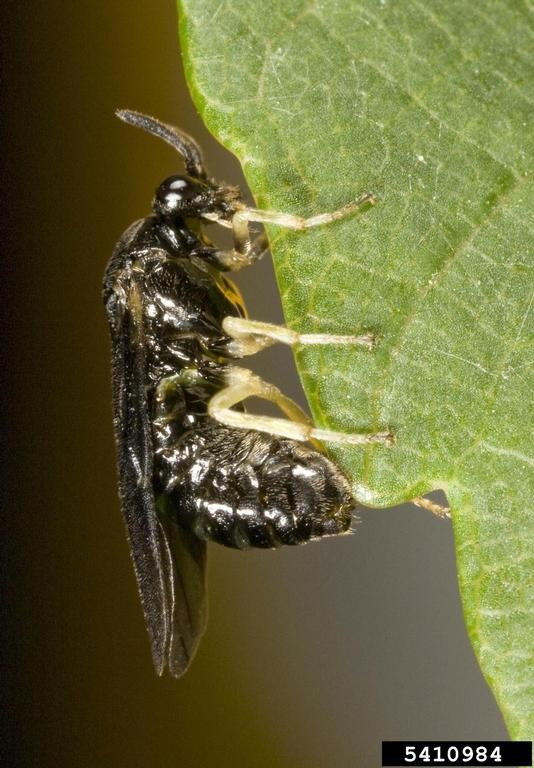
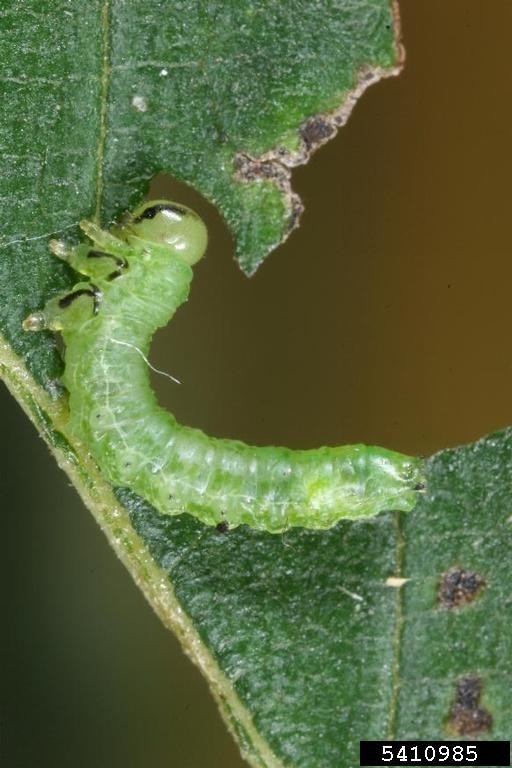
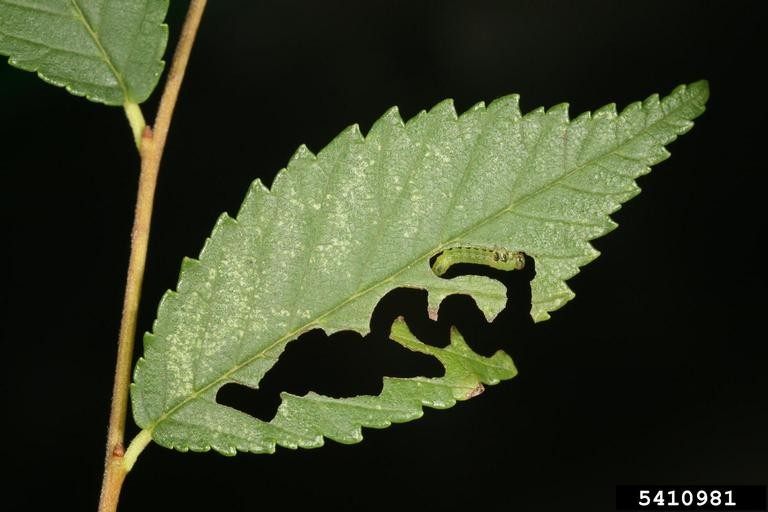
The elm zigzag sawfly exhibits distinctive characteristics in both its larval and adult stages, as well as unique damage patterns.
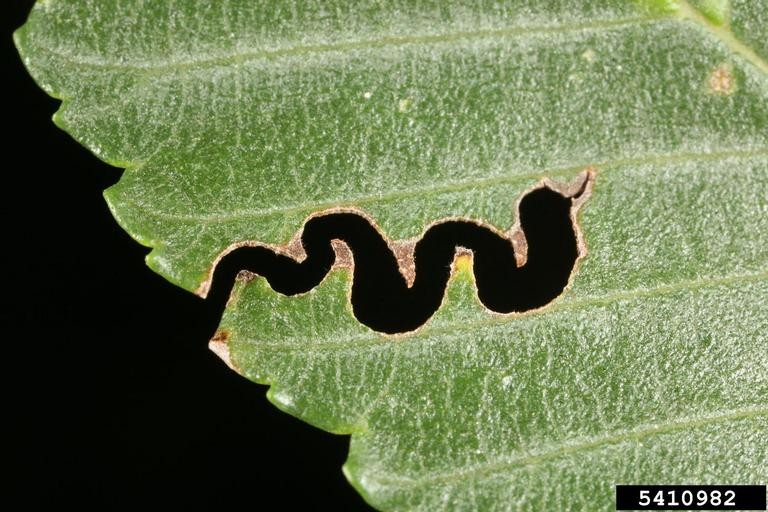
The most recognizable indicator of elm zigzag sawfly activity is the characteristic zigzag pattern created by larvae feeding on elm leaves. This damage is unique to the species, distinguishing it from other pests affecting elm foliage. The zigzag channels serve as a clear diagnostic feature, signaling the presence of this invasive insect.
Cocoons
The sawfly creates two types of cocoons depending on the season. Summer generations produce loosely-woven, net-like cocoons attached to leaves or other surfaces. When leaves aren't available due to heavy feeding, you might find these cocoons attached to fence posts or other nearby objects. Overwintering generations create dense, solid-walled cocoons in leaf litter or soil, making them harder to spot during dormant months.
Larval Characteristics
Elm zigzag sawfly larvae are identifiable by the following traits:
- Size and Color: Newly hatched larvae are approximately 1.8 mm long and grayish-white. Mature larvae grow to 10–11 mm, adopting a light green coloration that blends with elm leaves.
- Markings: Larvae feature a black band across the head and a distinctive T-shaped brown or black marking above the second and third pairs of legs.
- Leg Structure: Larvae possess six thoracic legs and six or more pairs of fleshy prolegs on the abdomen, distinguishing them from butterfly or moth caterpillars, which have five or fewer proleg pairs.
Adult Sawflies
- Adult elm zigzag sawflies are small but distinctive:7-8 mm long
- Shiny black body
- Yellow to white legs with white tips
- Smoky-brown wings
- White patch on the underside of the thorax
- Dark brown upper lip

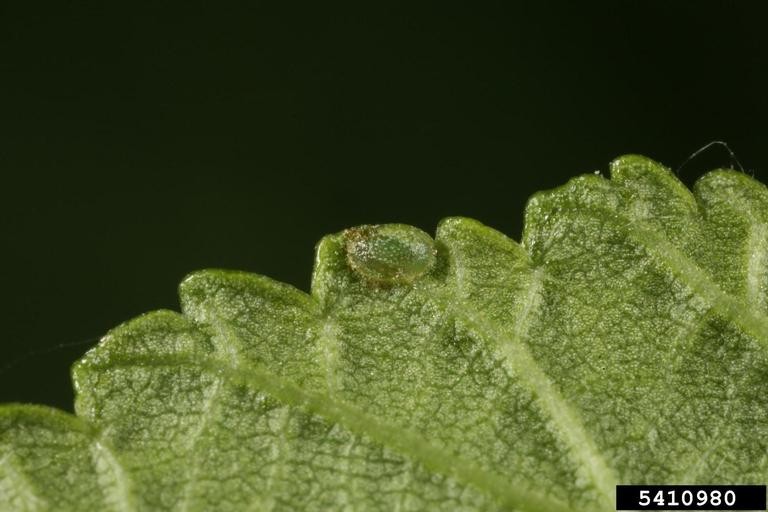
The elm zigzag sawfly may be small, but its impact on North America's elm trees could be enormous if left unchecked. Most recently, Tennessee confirmed its first populations in Washington County in 2025, bringing the total to nine U.S. states.
These states are all places where the elm tree is native, and its presence could lead to significant damage if not properly managed. This situation highlights the importance of being proactive in identifying and controlling invasive species before they can cause widespread harm.
While effective management strategies for the Elm Zigzag Sawfly (EZS) are still being researched, there are a few practical steps you can take to address mild infestations. Physical control methods, such as carefully hand-picking larvae from infested trees, can help reduce their numbers. Another practical approach is using a high-pressure water spray to dislodge larvae from the trees.
These methods may not eliminate the problem entirely, but they can provide immediate relief and help mitigate the impact while long-term solutions are developed. Always dispose of dislodged larvae responsibly to prevent further spread.
If you suspect you've found elm zigzag sawfly, don't keep it to yourself. Report to the Tennessee Department of Agriculture or use the Report a Pest platform.
When reporting, include:
- Clear photos of damage patterns and any insects found
- Exact location information
- Date of observation
- Host tree species if known