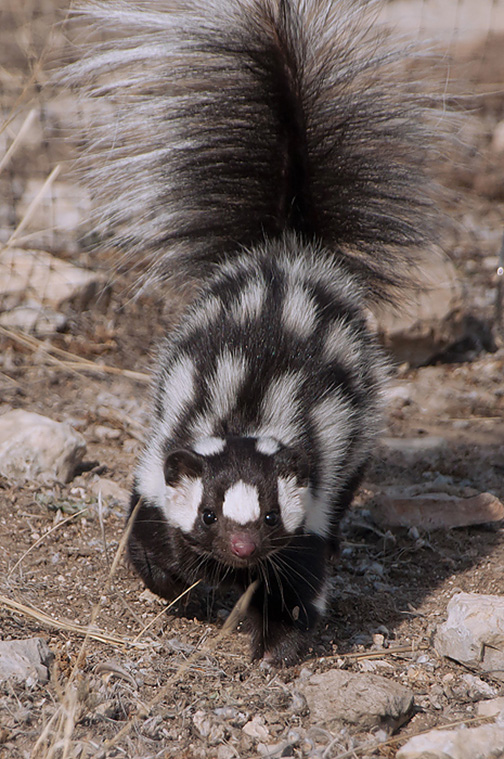
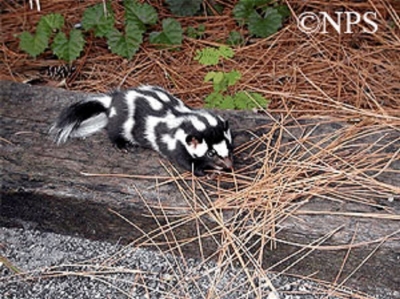
Eastern Spotted Skunk, Spilogale putorius
Of the two skunks occurring in Tennessee, the Eastern Spotted Skunk is slightly smaller and less common. They are found in the eastern and middle parts of the state.
Description: A medium-sized, stout-bodied mammal with a small head, short legs, and a prominent, bushy tail. The long, glossy, black fur has white stripes along the neck, back, and sides to mid-body. Behind these are vertical white stripes or broken stripes (which appear as spots). White spots also occur on the forehead and in front of each ear. The eyes are small, and the ears are short. Tail is black, but sometimes has a white tip.
Length: 14.0 - 22.0 inches
Tail: 4.5 - 9.0 inches
Ears: 1.0 - 1.1 inches
Weight: 0.75 - 2.75 pounds
Similar Species: Striped Skunk does not have vertical stripes or spots near the rump, and lacks white spots on the forehead and in front of the ears.
Habitat: Occurs around rocky, dense habitat, including fencerows, shrubby field borders, and farmland. Underground dens can be in grassy banks, rocky crevices, or along fencerows, while aboveground dens can include barns, woodpiles, haystacks, or rock or brush piles.
Diet: Primarily eats animal foods, but will occasionally eat plants. Preferred foods are insects such as grasshoppers, crickets, and beetles; it also eats mice, lizards, snakes, crayfish, salamanders, and mushrooms.
Breeding information: Breeding occurs in late winter when males wander in search of females. Most females produce a single litter a year, but some produce a second in late summer. Litters range from 2-9 (usually 5) young. The blind, hairless newborns have the black and white color pattern on their skin. Their eyes open at about 1 month old when they start to walk. Weaning occurs at around 2 months old.
Status in Tennessee: Eastern Spotted Skunks are uncommon and are of conservation concern due to declines in populations across much of the state. In 2023, Eastern Spotted Skunks were designated at state threatened and removed from the list of furbearers in Tennessee.”
Fun Facts:
•As a defensive tactic, they will conduct a headstand, move towards the threat, balancing on its forelegs, and direct the tail (and scent glands) towards the threat.
•The Eastern Spotted Skunk scent is stronger than that of the similar Striped Skunk.
Best places to see in Tennessee: Farms or rocky habitats.